The Last Note
general
On The Last Note I had full ownership of the level design. The DLC’s script was written by Creative Director Damian Kocurek and then dressed in narrative by Marta Malinowska. My task was to translate that into space through room arrangement — reusing rooms from the base game and arranging them to present the story from the Musician’s perspective — plus blockouts for new locations, technical setup, scripting logic in the chapters, and scripting events, puzzles, and horror elements.
Structurally The Final Note is divided into three chapters. Each chapter divided into several or one sequence and a finale. Each chapter and sequence focuses on a specific motif.
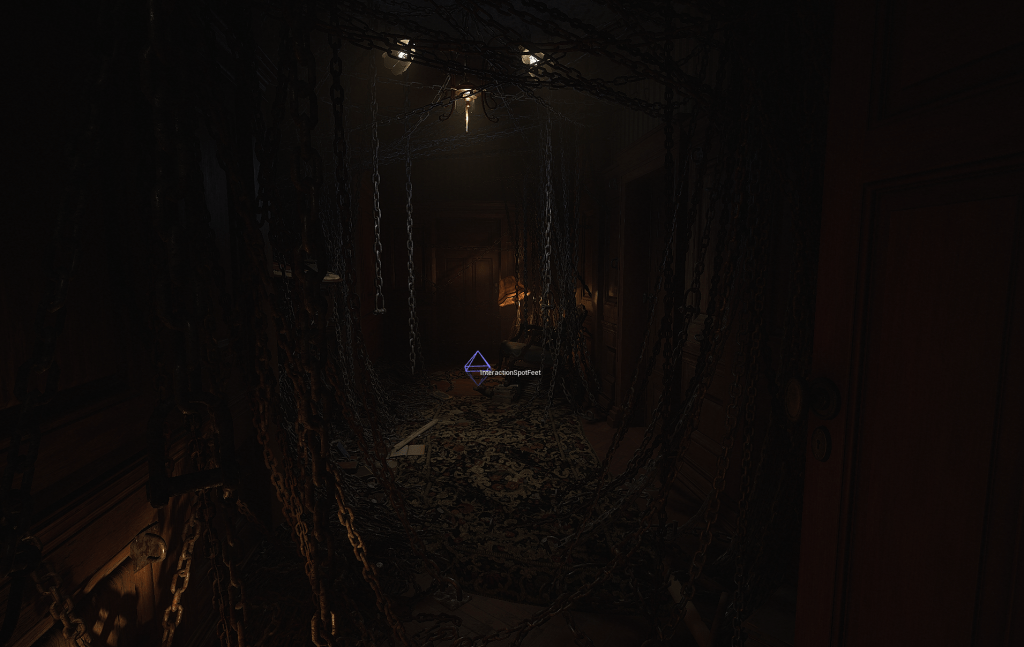
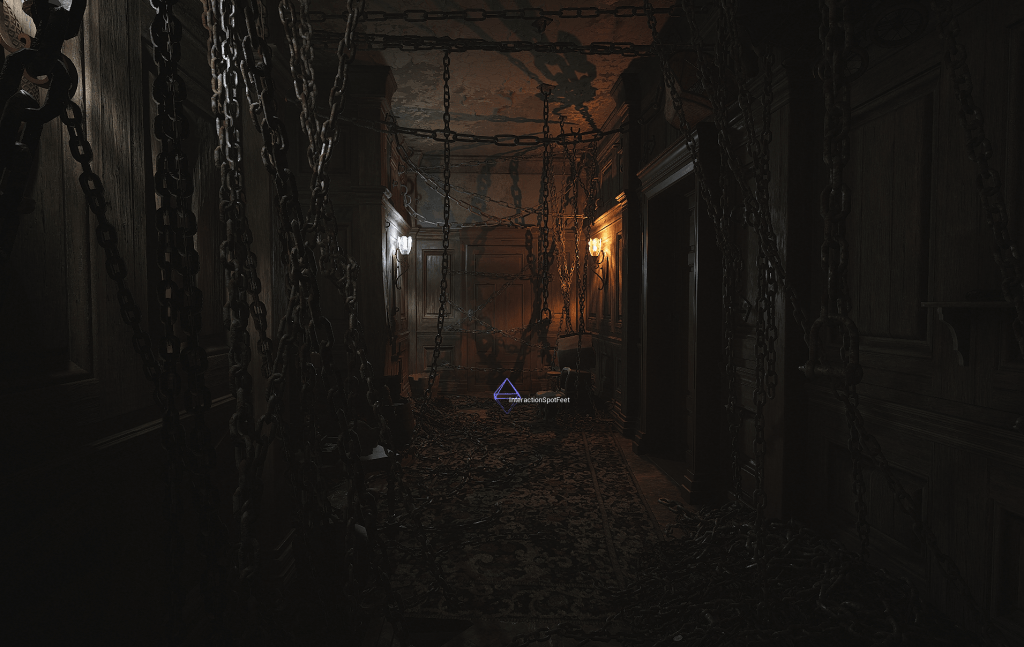
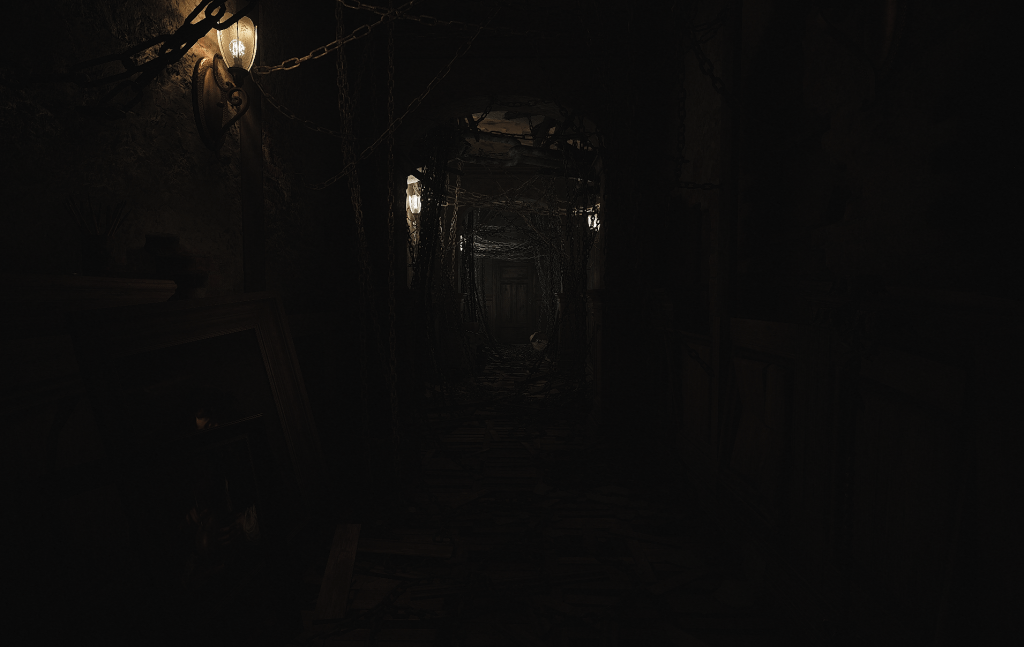
The main motif of the DLC is chains, which symbolize fear and the sense of being trapped by the protagonist. Progress is visible in the Main Hub, where each time a sequence is completed some chains are removed, unlocking further parts of the story and symbolizing the protagonist’s gradual freeing from these metaphorical chains.


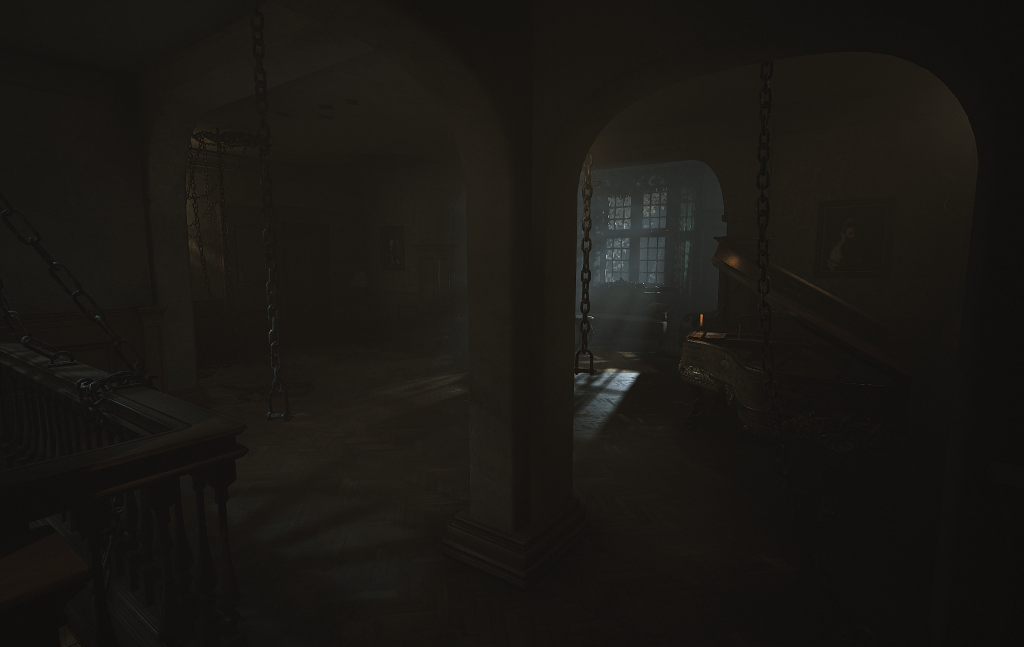
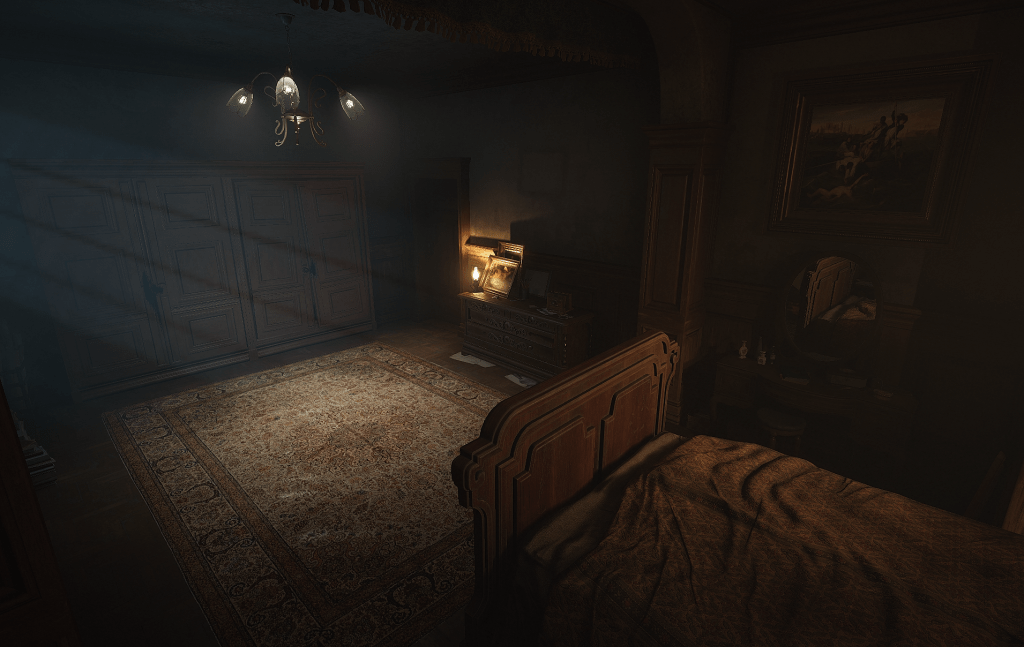
Each sequence starts in the bedroom — the Musician’s sort of prison. Sequences begin in separate rooms — entering a specific room and interacting with an object or looking in a certain direction transports the player to that sequence.
Chapter 1
Sequence 1
Motif: Pain
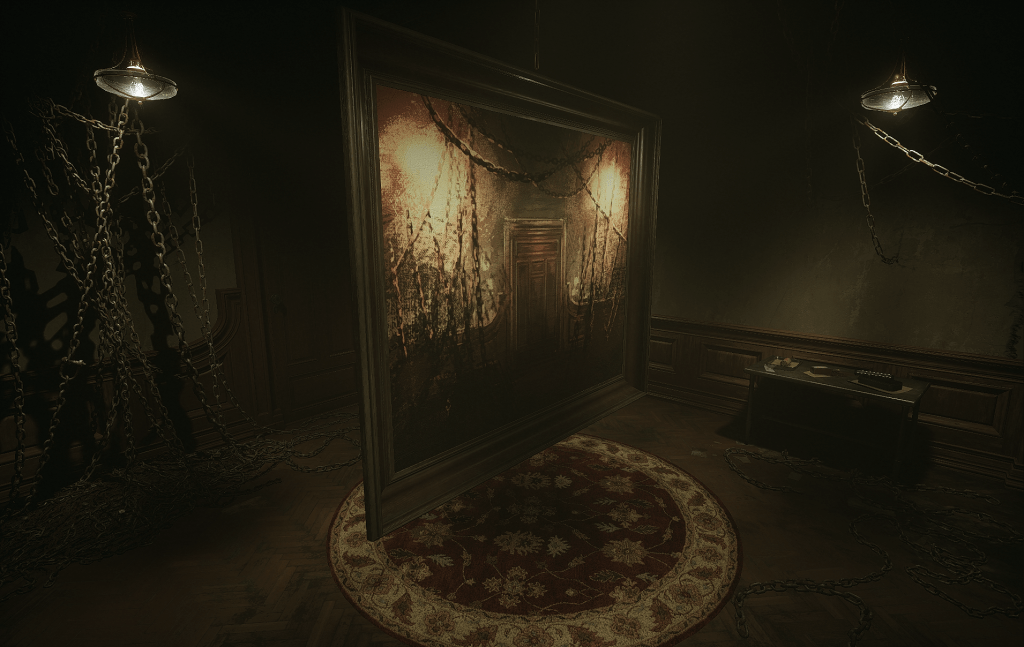
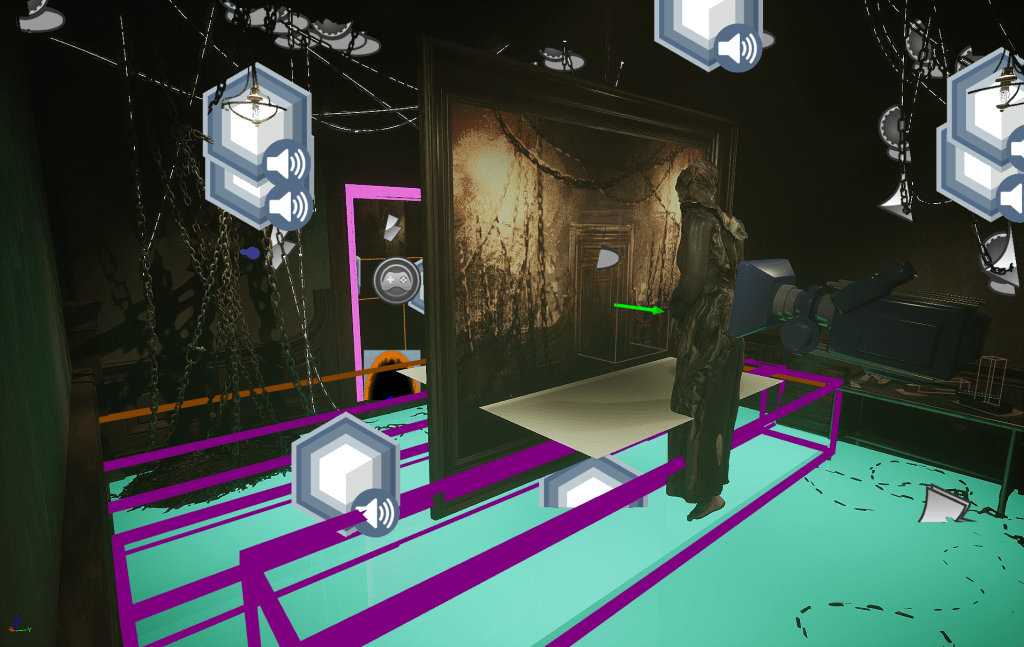
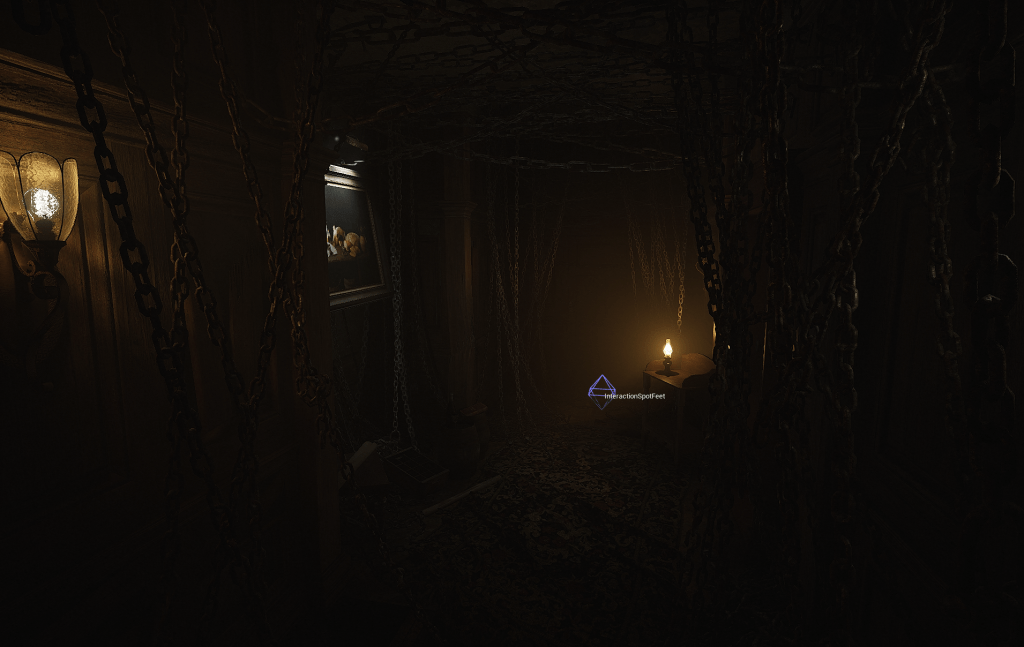
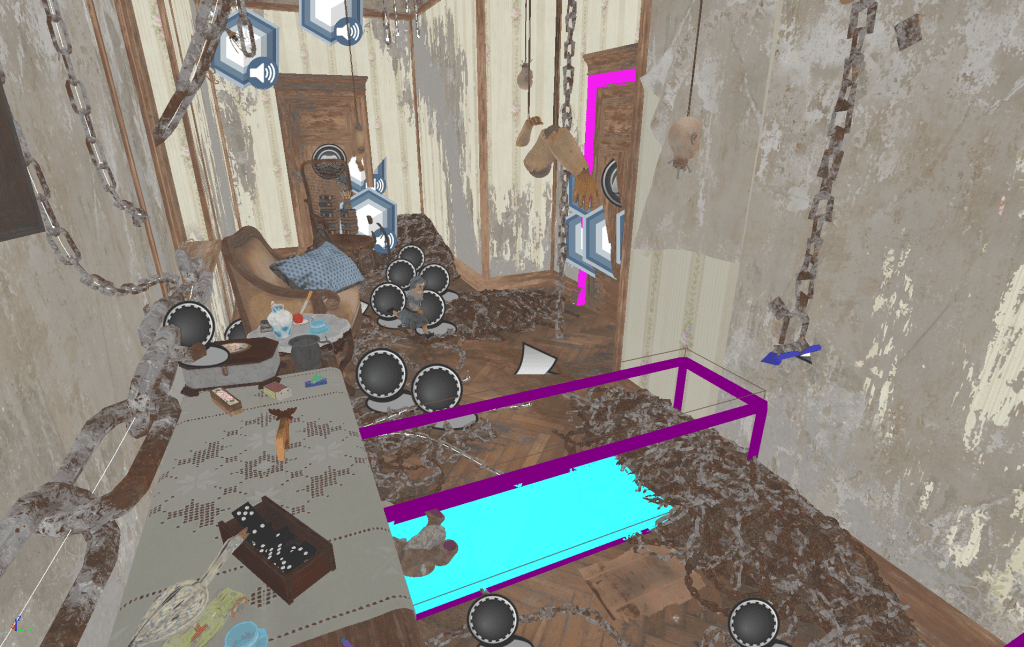
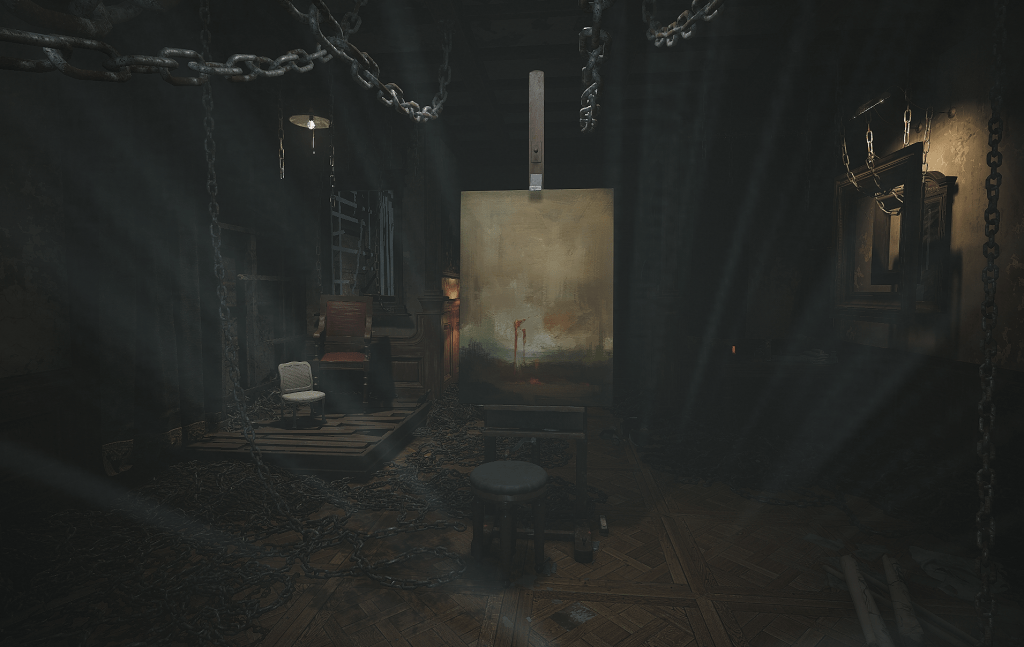
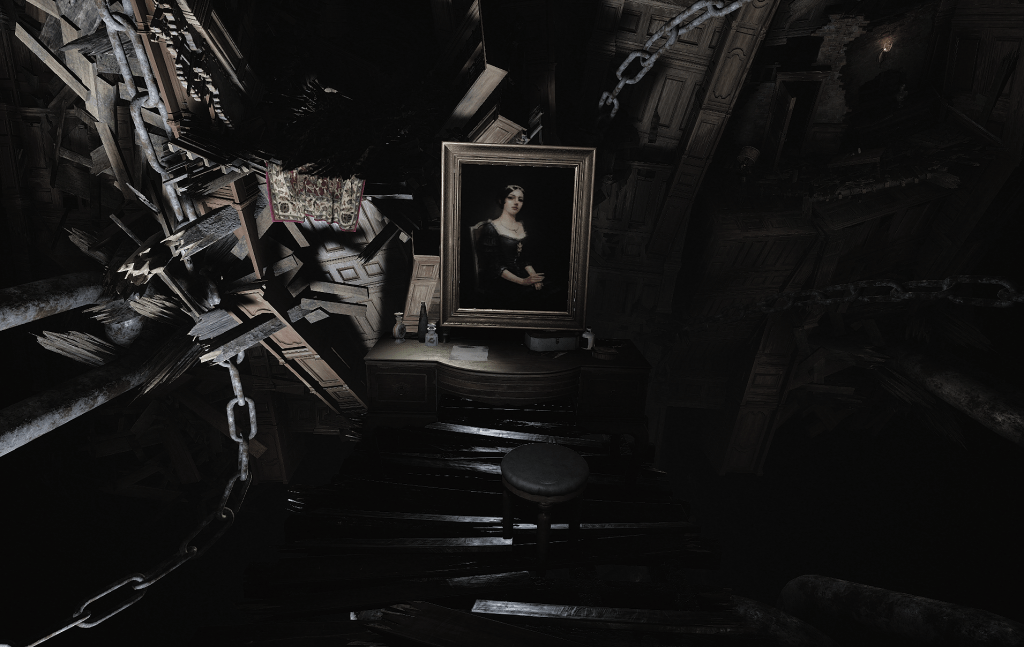
The first sequence starts in a storage room with the painter’s portrait. The main task is to find three items related to pain and place them in the correct spot in a room with a rotating painting. The player unlocks further sections of the house by rotating the painting, which reflects what is behind it. Each section is a repetition of the same corridor and the room with the item in different arrangements. The player walks the looped chained corridor looking for the correct room that contains the item. In this sequence players also have the first combat with the main enemy — a dark vision of the Musician — representing how she perceives herself.
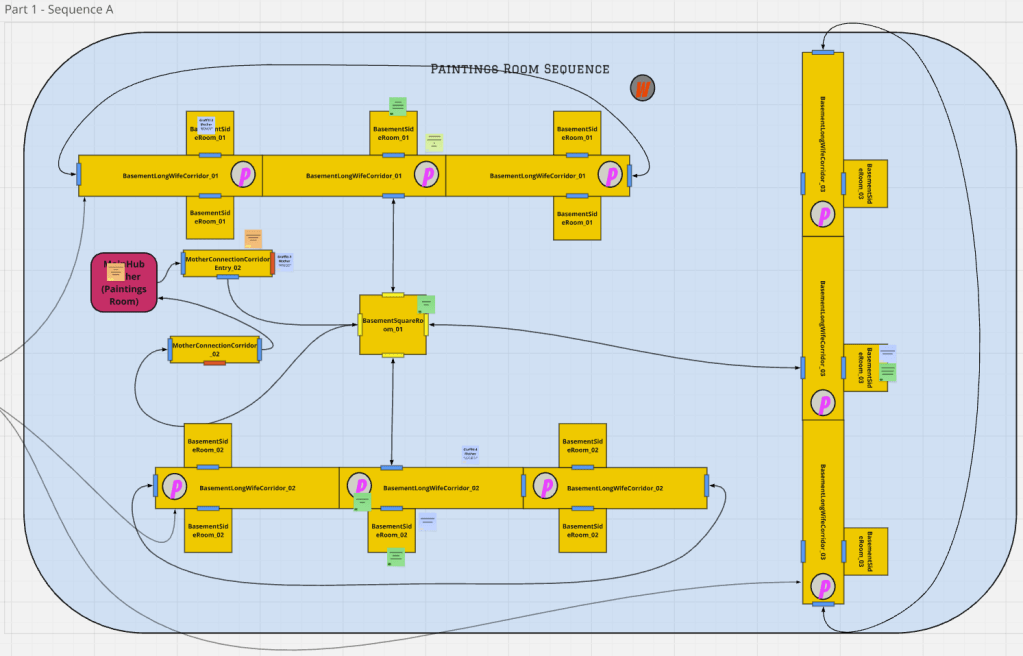
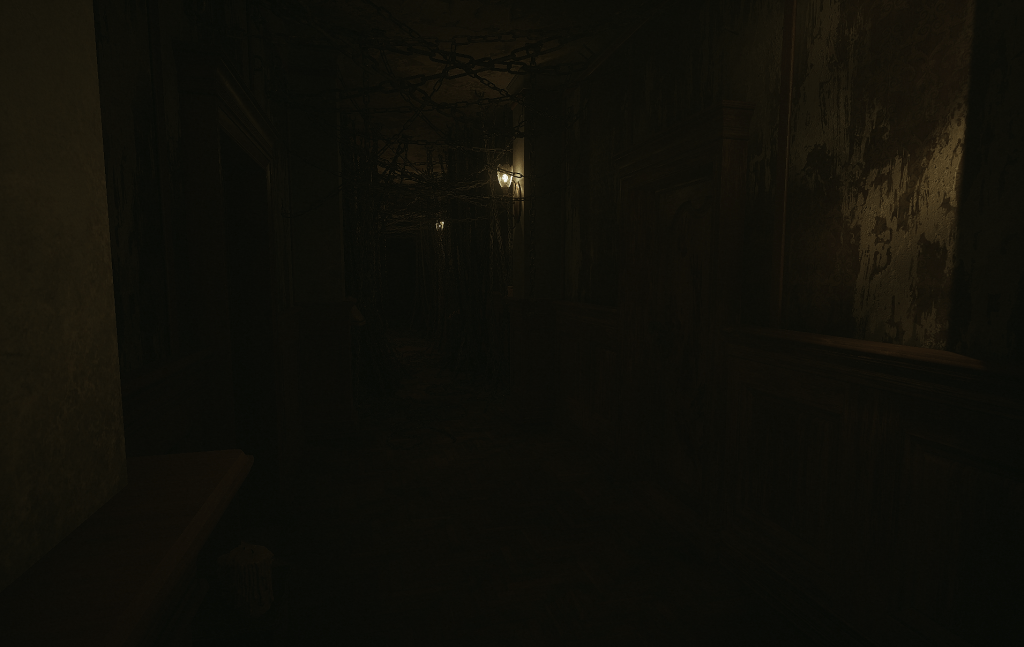
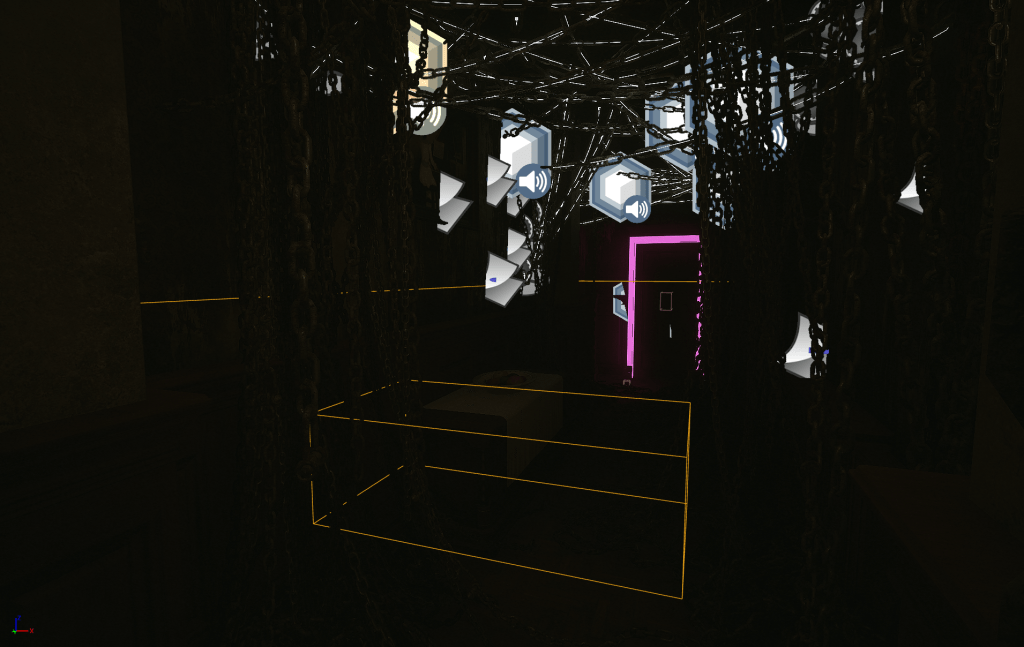
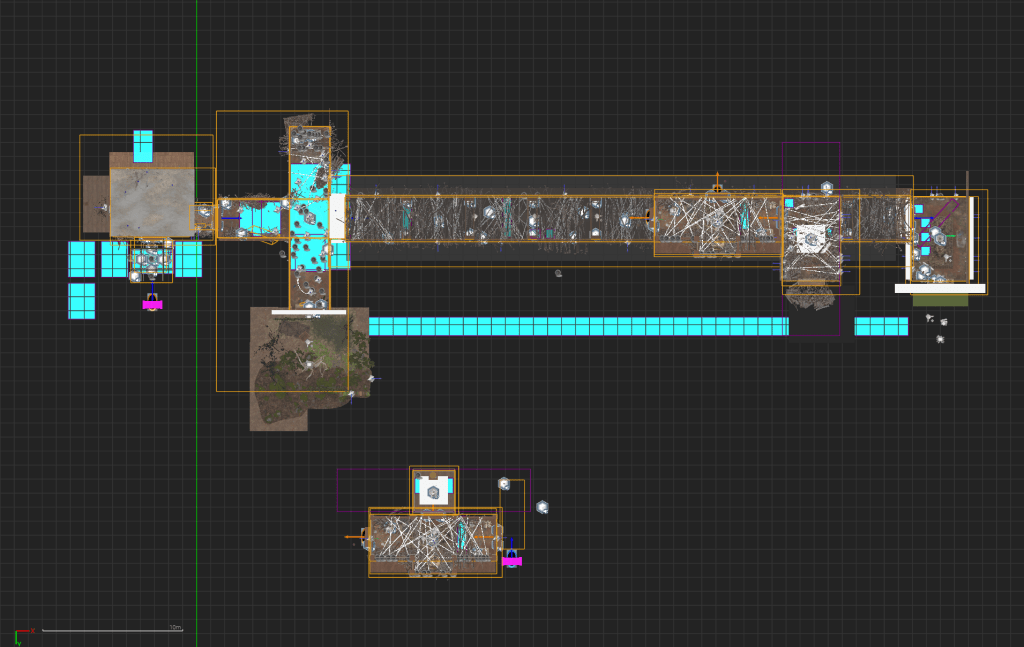
The sequence was split across multiple floors, built around a single duplicated corridor that looped. Interacting with the painting transports players to lower segments.
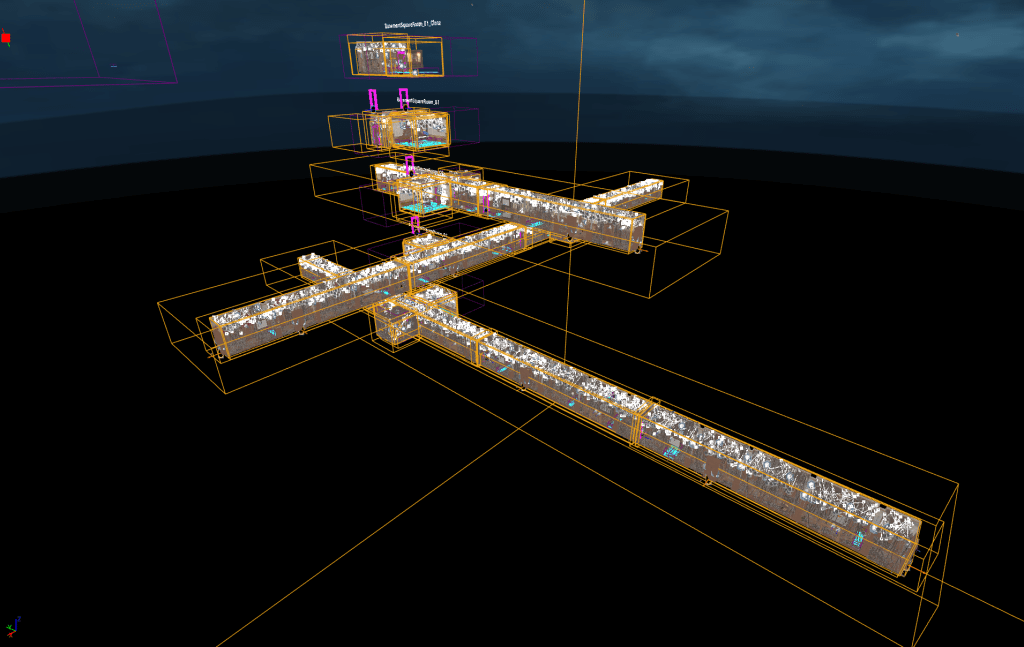
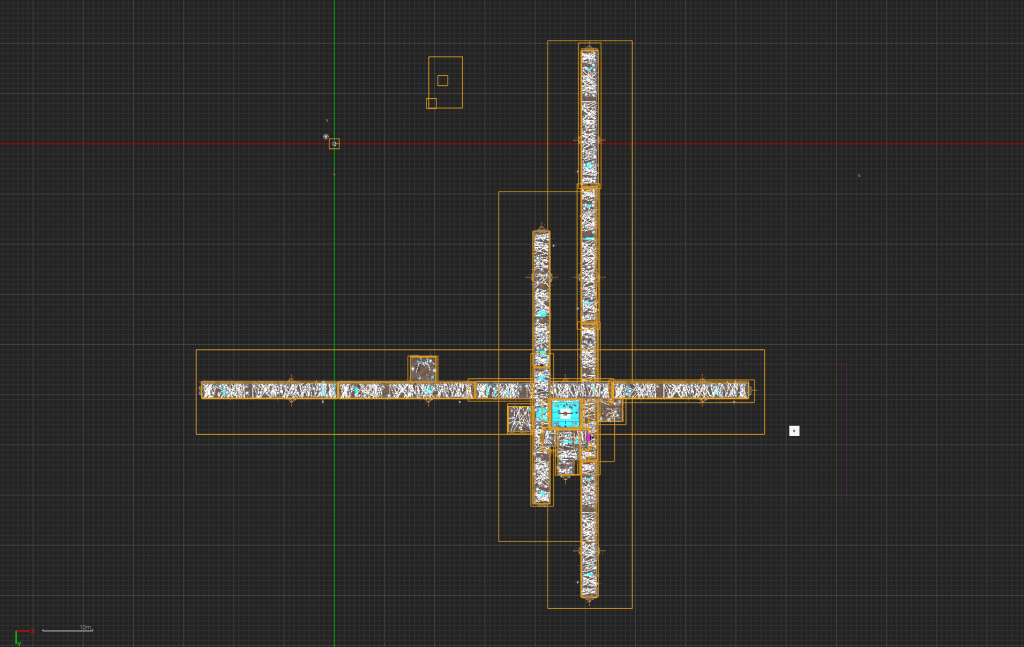
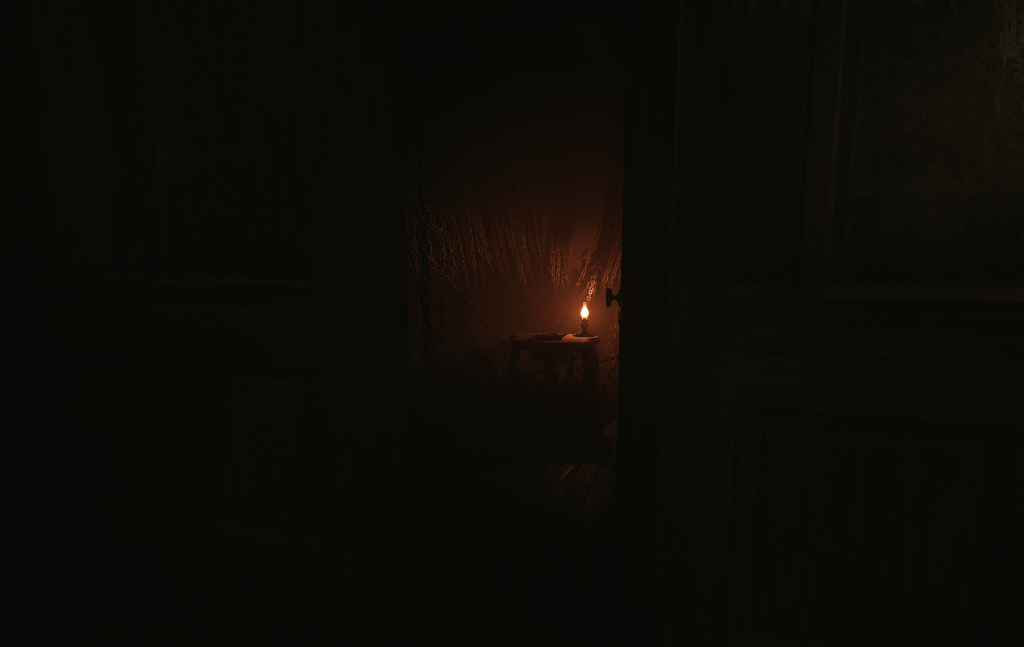
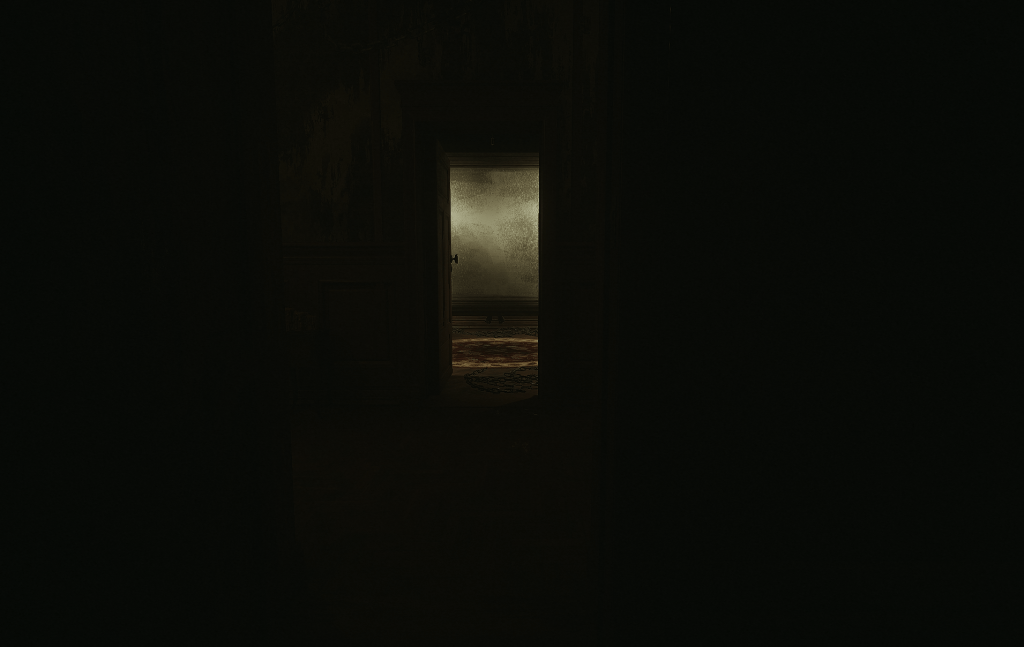
It starts in the Bedroom; upon exit, players are guided by light to a closet room with the Musician’s portrait. Entering triggers VO and a teleport into the first sequence.

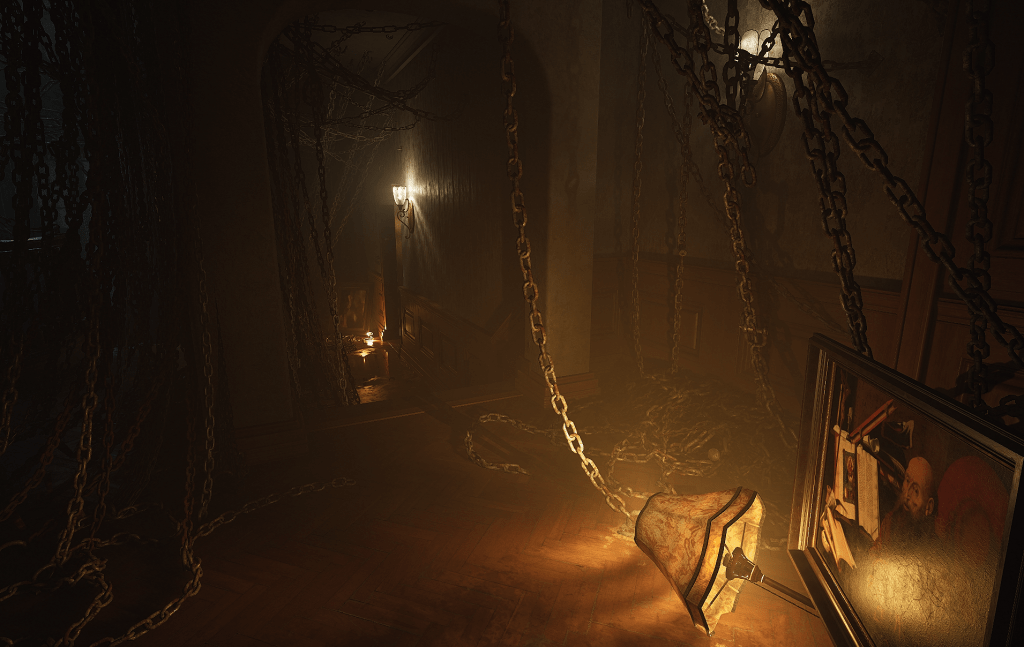

The first corridor is a connector; it’s the entry and exit to the sequence (you leave by breaking the chains on the door—symbolism). Under a spotlight on a hanging shelf, we placed a flashlight—a gameplay element for combat and interactions, analogous to the lantern from the Painter’s Story.
The painting is interactive and changes as you rotate it, revealing a door to the corridor sections.

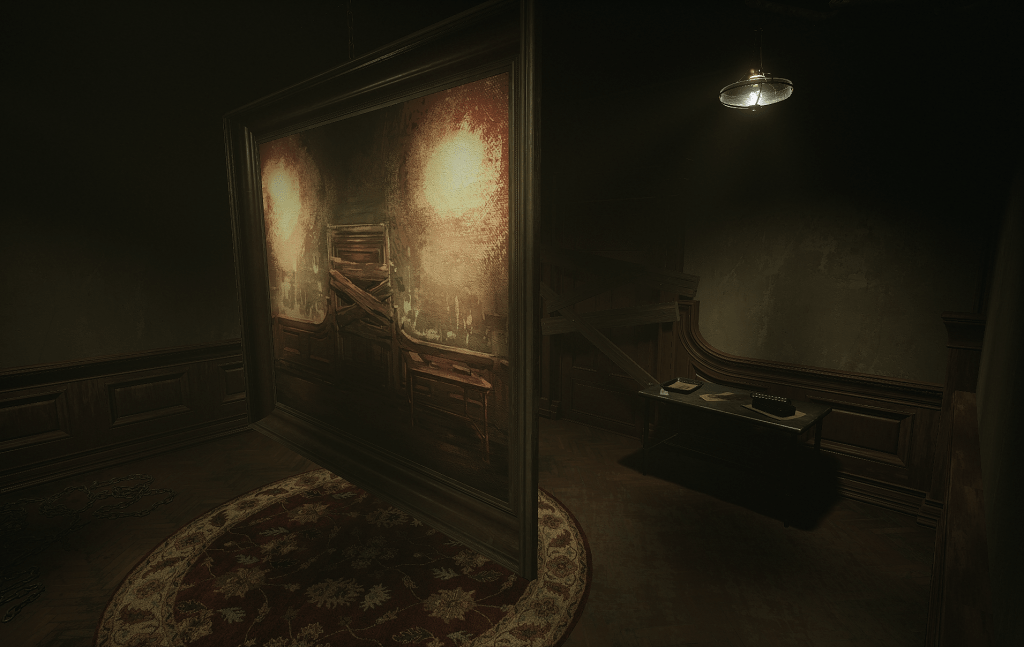
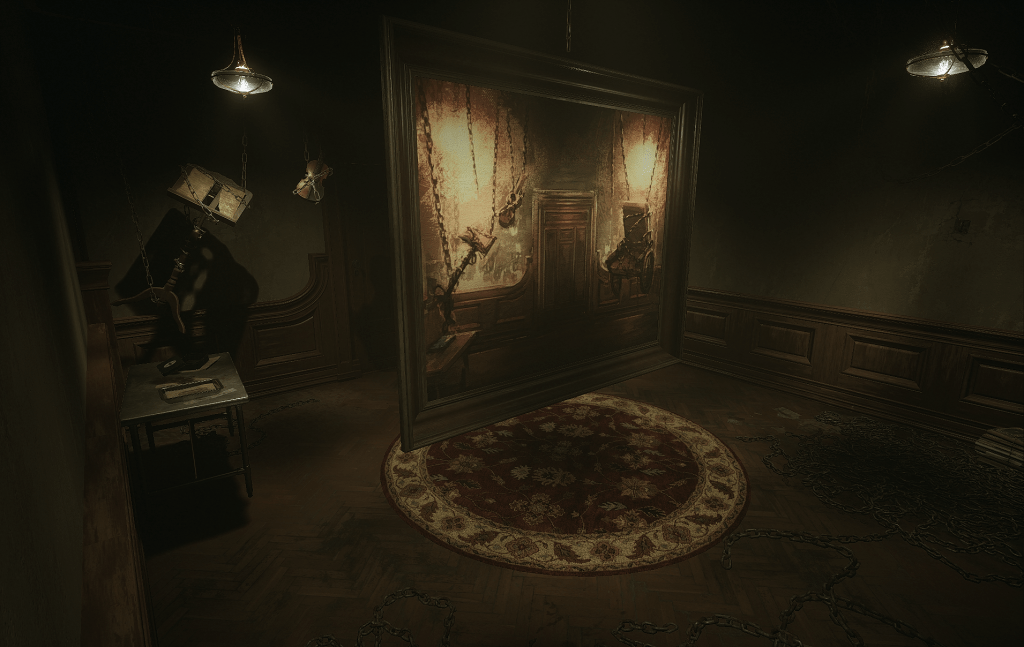
In the first section, the entrance to the item room is straight ahead, marked with handprints—meant to tutorialize and acclimate the player to the loop formula. Optional mood beats are set: looking right shows the Painter disappearing behind a closed door; after picking up the item, in the same spot behind the door, the Wife/Musician disappears.
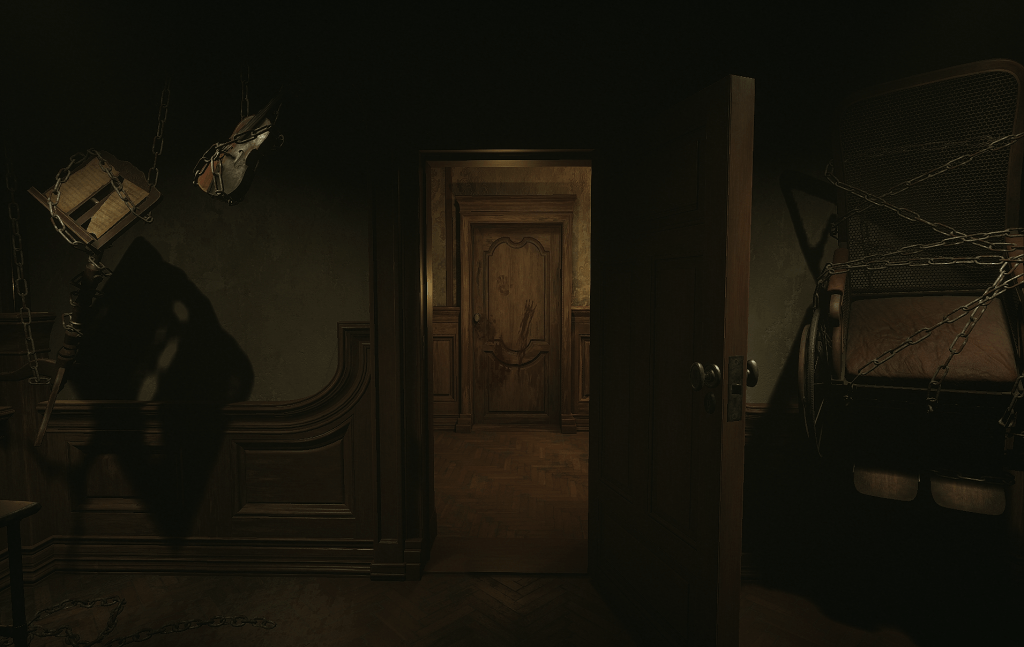
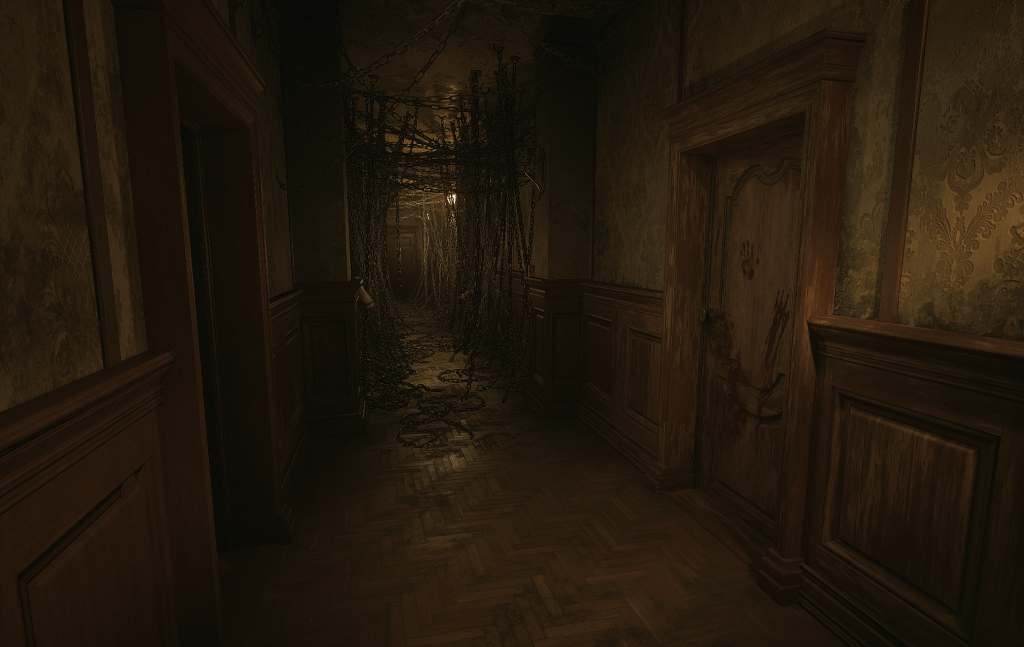
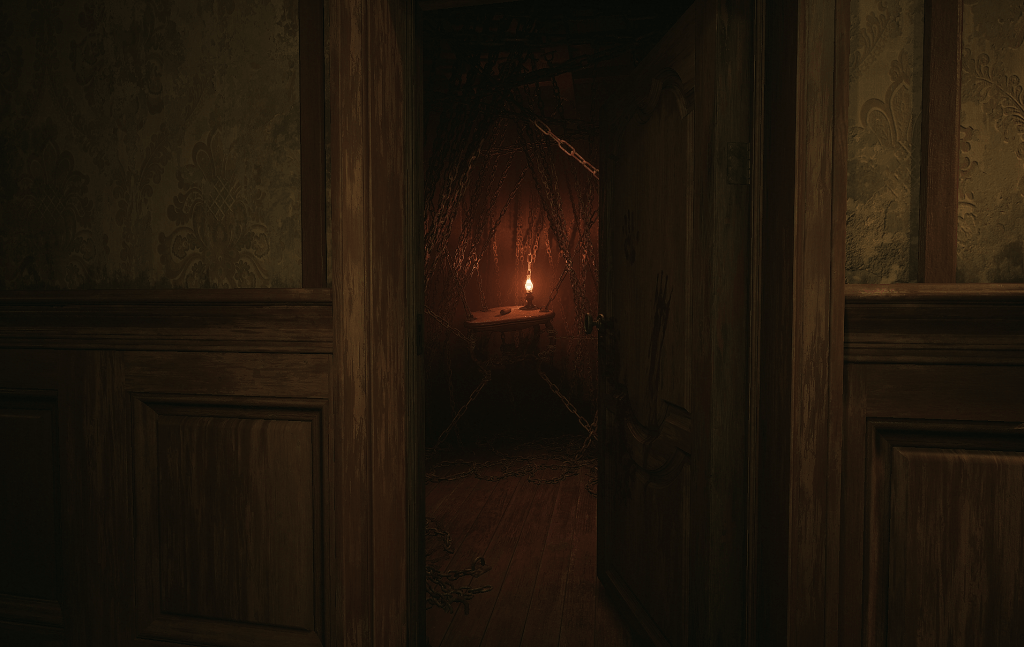

In the second section, the item room is moved to the second corridor—players are light-guided in that direction. Decals point toward the room.
Entering the room triggers an event with footsteps and shattering glass. On exit, you see a broken bowl that previously sat on the dresser. Stepping back into the corridor triggers the first encounter—players must flee to the room with the painting.

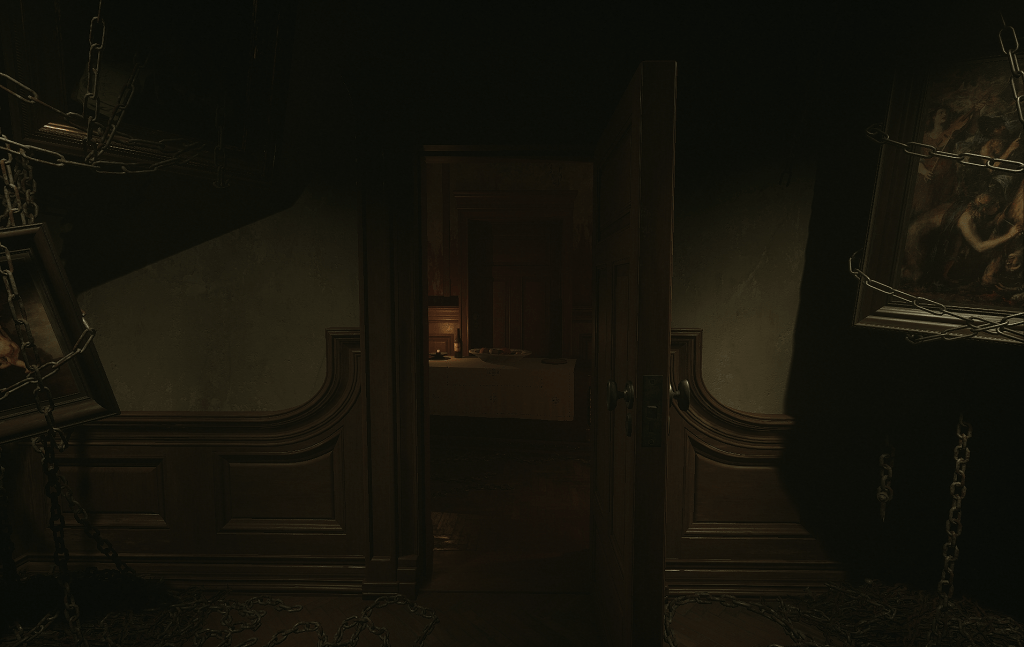
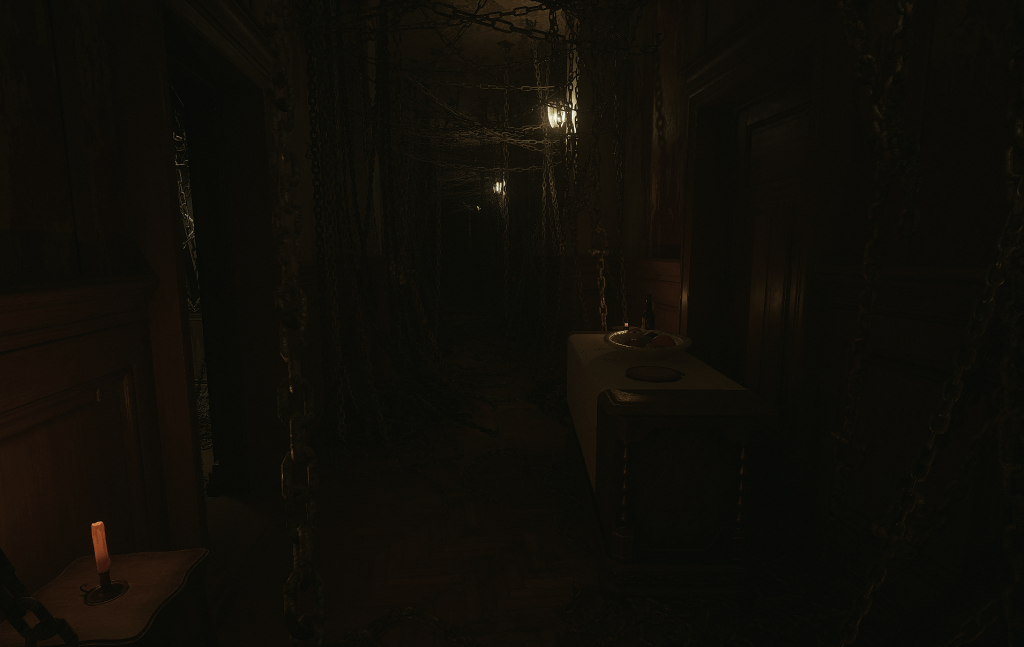
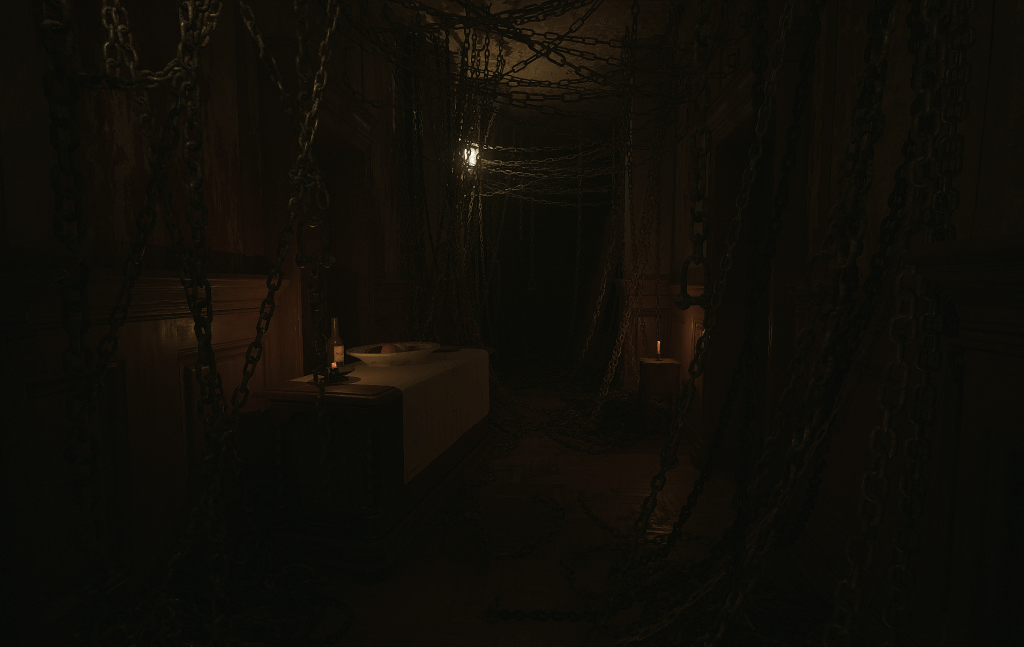
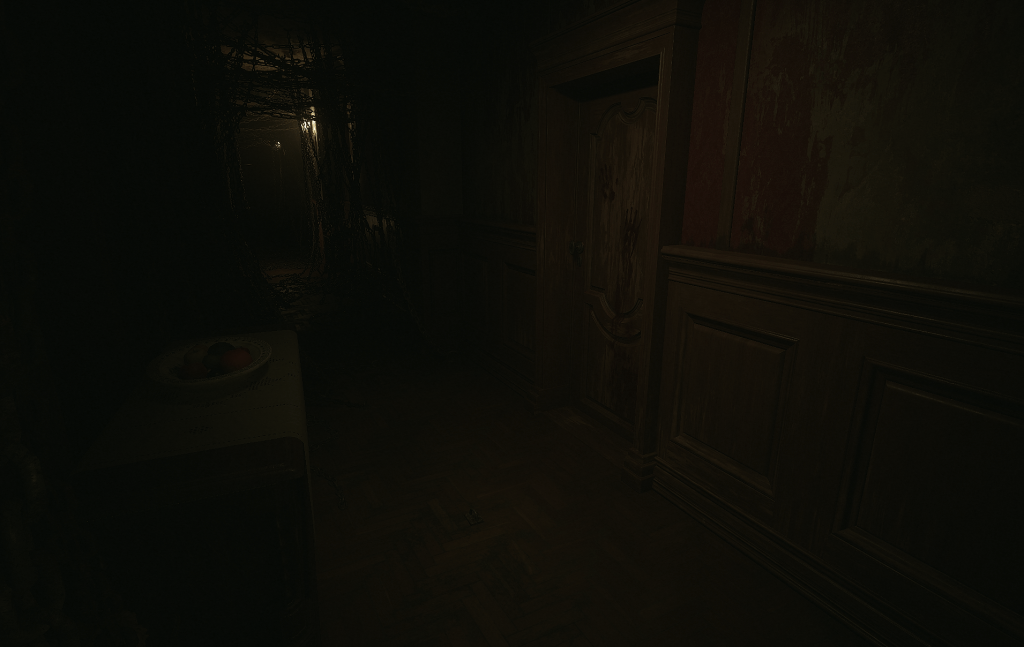
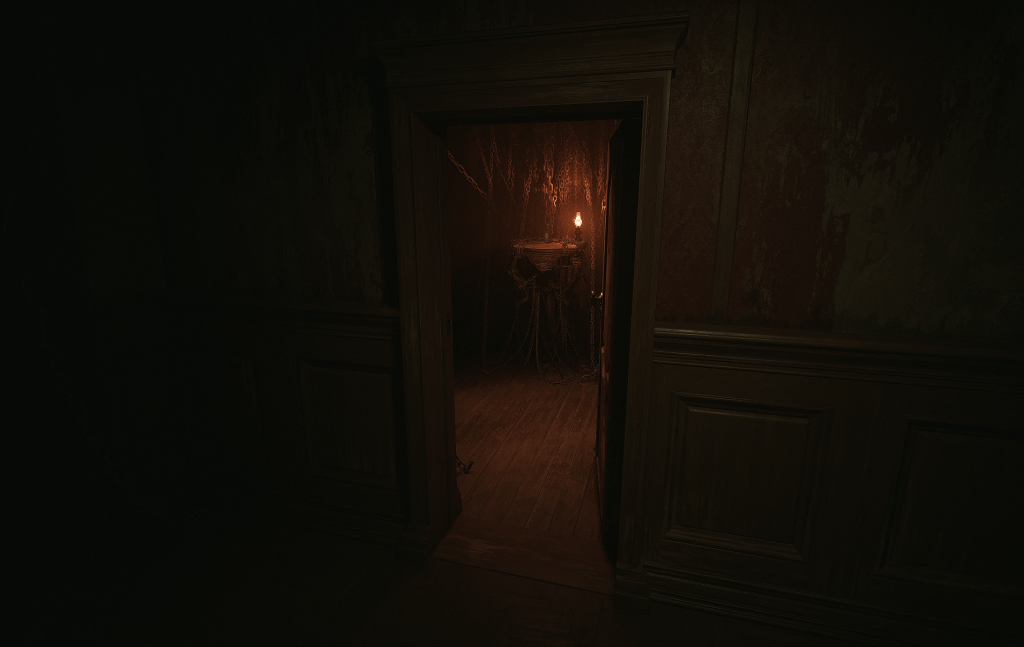

In the third section, the door to the item room is again straight ahead, but this time locked. The light once more leads to the second corridor, where a key sits on a dresser at the end, properly lit. Picking up the key and returning through the corridor triggers a combat sequence; this time players are effectively forced to use the flashlight on the Wife/Musician.
Combat ends after unlocking the door with the key.

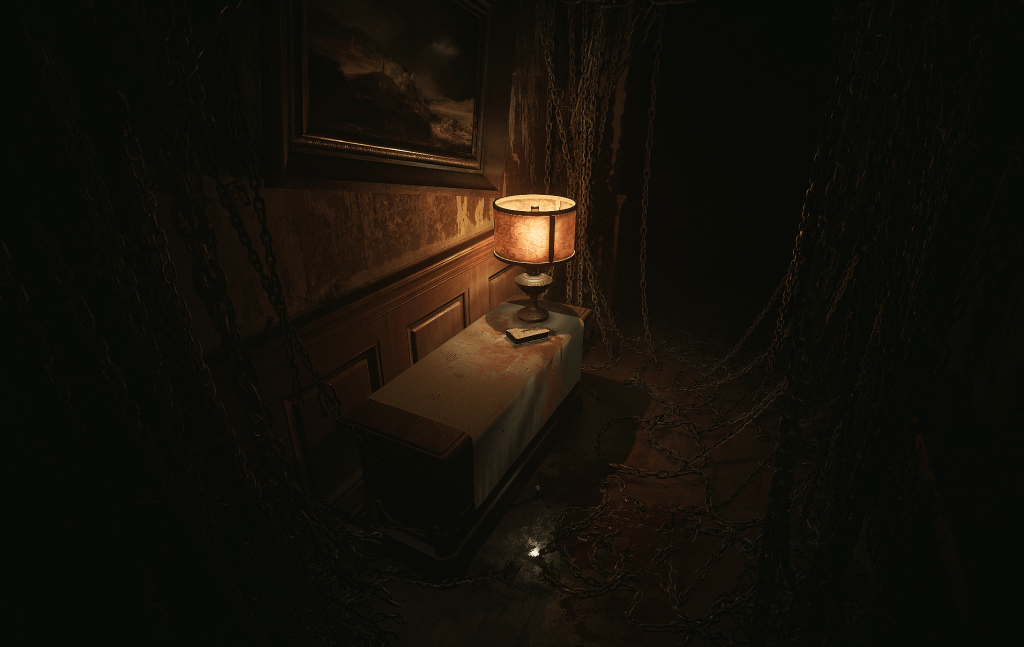
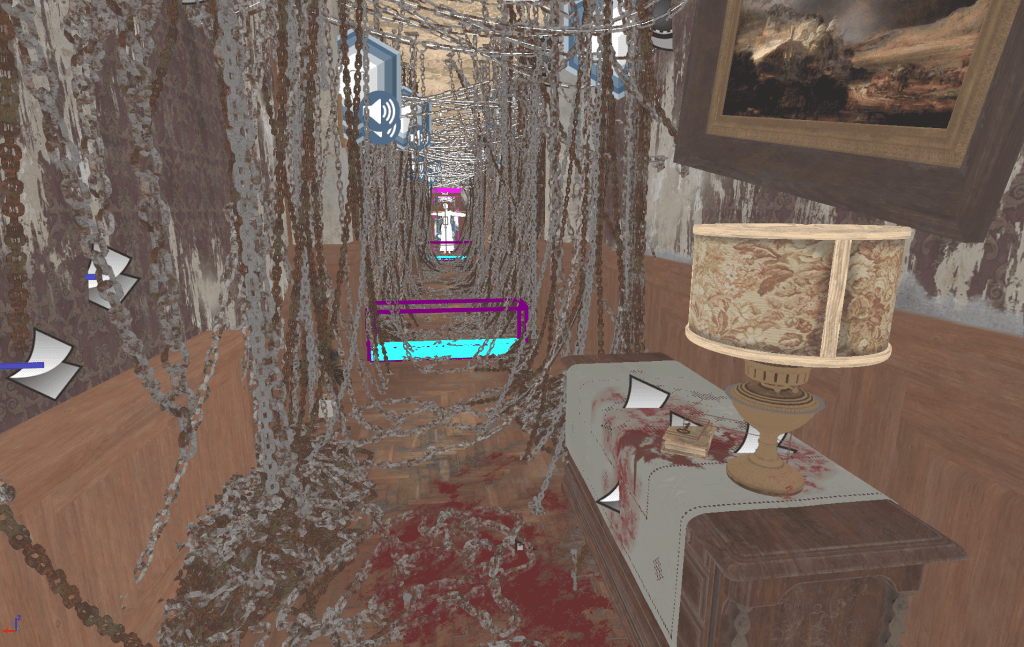
There’s a final mood-driven horror beat with a hanging figure behind the painting (feet visible). The sequence ends, and rotating the painting returns you to the first room, where the boards that previously covered the door are now broken.

Sequence 2
Motif: Confinement, claustrophobia
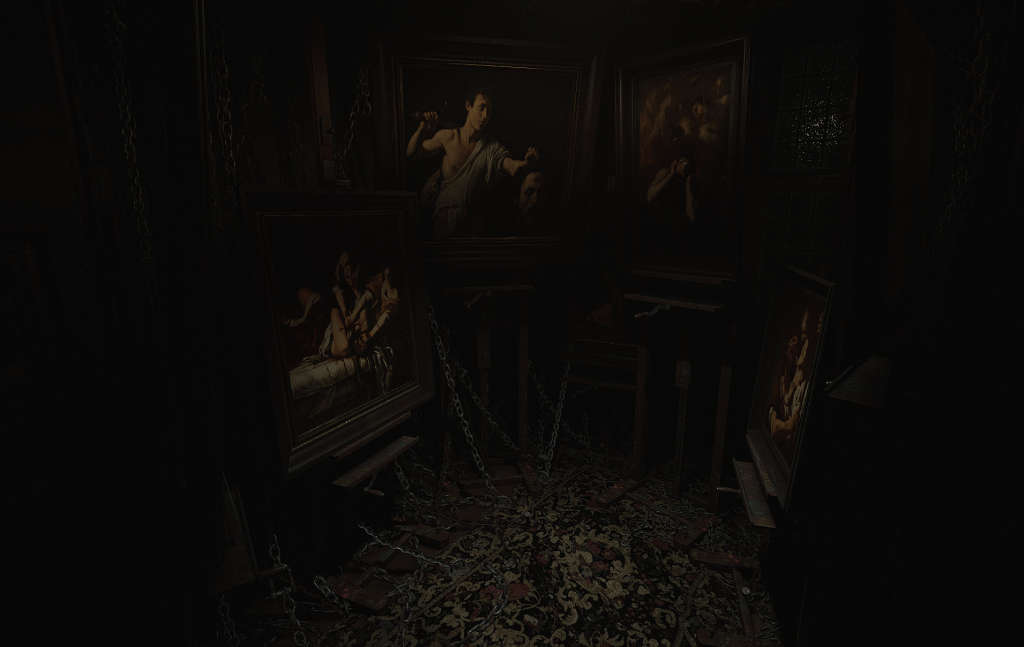
The second sequence starts in the smallest room in the house — the closet under the stairs — foreshadowing the main motif of the sequence: claustrophobia. Reused rooms here are smaller, more claustrophobic. Walls tighten. The motif of being trapped is reinforced by a cage and a bird trapped inside it.

After exiting the closet, players see chains snapping, unlocking the path to the next sequence, which begins in a second closet – Players are guided by the light.


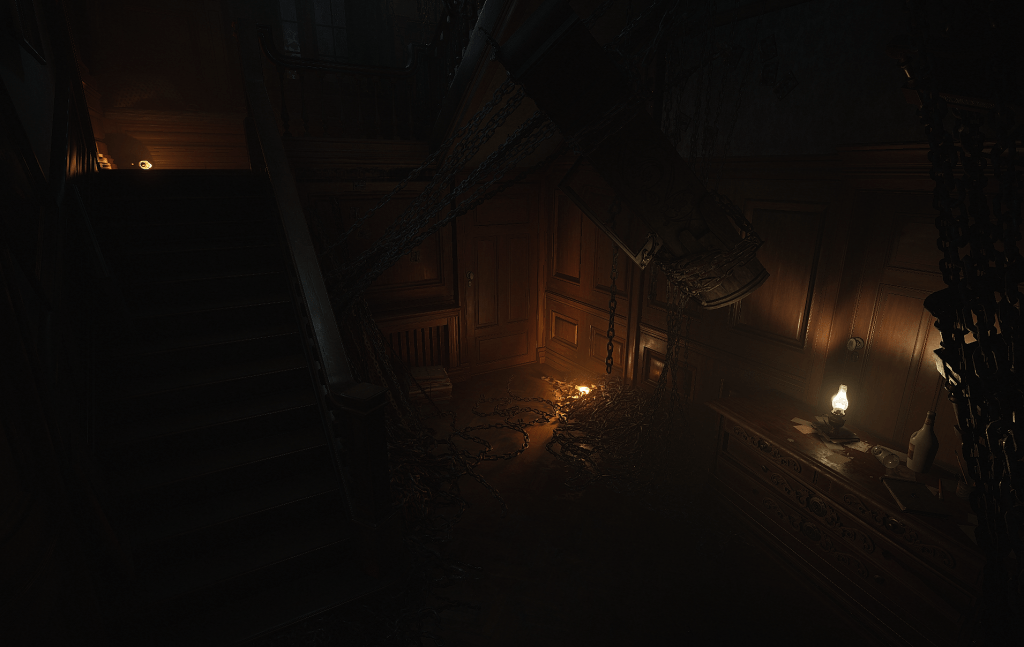
The first room is a tight space with an empty birdcage. Upon entering, the door closes and, when you turn around, the cage is gone and the walls begin to close in on the player, accompanied by the sound of a bird battering against cage walls—symbolizing the protagonist’s state and her sense of entrapment.
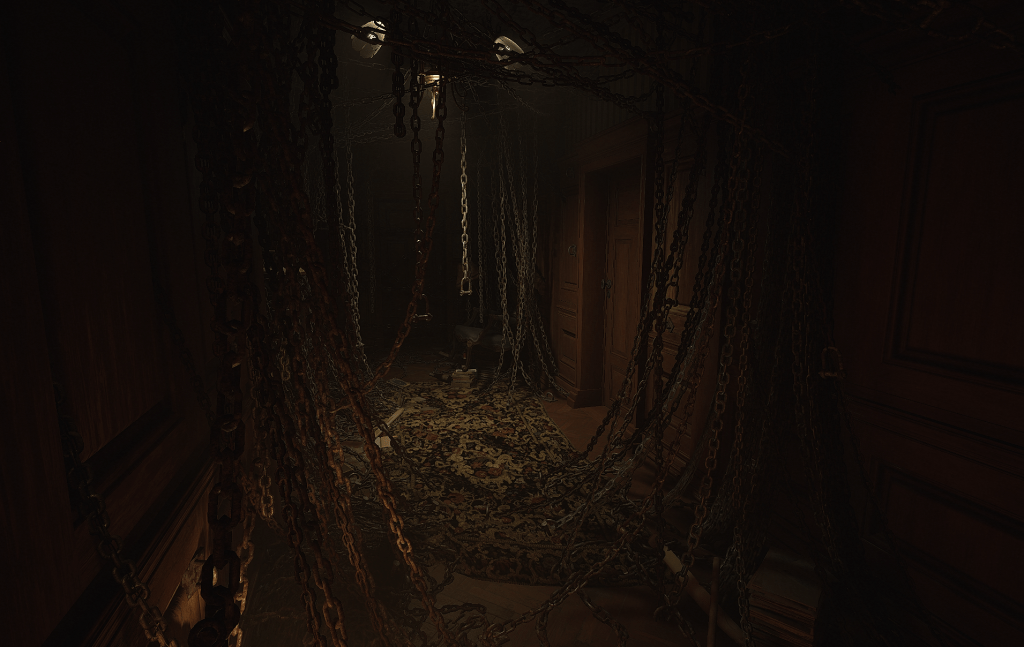
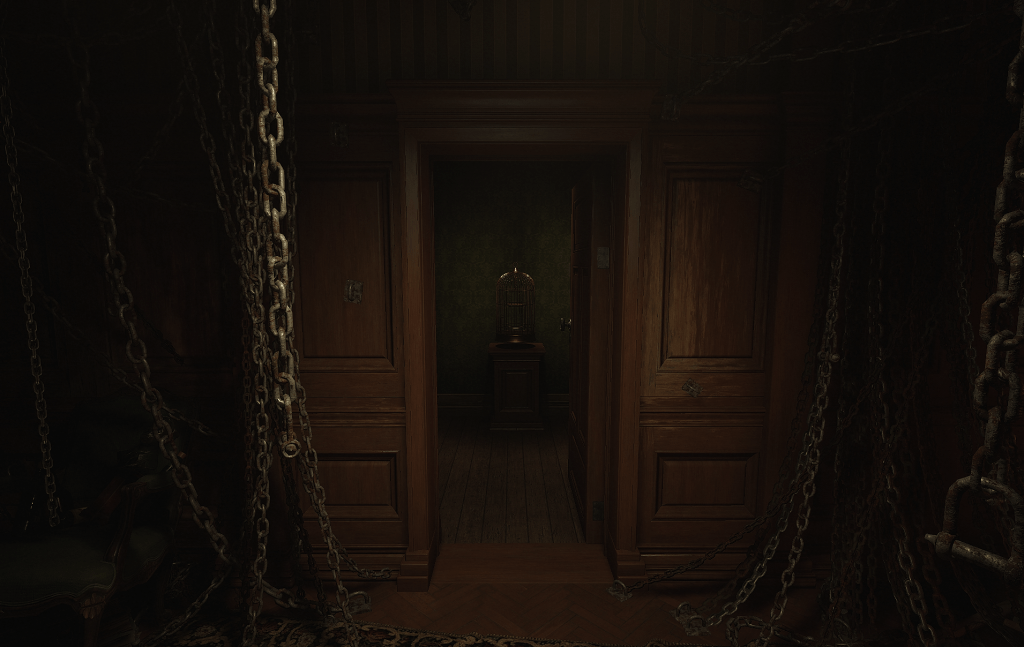
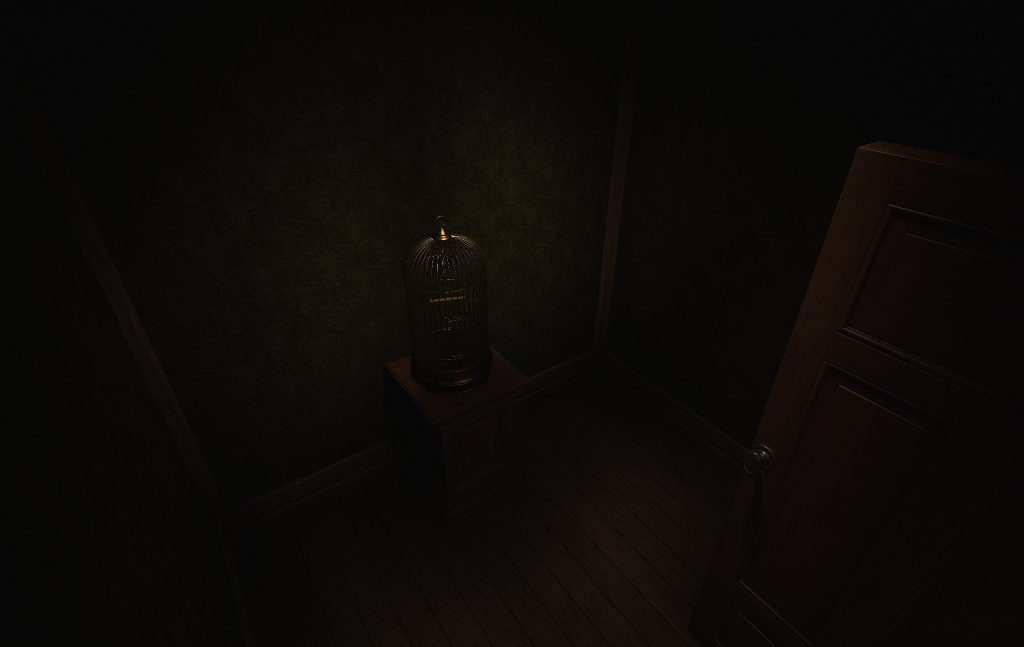
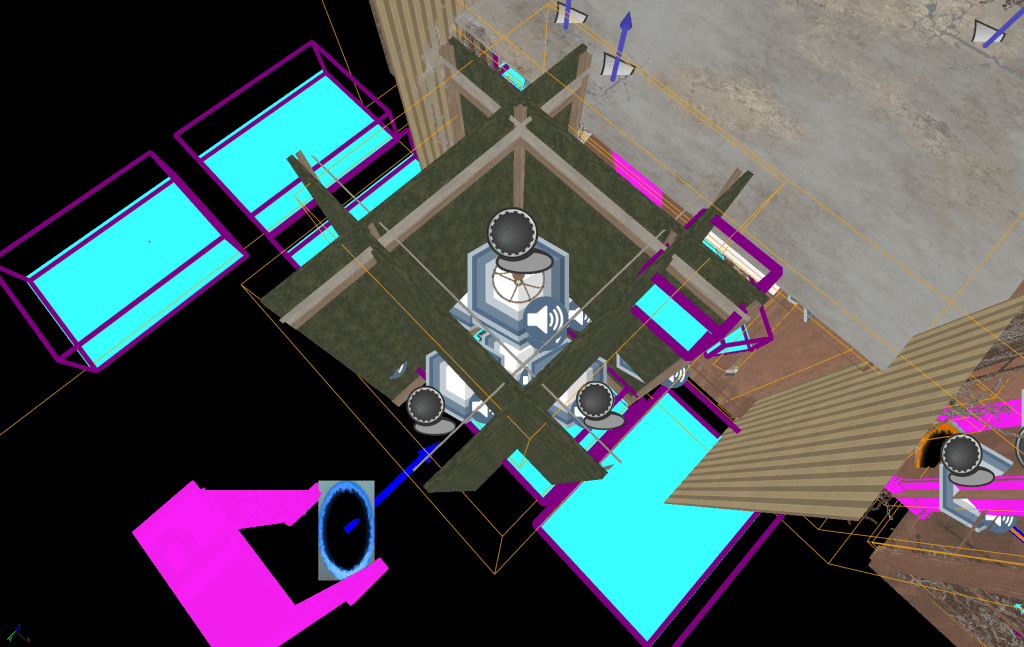
After exiting, players arrive at the shrunken room known from the Painter’s Story. A mood beat plays, after which the wardrobe doors open, revealing a passage to the next room, marked with the scales icon as a choice room.
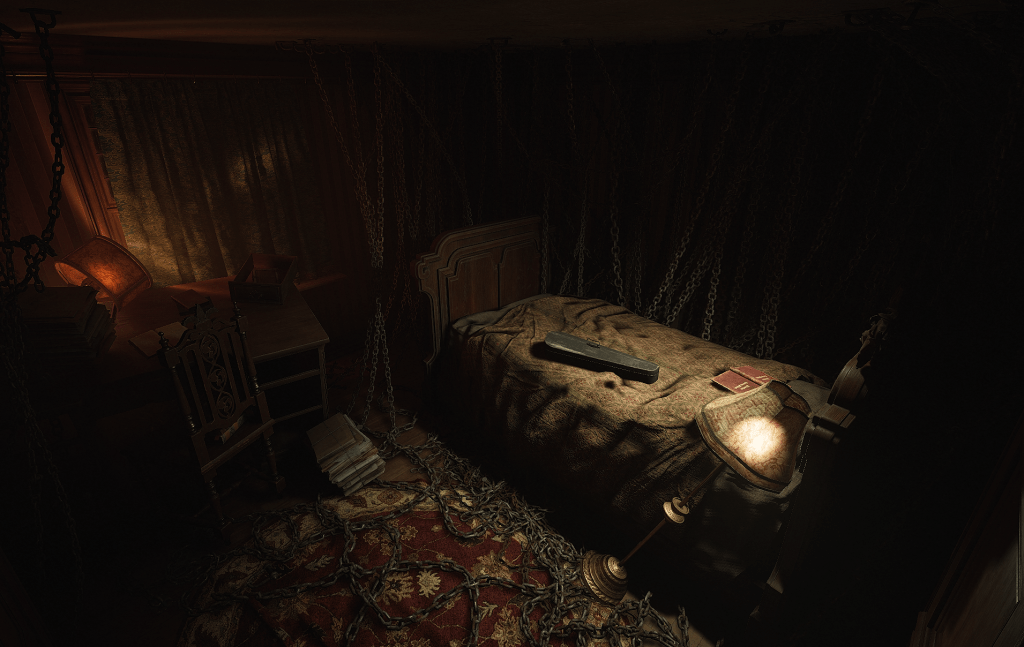


Here, players must choose whether to place the dead bird by the open window – suggesting a will to escape/free the protagonist – or to lock it in the cage, implying acceptance of her fate.
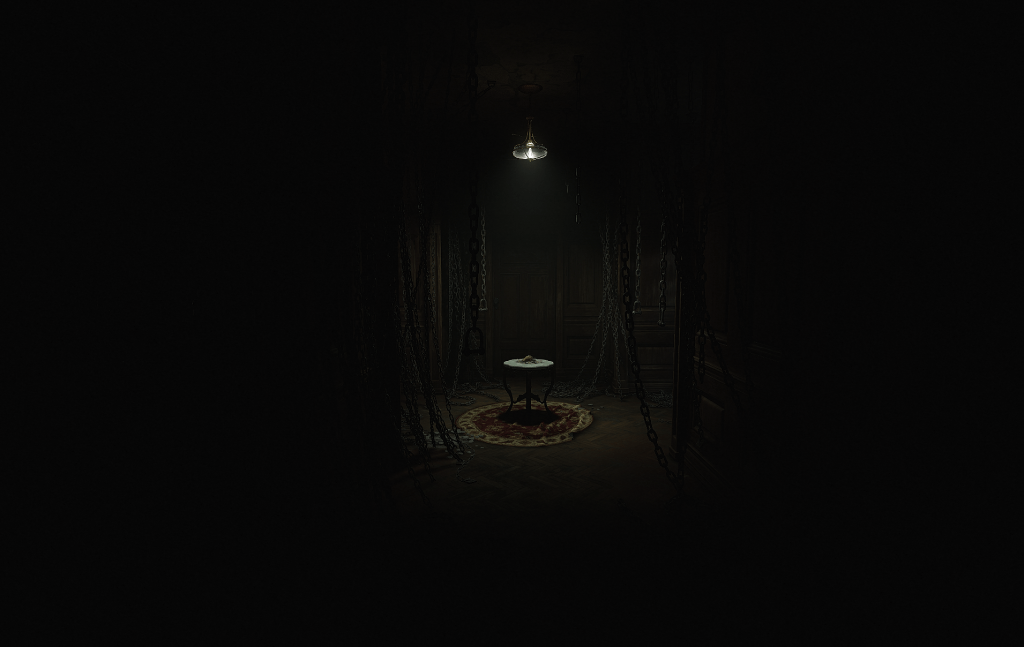

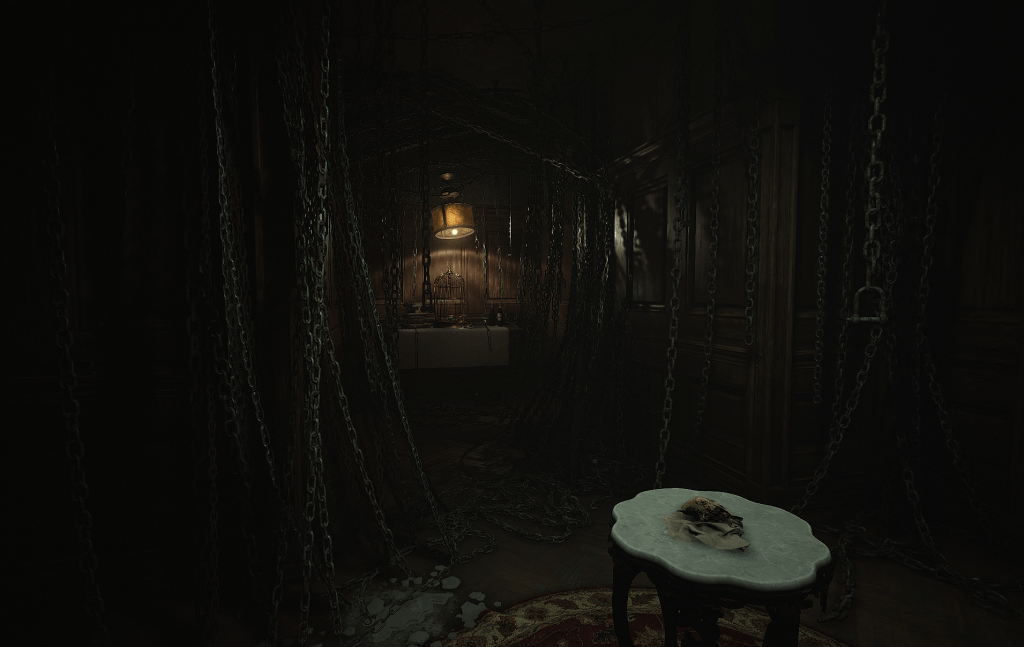
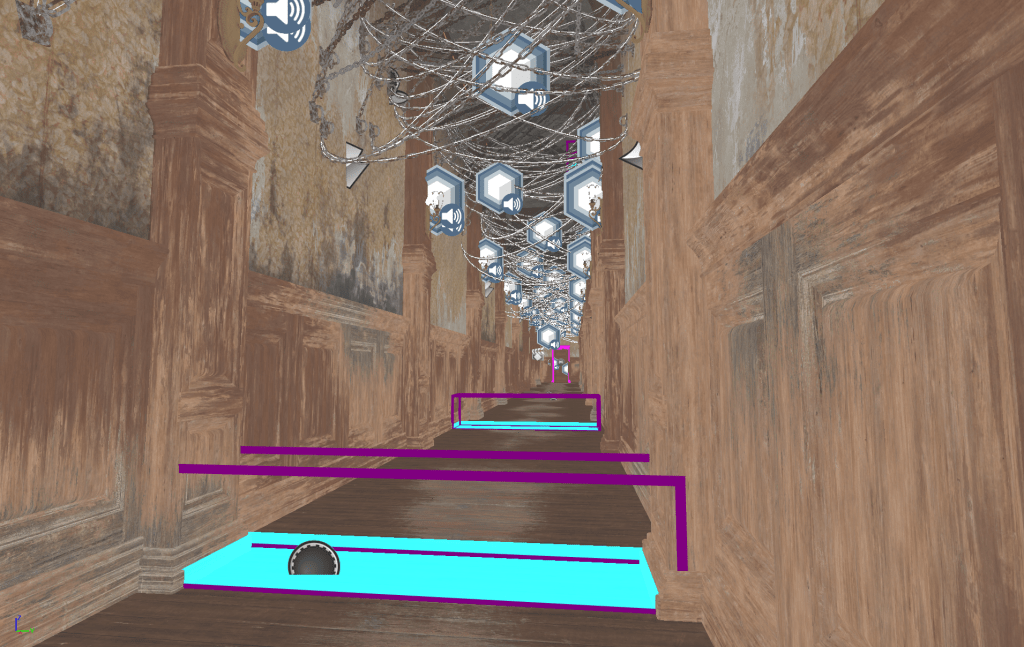
The next room is a long, narrow corridor that begins to constrict, forcing players to sprint to the exit door.

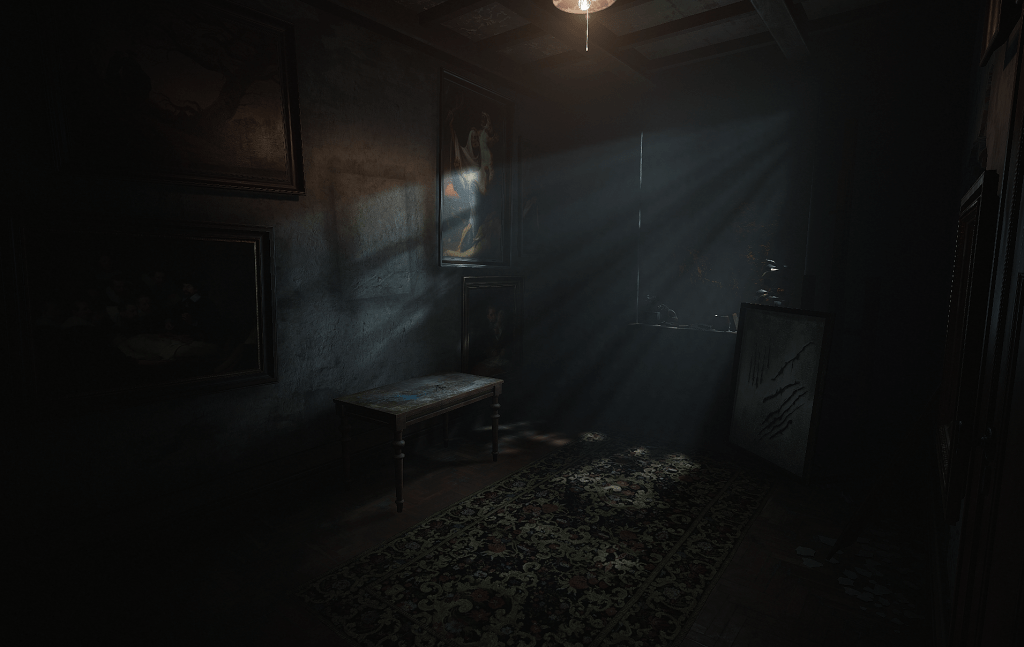
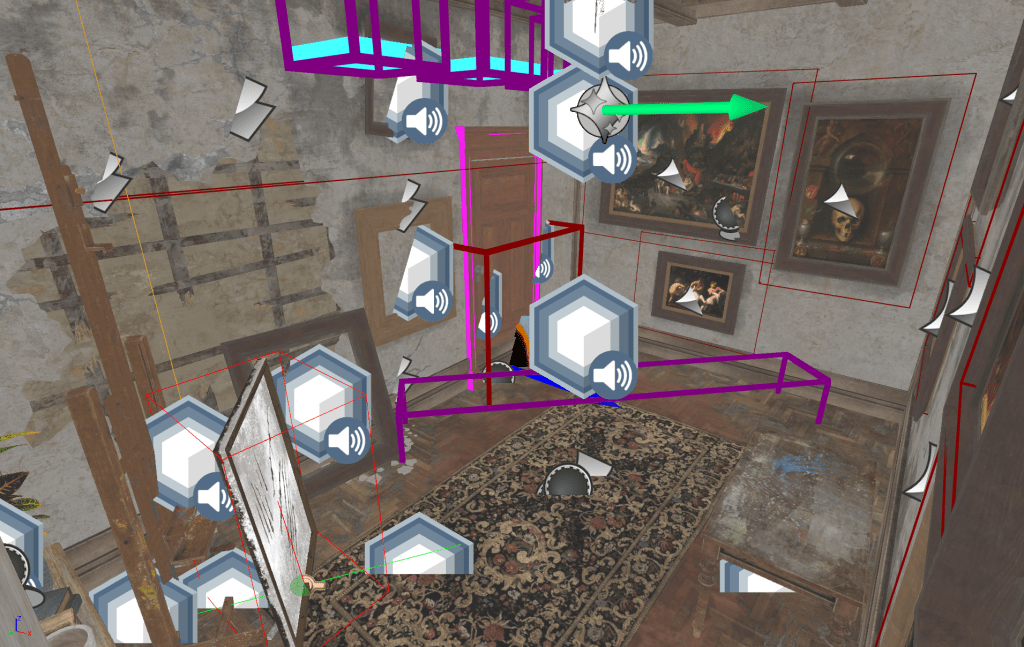
In the following room, a torn painting falls after interaction, revealing the Musician’s deformed face—suggesting how she sees herself and her inability to accept it. The walls in the room begin to close in.
Chapter 1 Finale
Motif: broken marriage
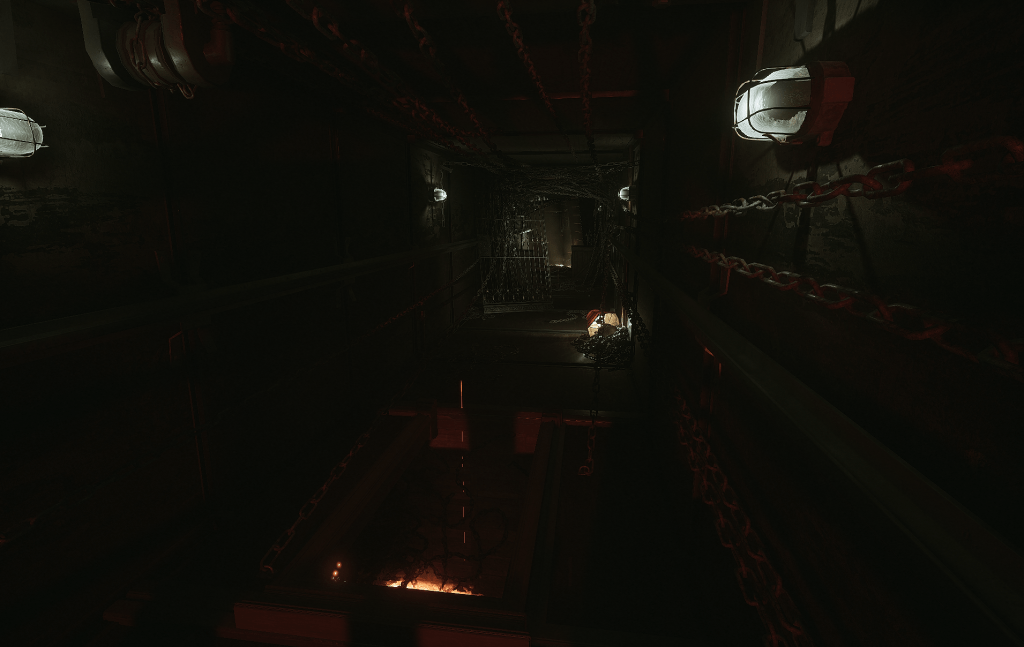
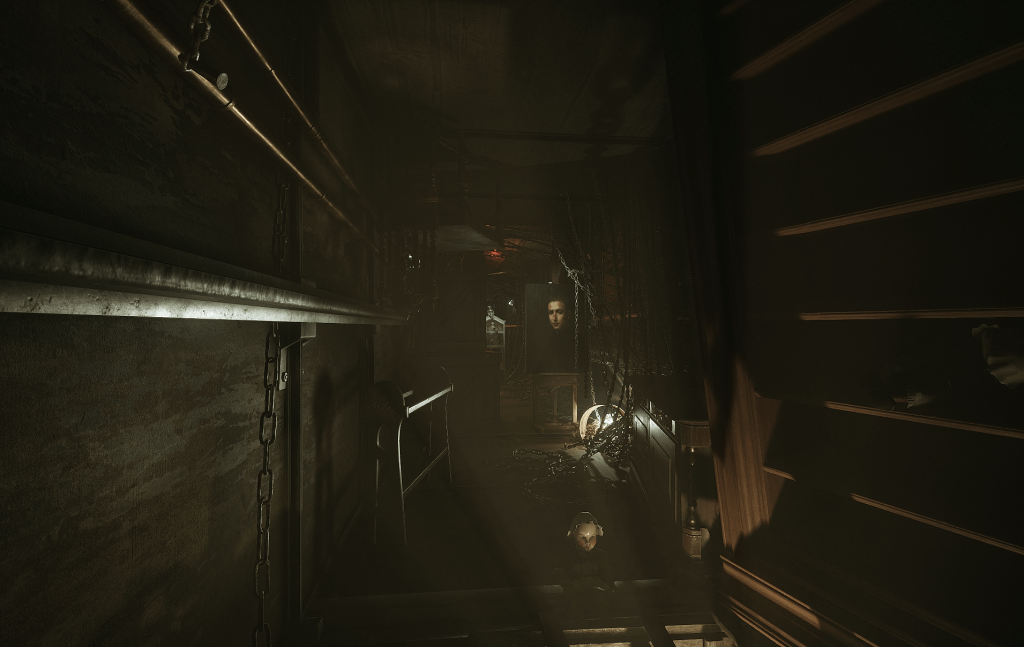
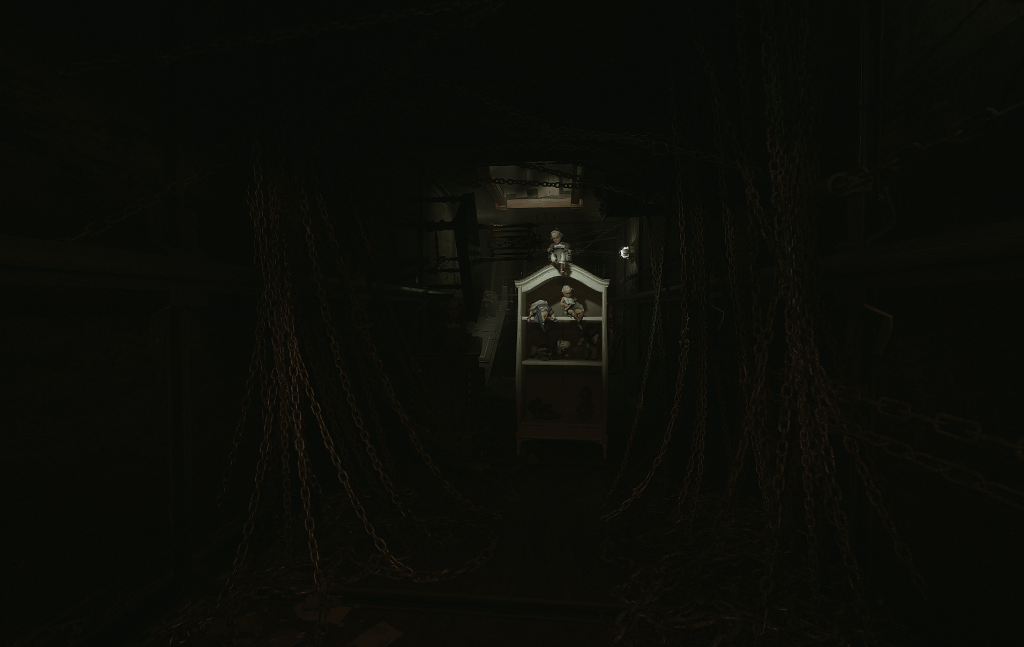
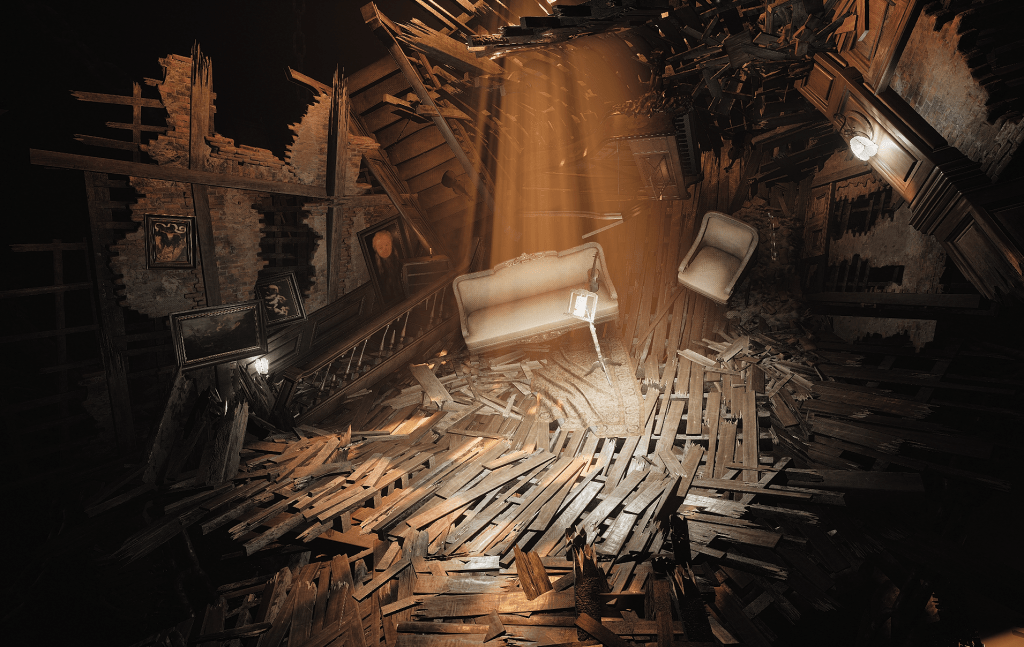
This sequence mirrors a scene from the base game — in the Painter’s story in Chapter 2 we ride an elevator and on one floor we see the wife walking toward us — in this sequence we see that from the Musician’s perspective. We fall into the elevator shaft, gravity changes, and to escape the falling elevator we must discard items related to family and the protagonist’s passion.
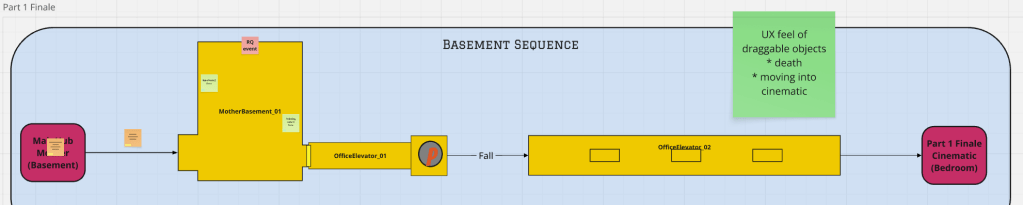

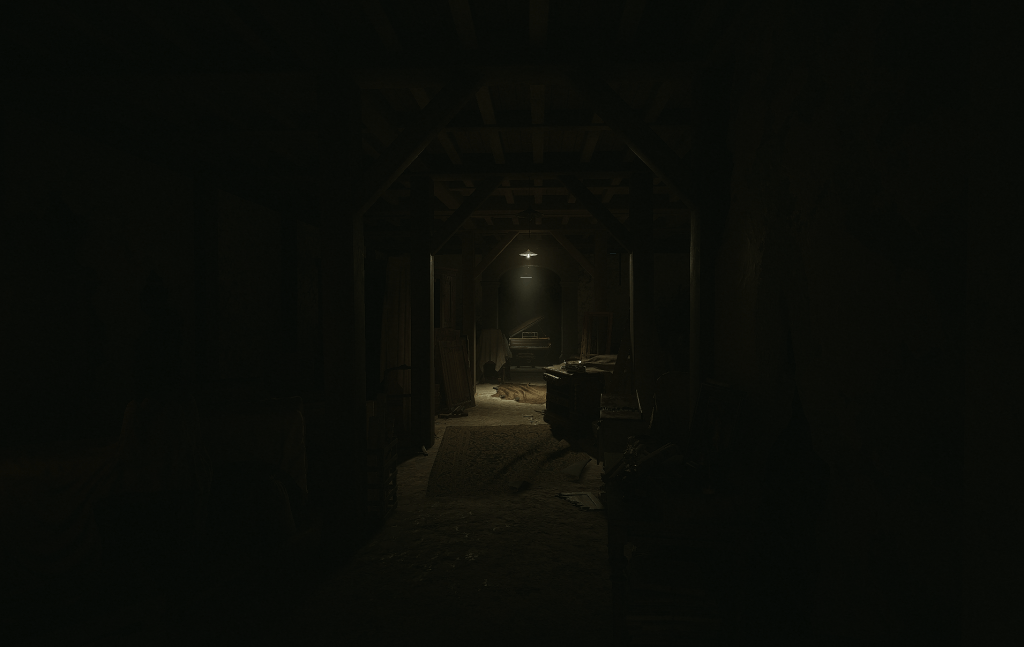
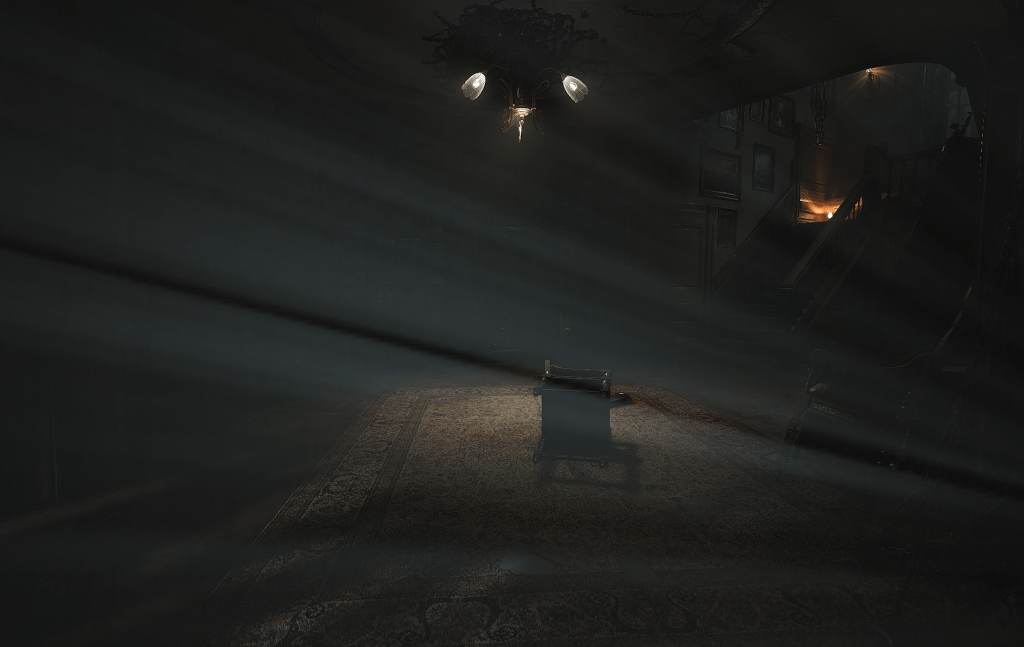
After leaving the Closet, the light leads to the Basement, where a piano – Musician’s artifact – can be seen at the far end. After the interaction and event, the players turn around and see a transformed Basement leading to a room with an elevator.



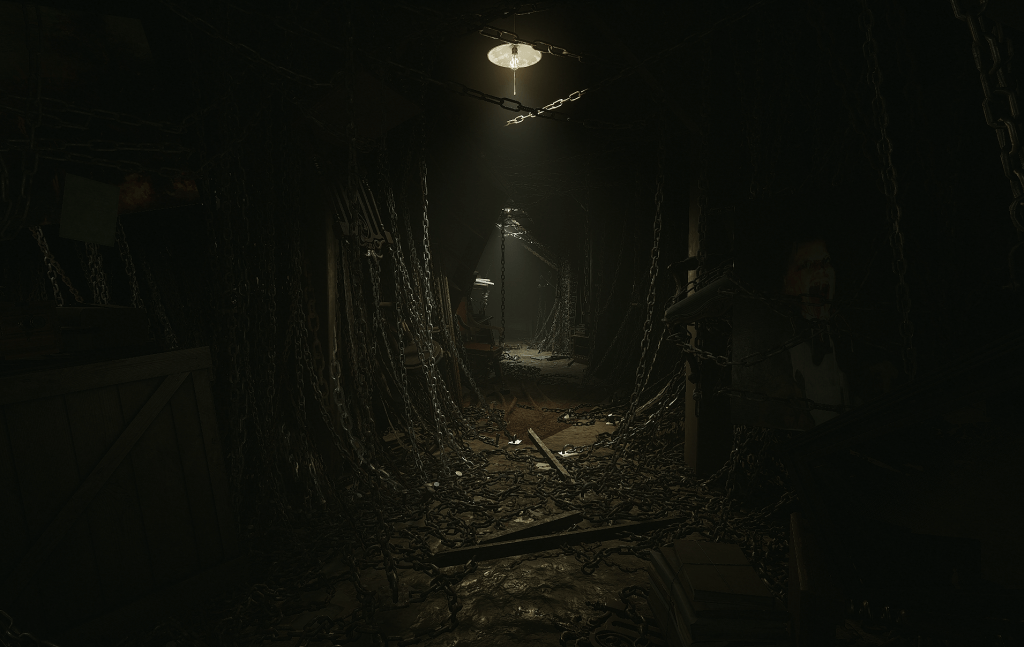
A mirrored scene from The Painter’s Story Chapter 2.
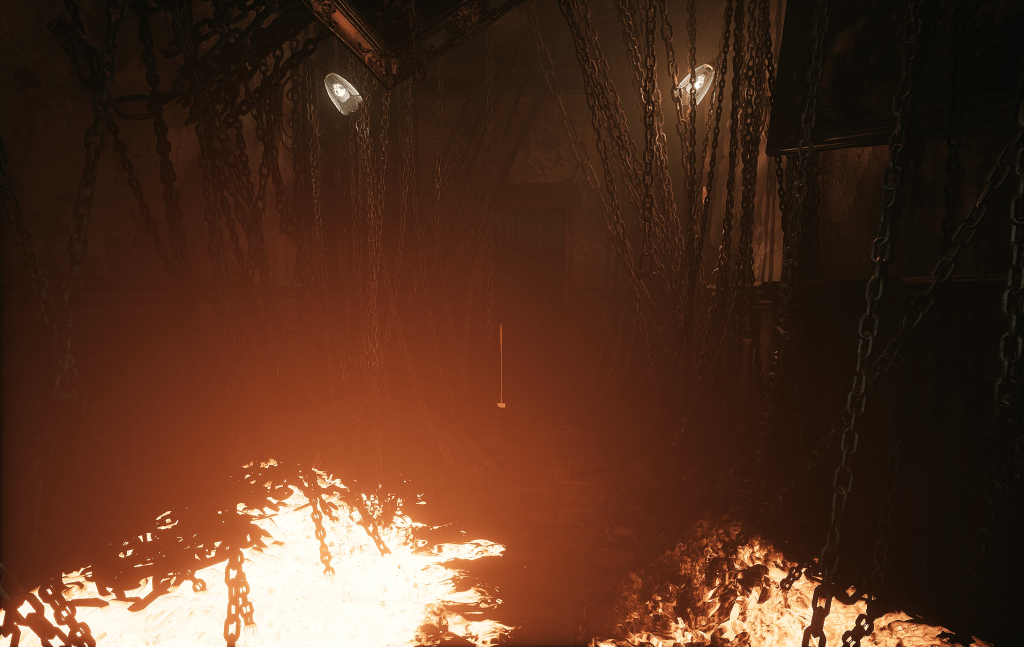

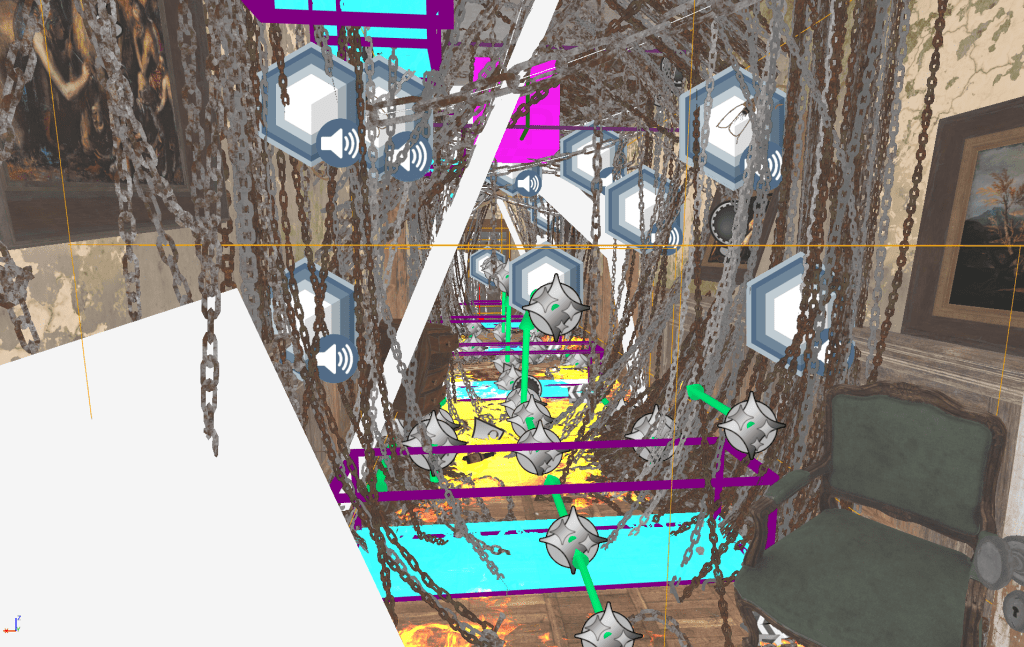
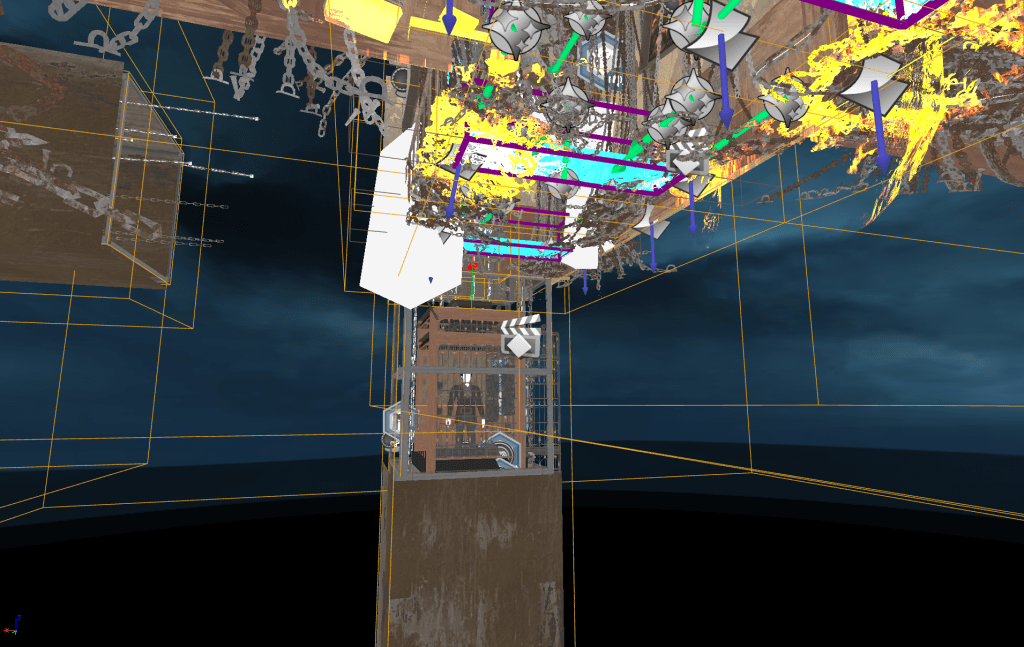
Casting off elements related to the Painter’s life – symbolic of his burdens.


Chapter 2
Sequence 1
Motif: Return to capability
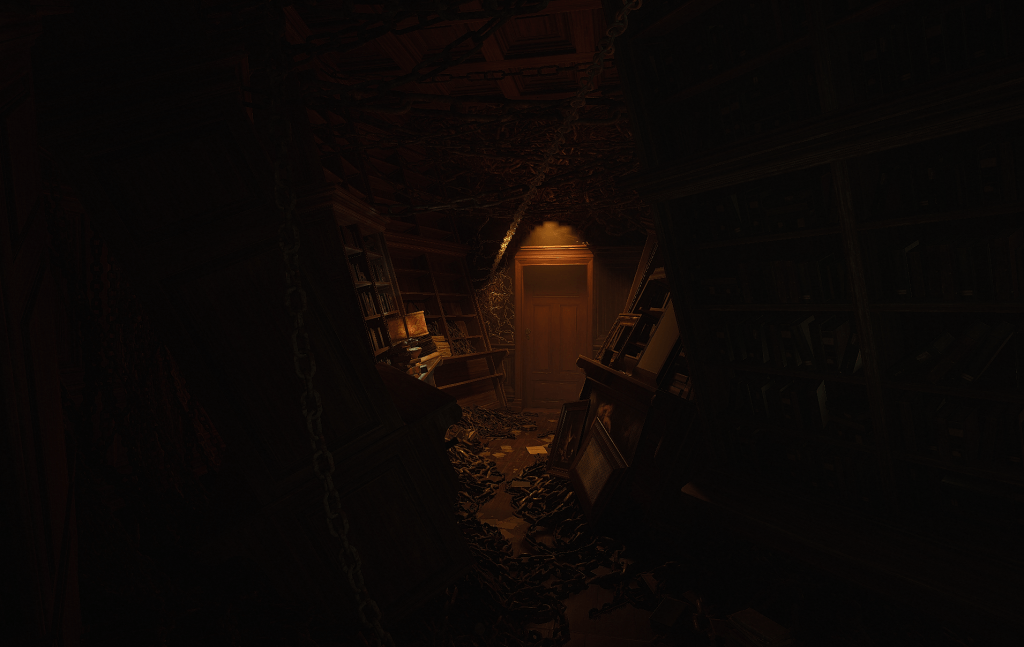
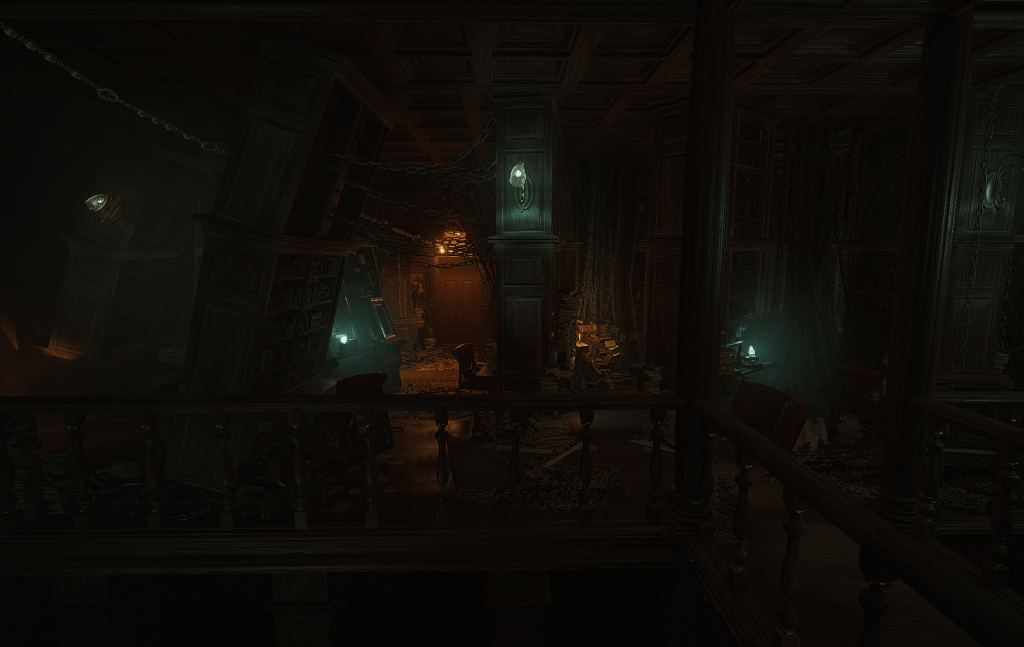
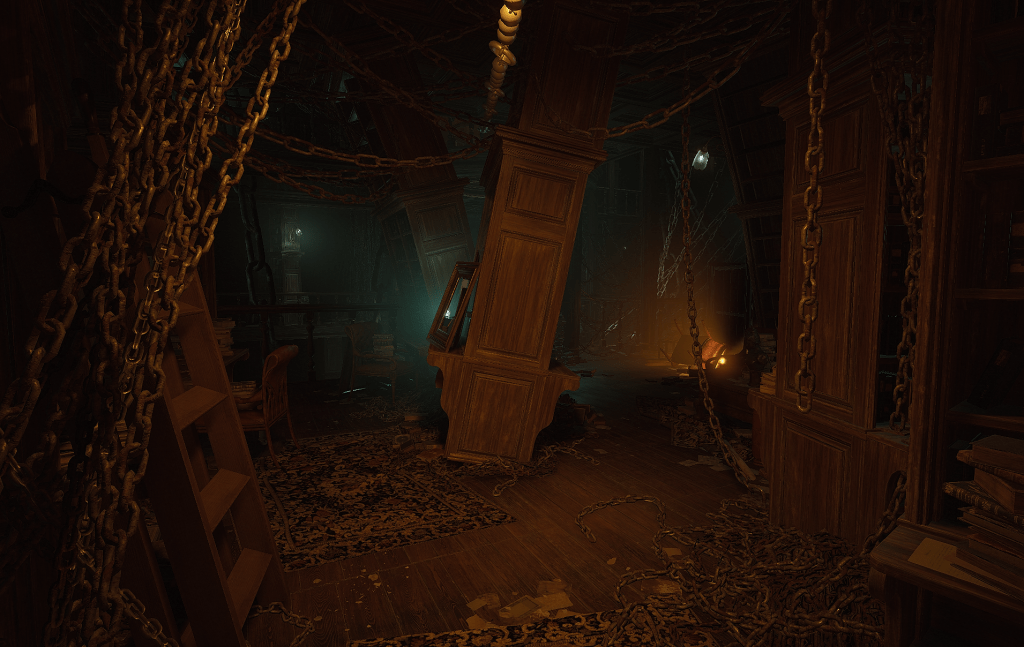
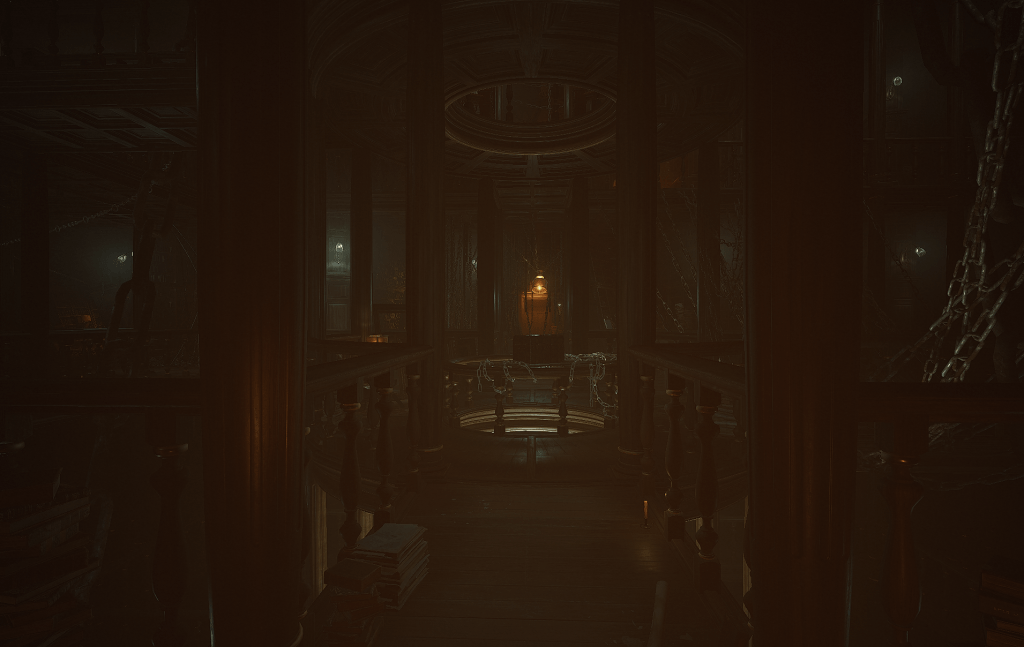
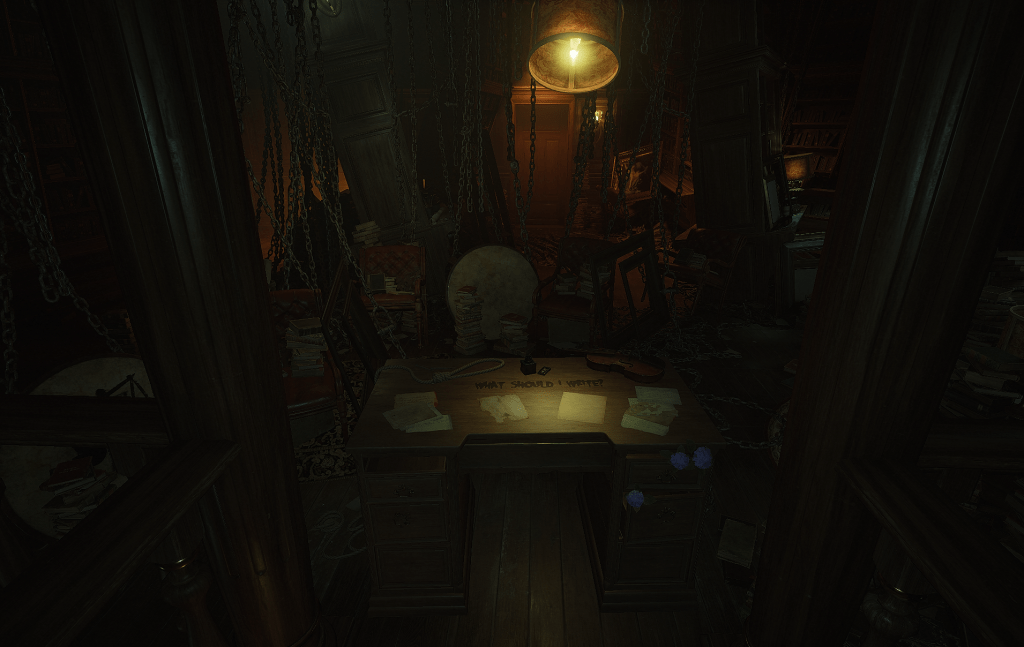
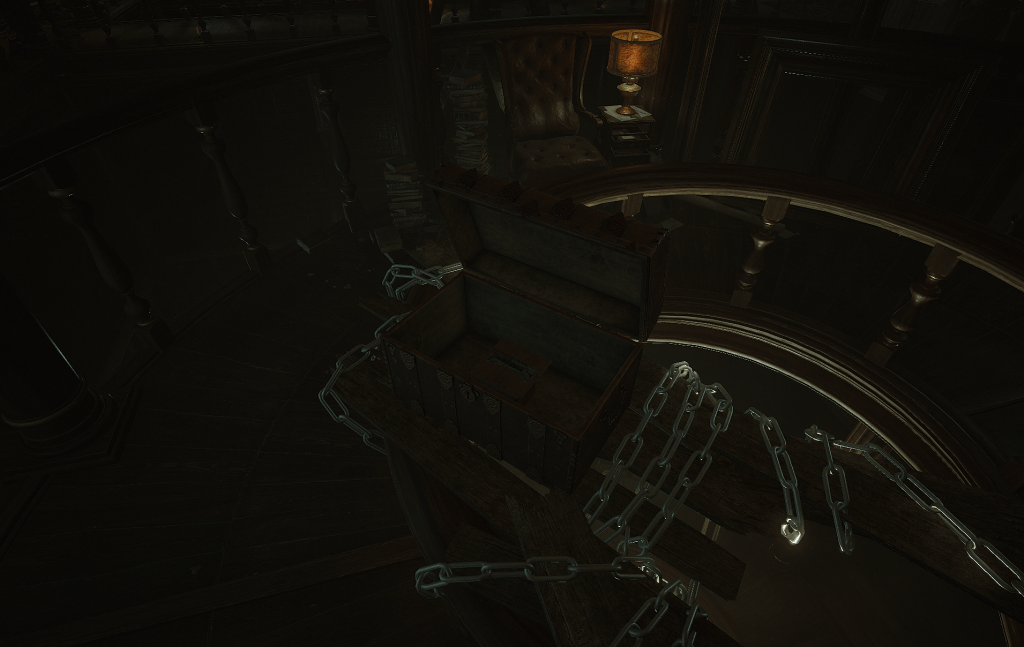
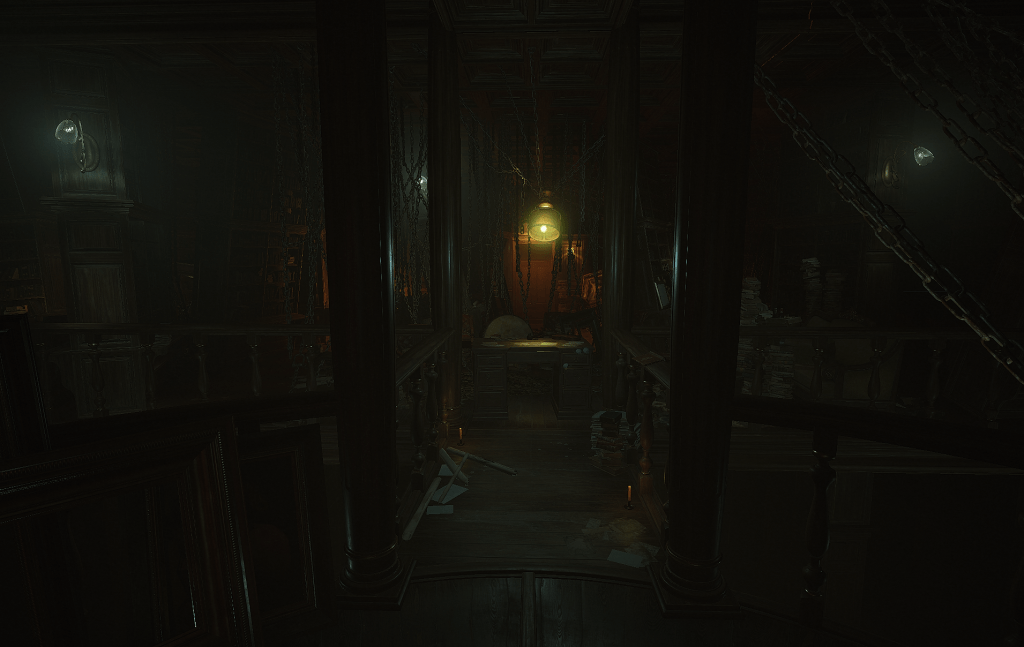
This is the largest room in the game — a huge, multi‑story library with a visible hanging chest in the center. The player must follow the chains and tear off notes that cause the chest to lower. At the end the player chooses which notes speak to them more — the more optimistic ones or the more negative ones.
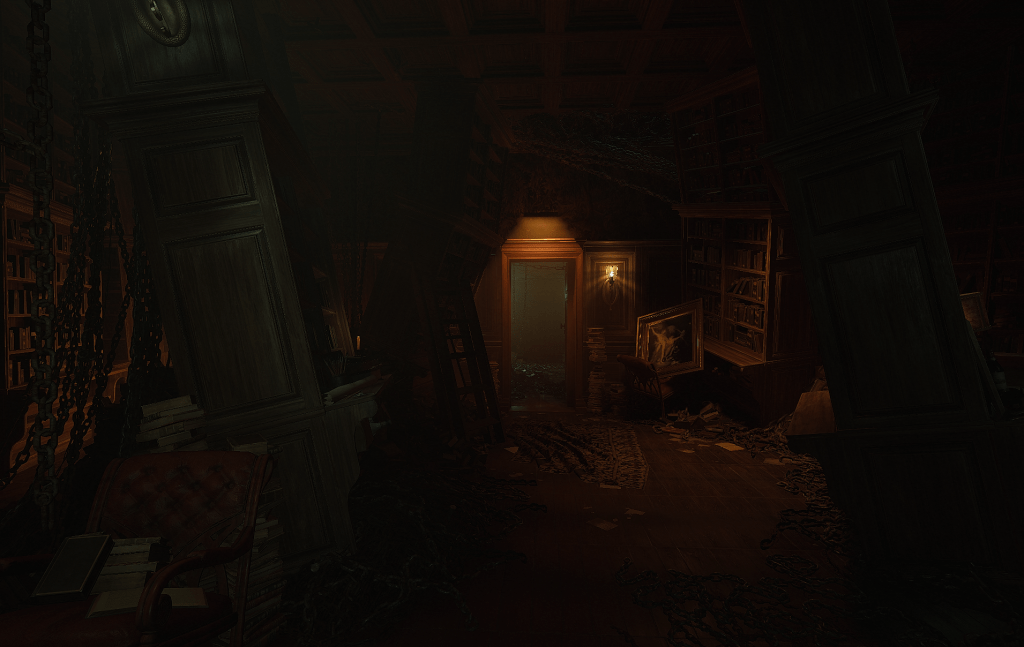
The room was created by Piotr Stańczyk. Side rooms are inverted and twisted versions of rooms known from the base game, creating a strongly psychedelic effect.
The main focus here is the narrative, which is supported by the oppressive aspect of the library and a series of horror mood events, with the occasional apparition — the dark figure of the Musician walking between the SHELVES.
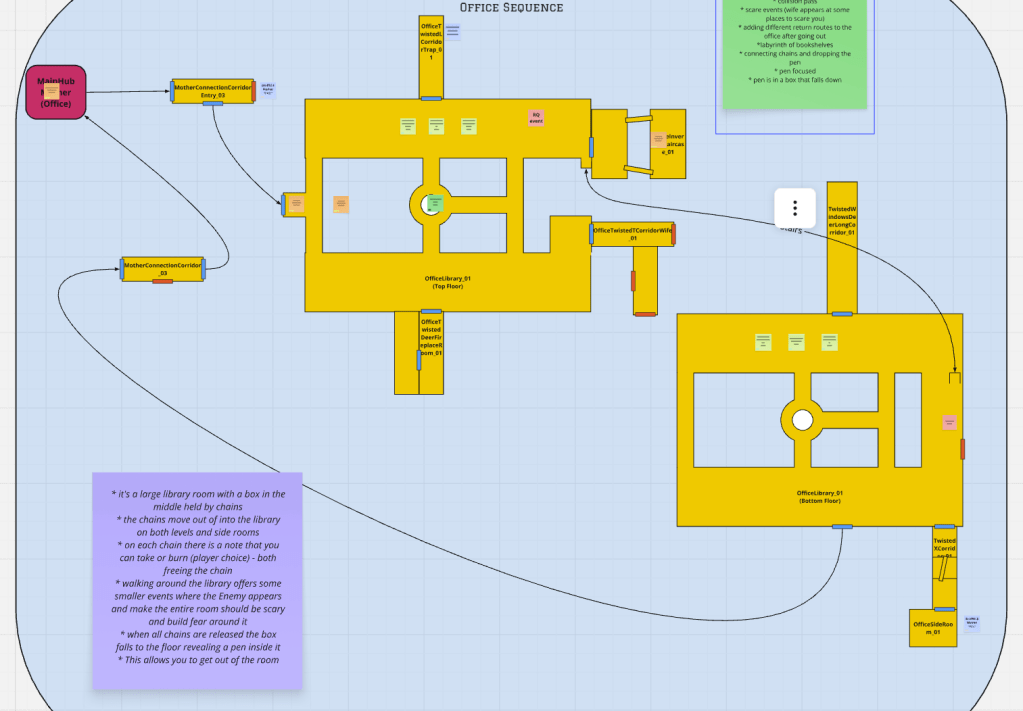
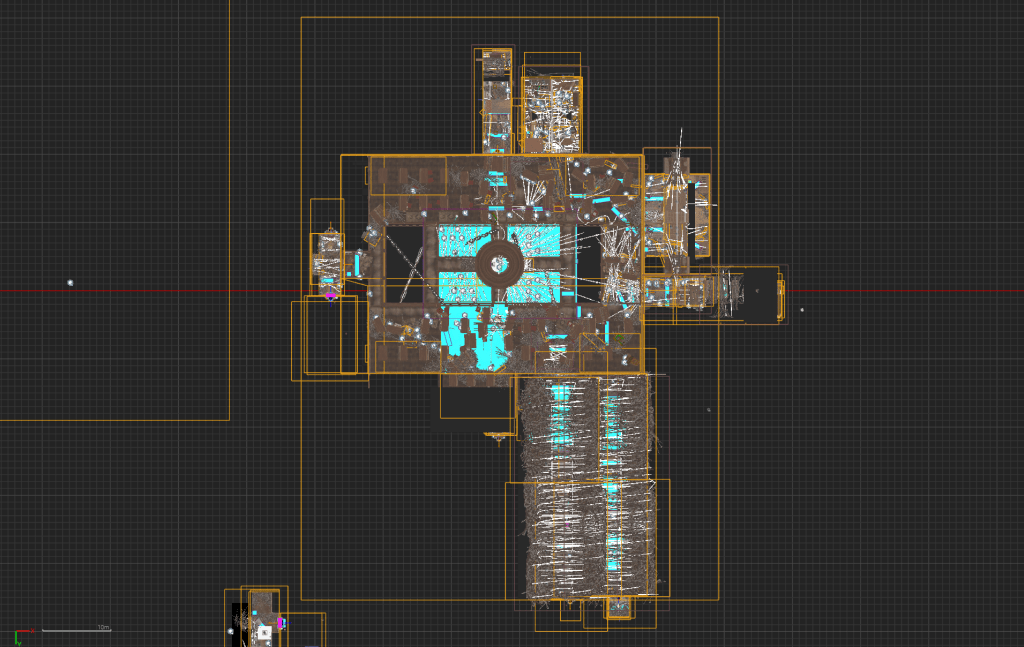
Upon exiting the Bedroom, now-unlocked The Office is immediately visible, leading to the largest room in the game.
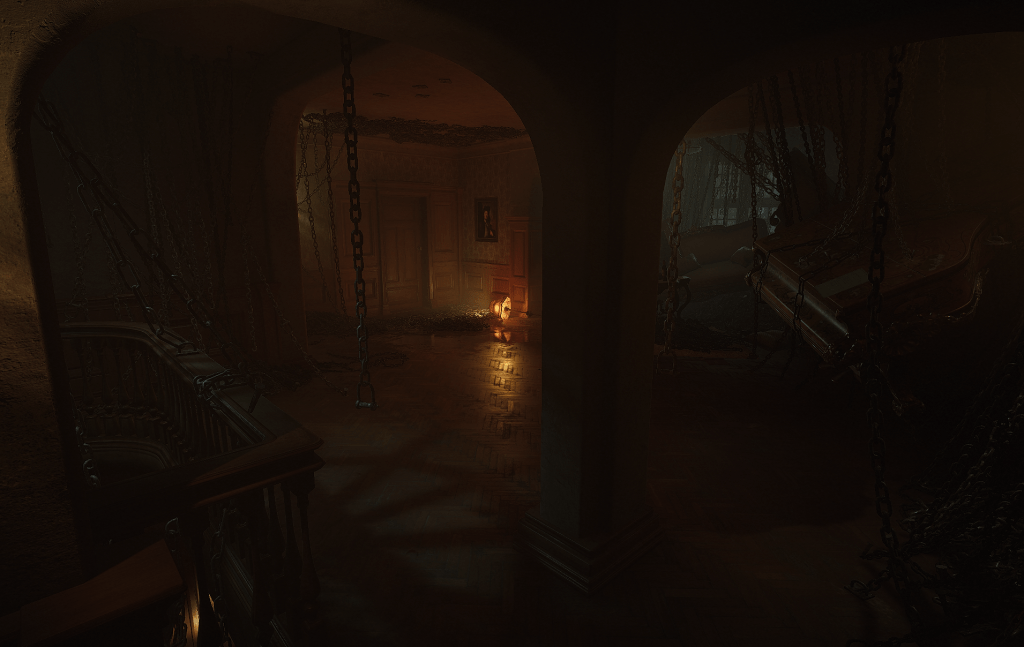

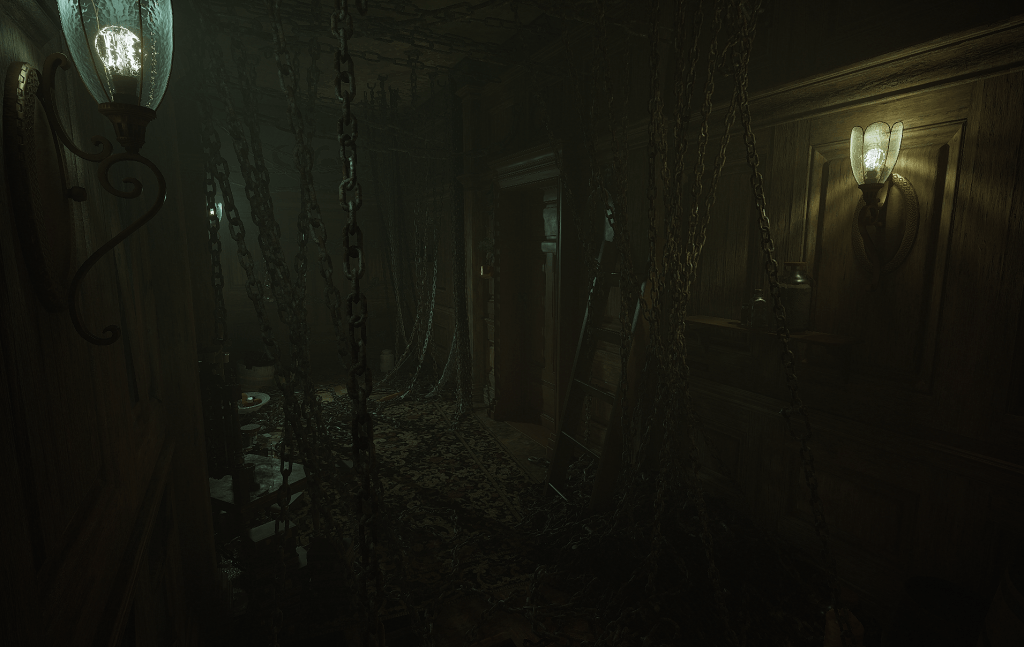
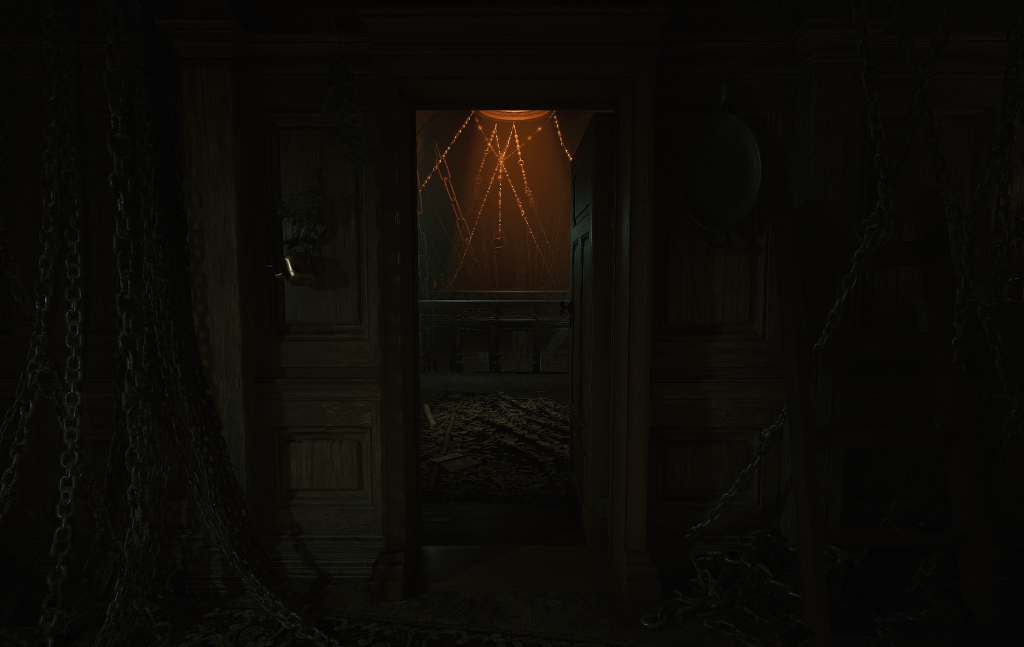
At the center of the room hangs a chest hanging on distinctive chains. Following the guidance, players encounter a blocked path and a note binding one of the chains – after picking up the note, the chain snaps, the obstruction breaks, and the chest can be seen descending, revealing the level’s main objective.
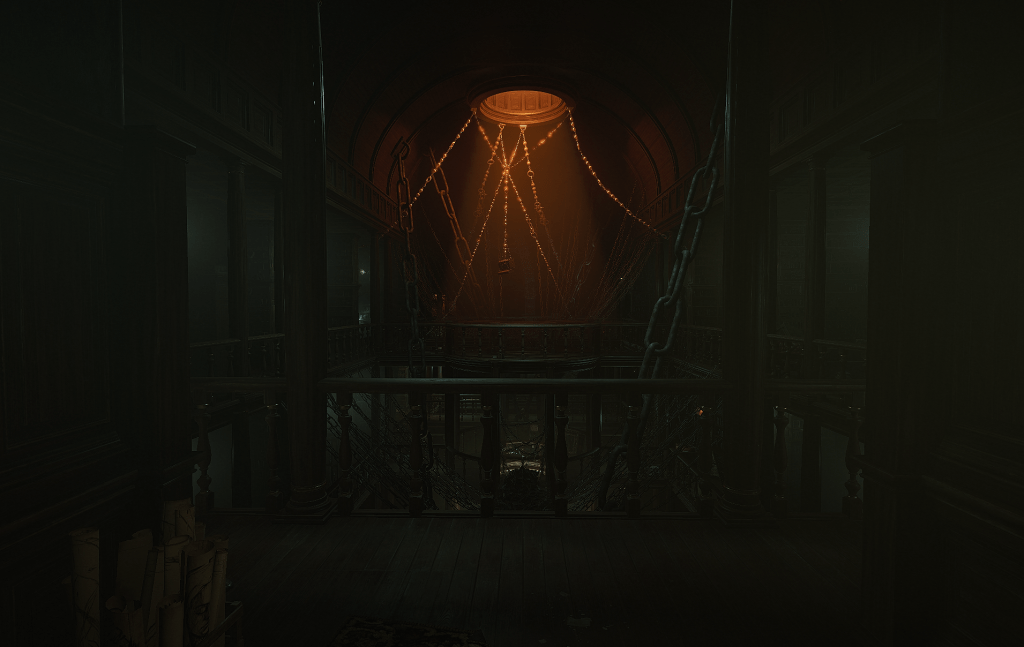
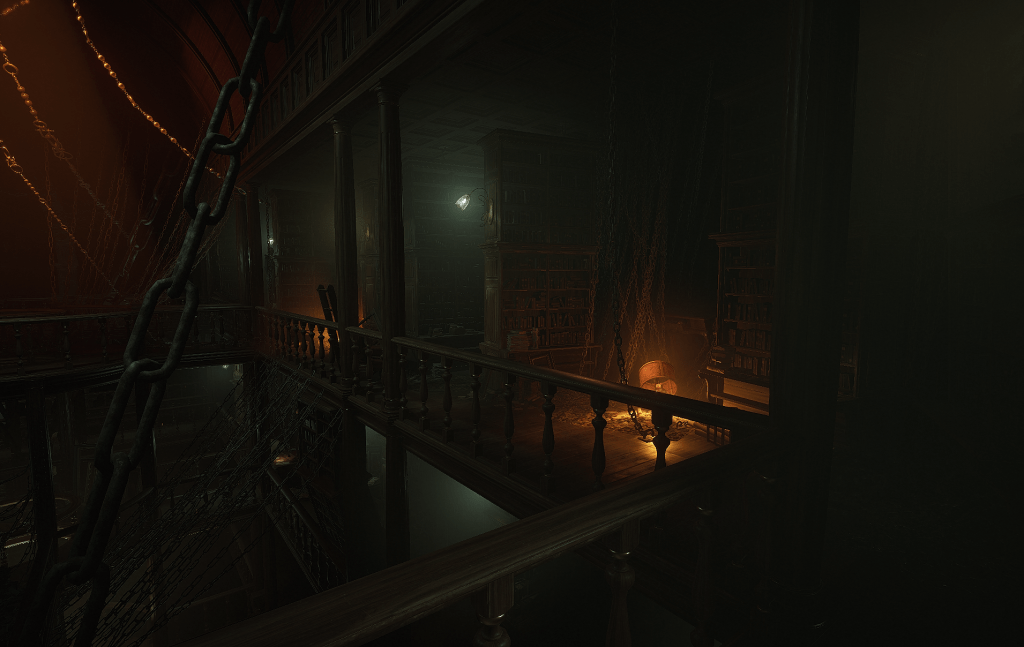
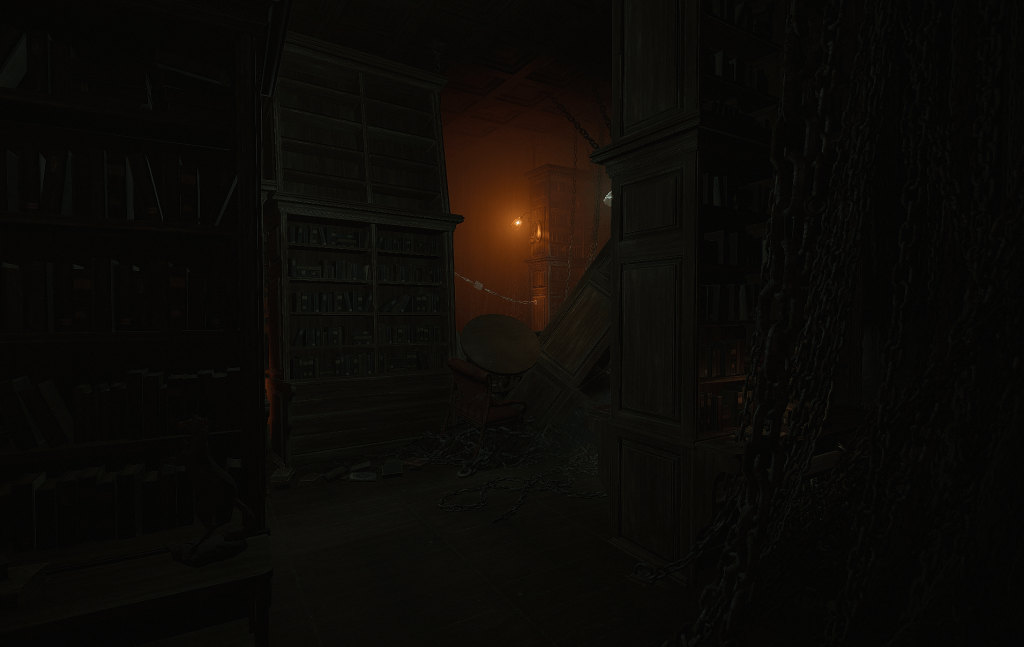
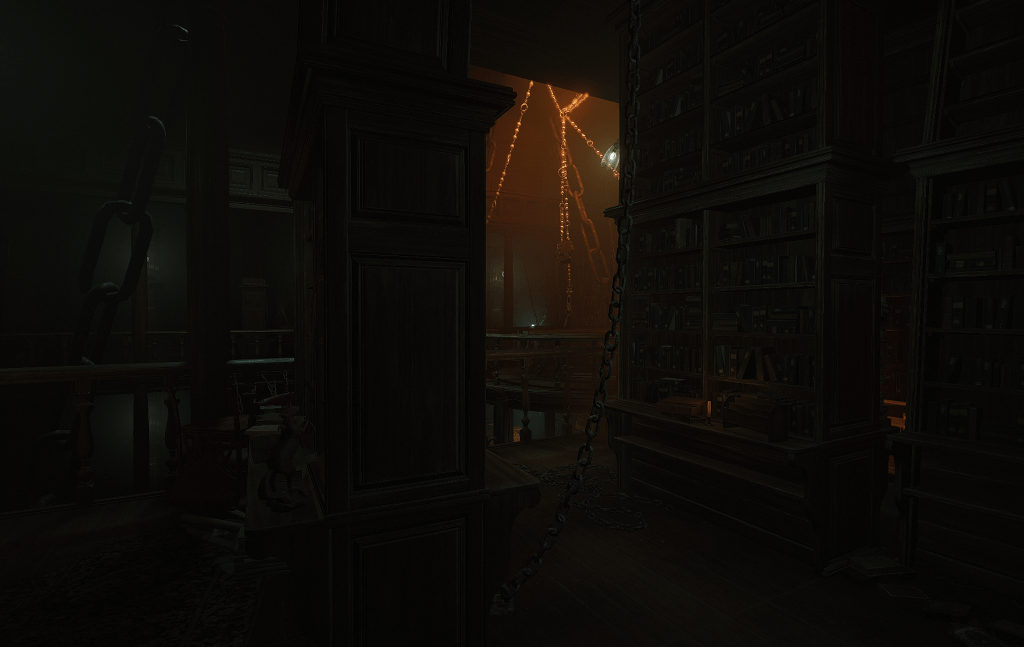
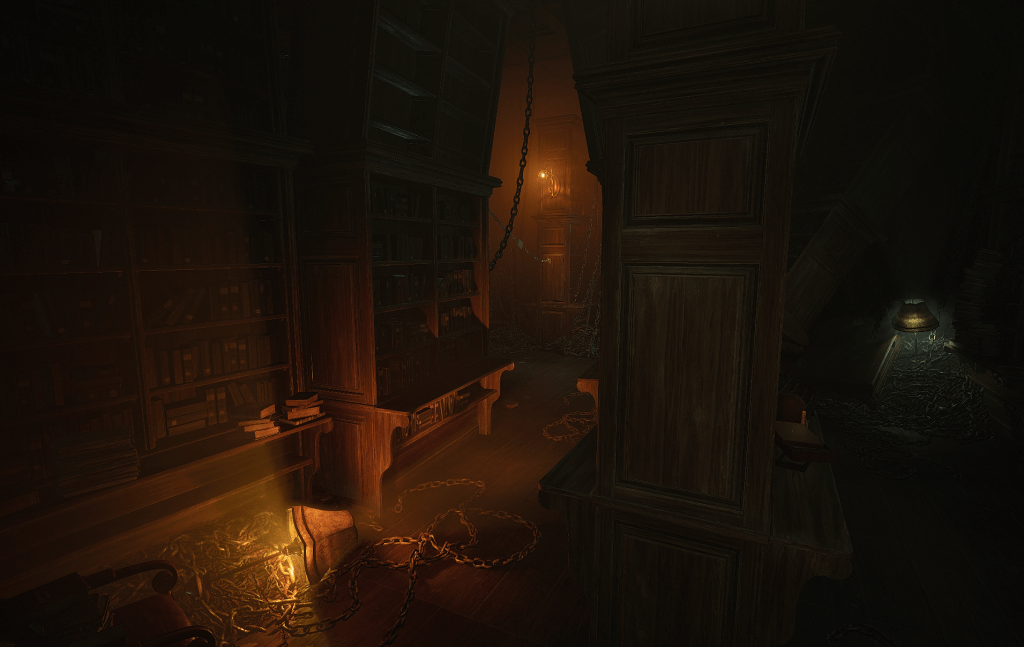
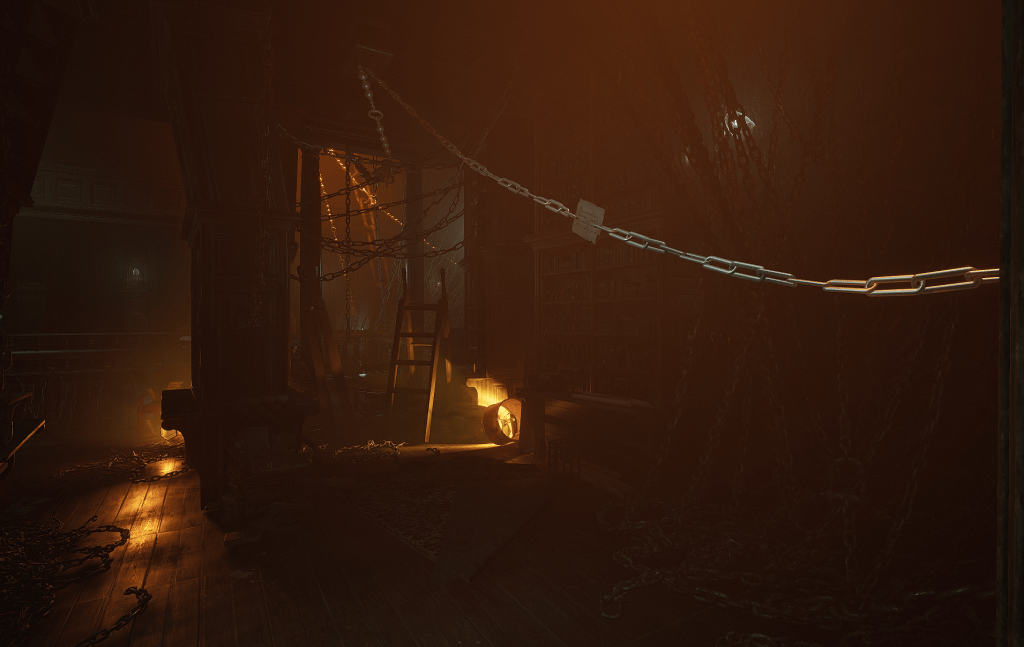
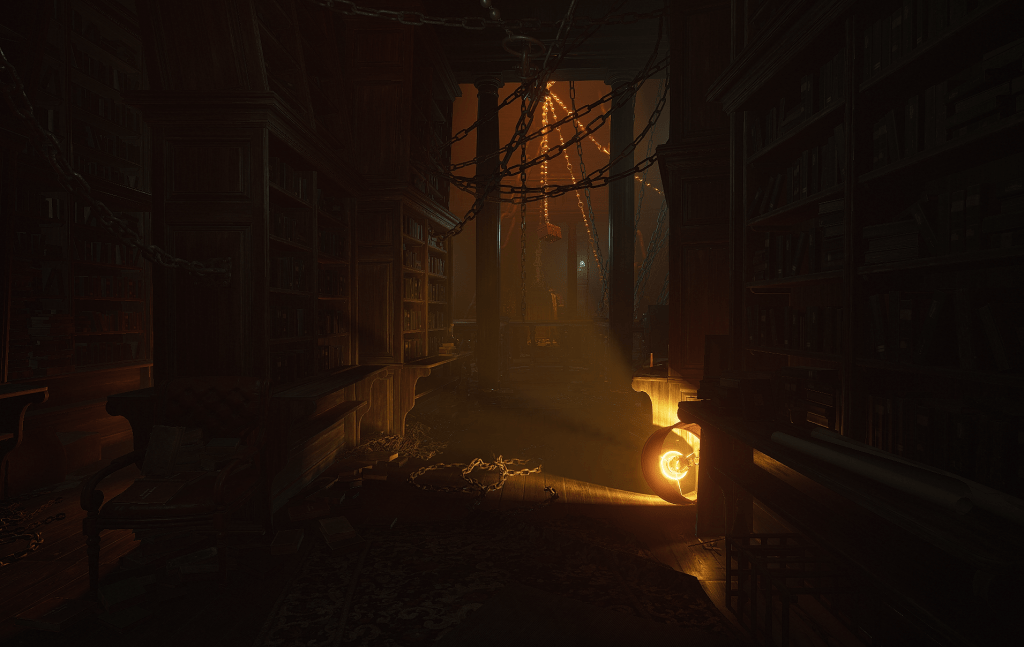
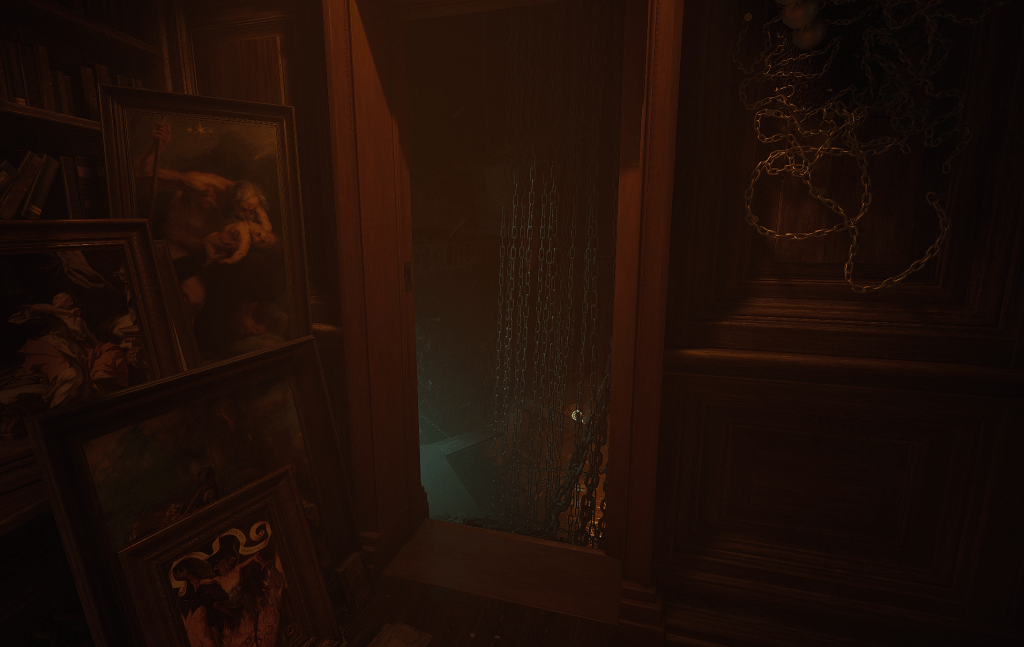
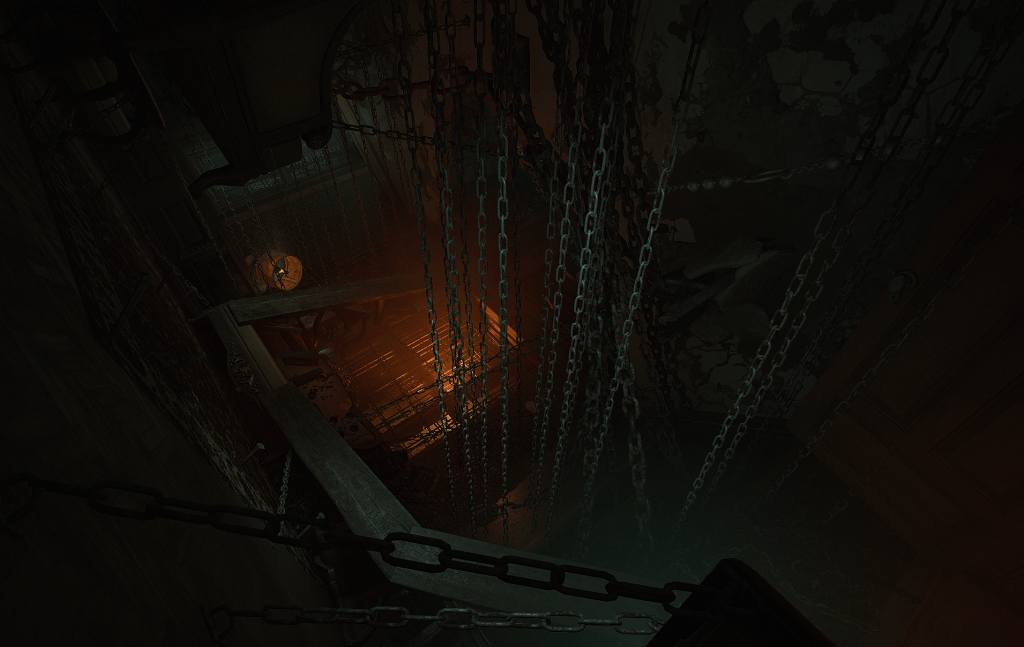
Distinct chains lead to specific rooms. The order of breaking the chains is now up to the player; after collecting some notes, parts of the corridors unlock, making access to other areas faster and easier.
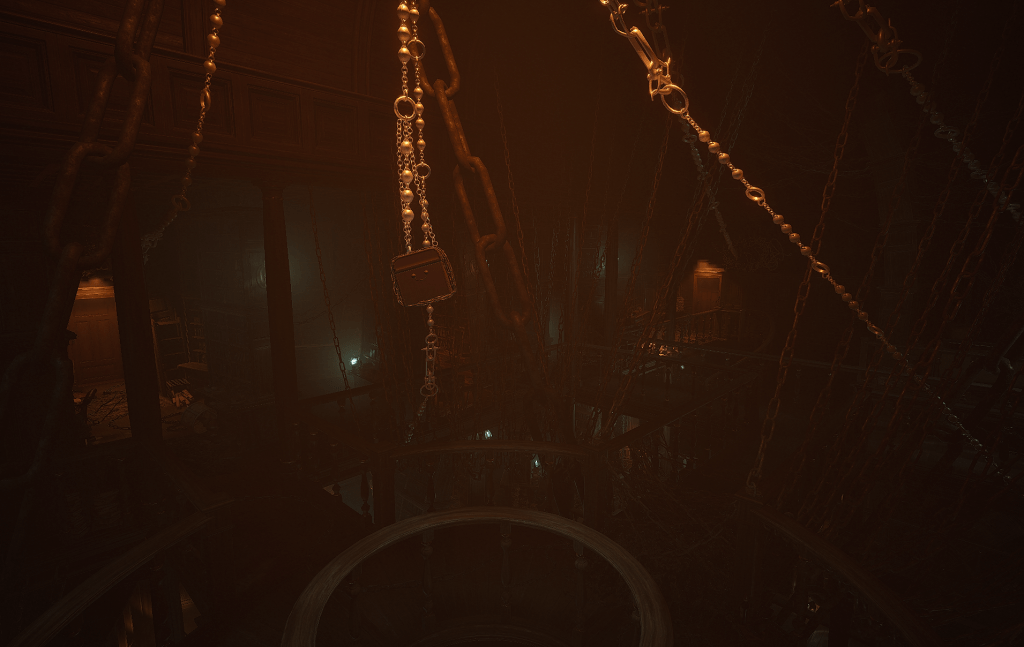

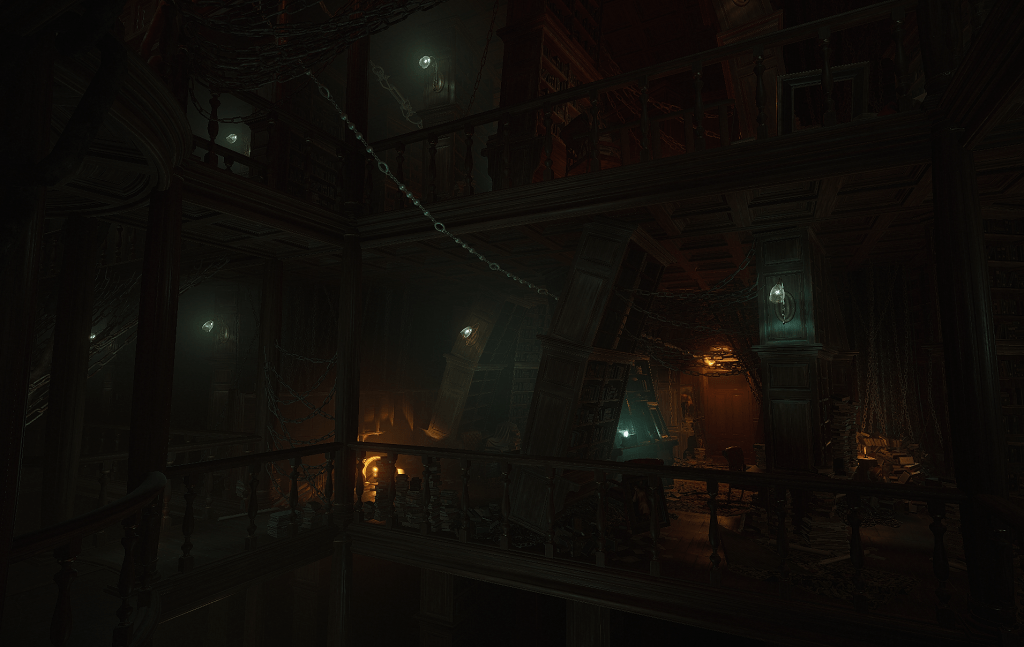
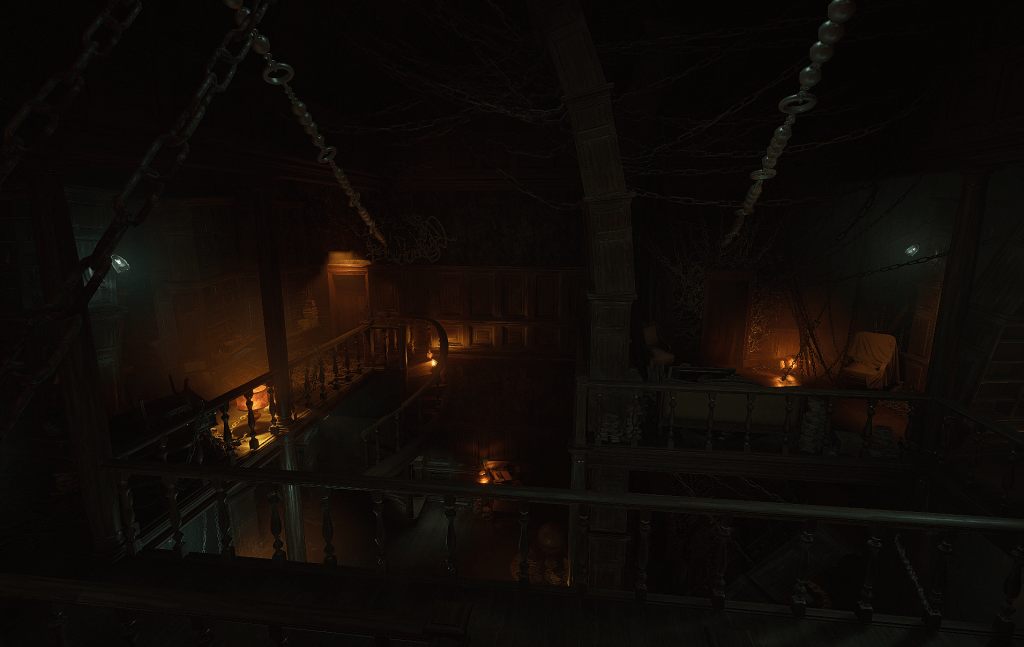
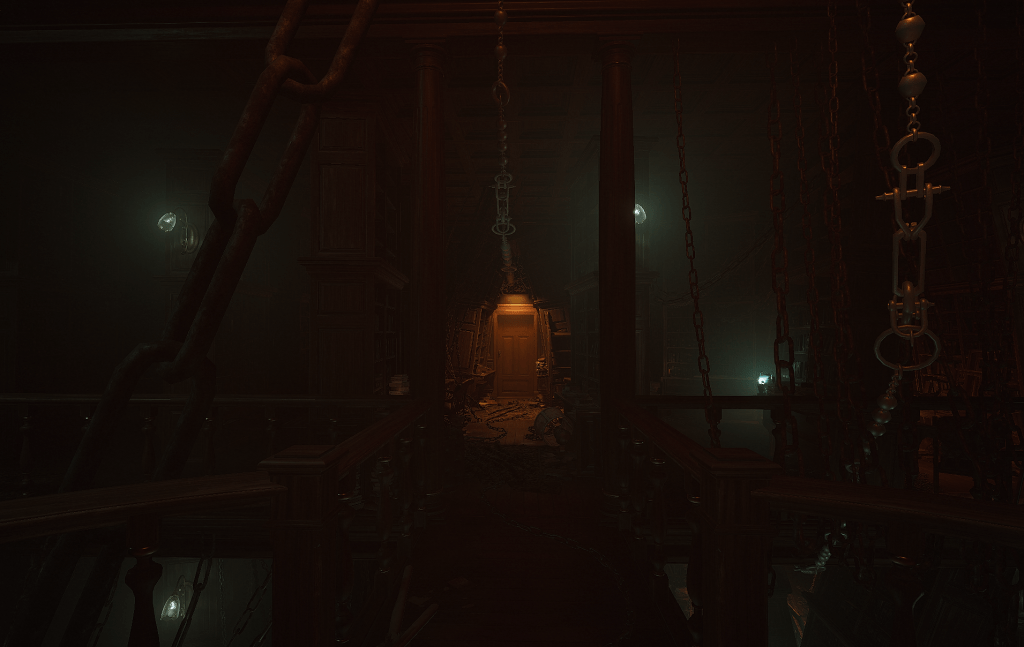
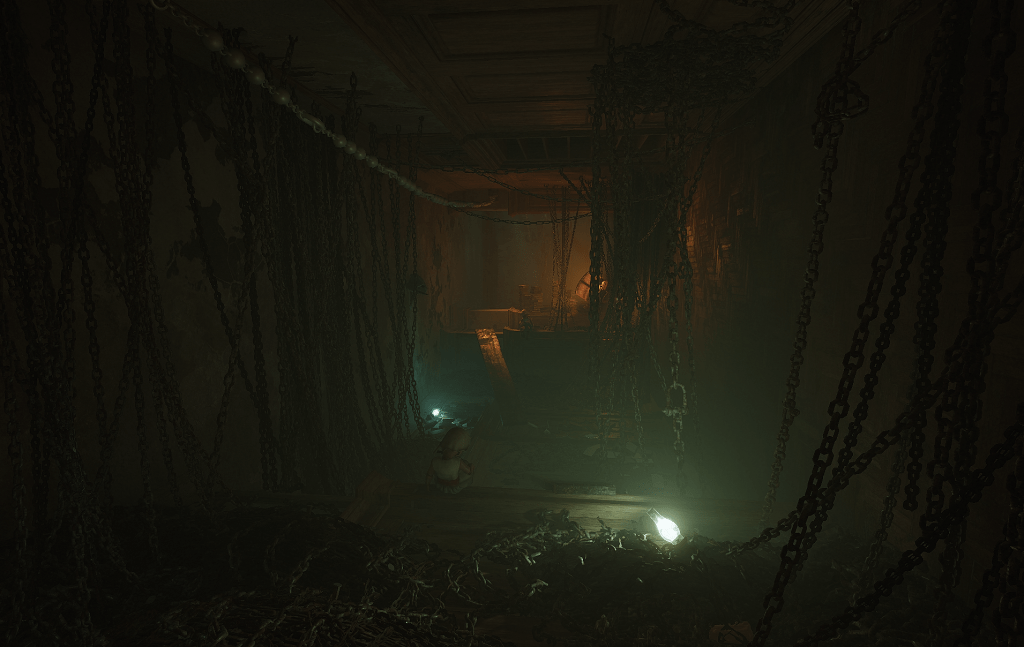

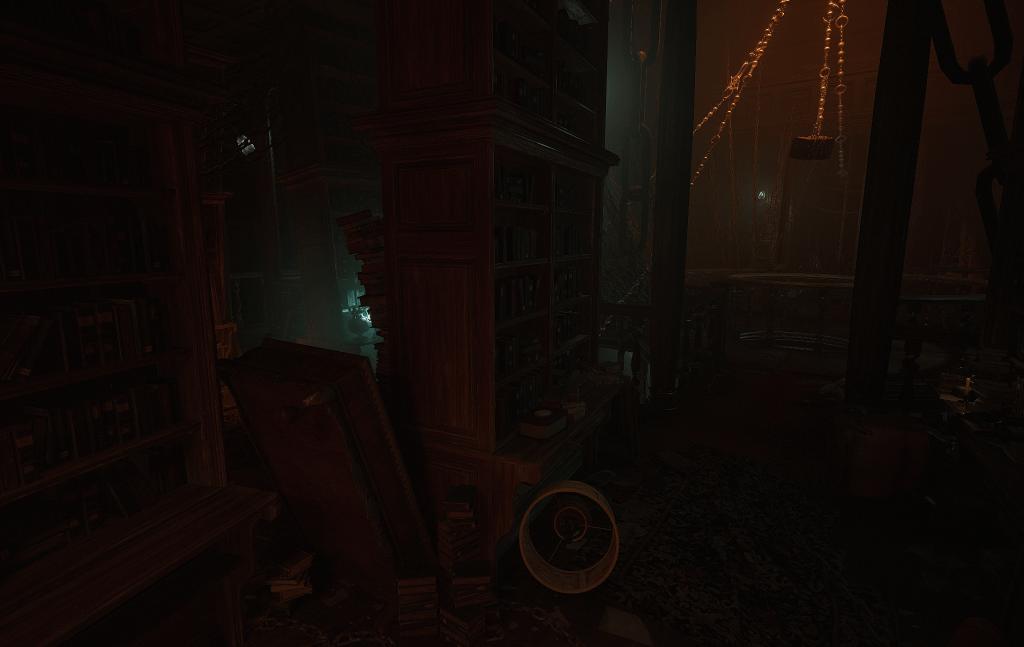
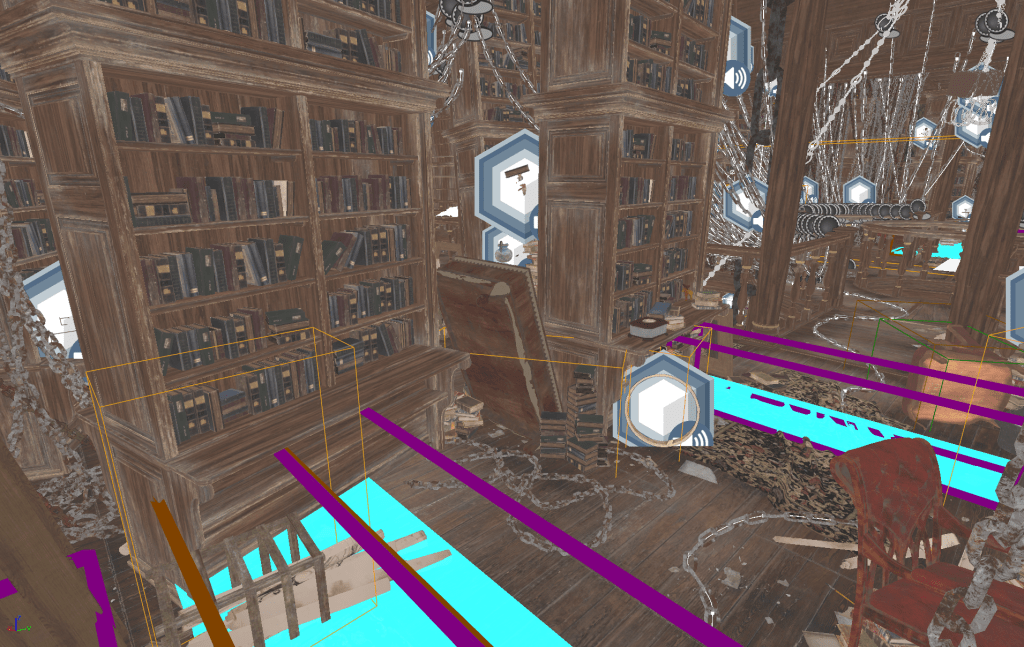
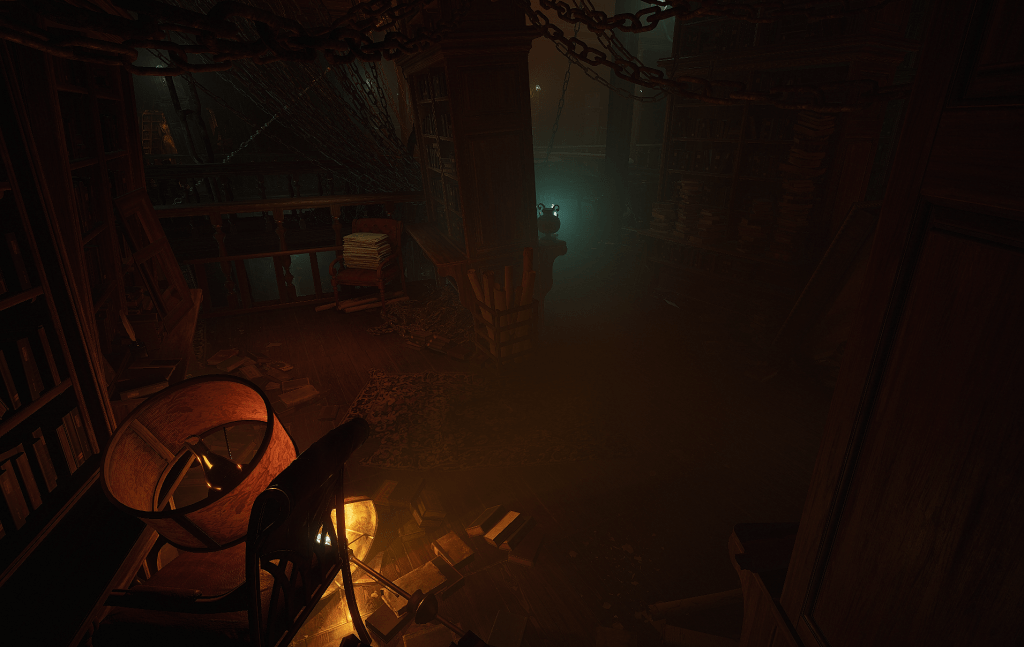

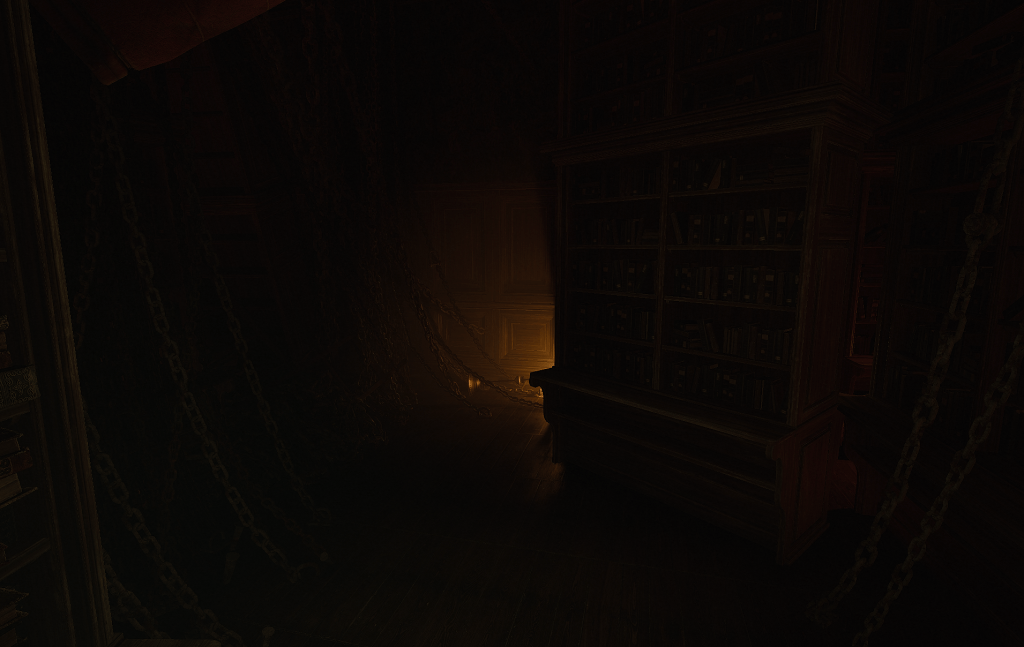
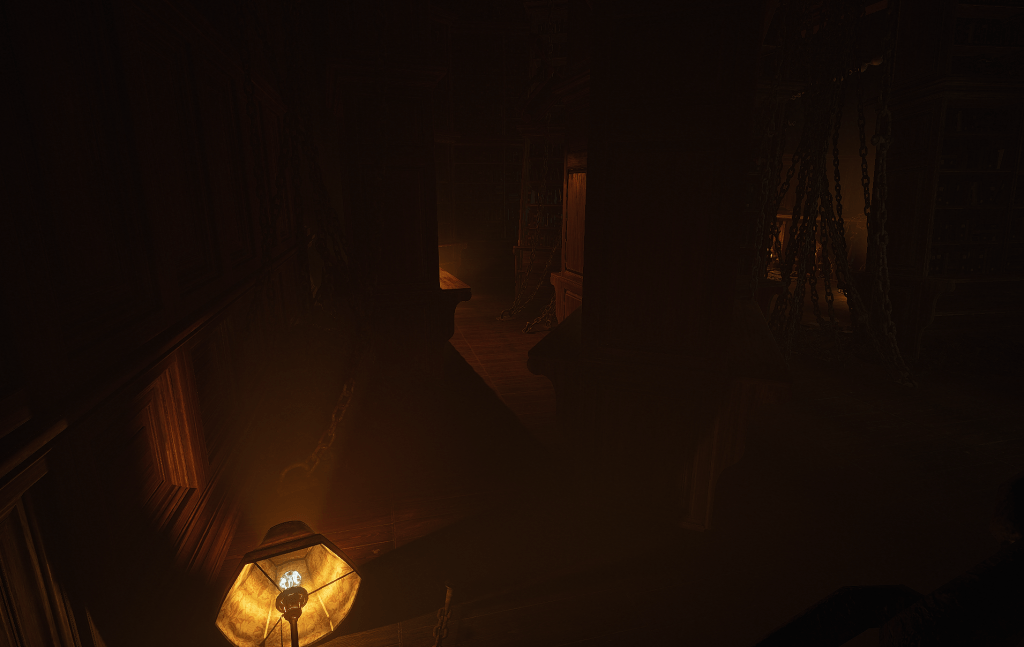
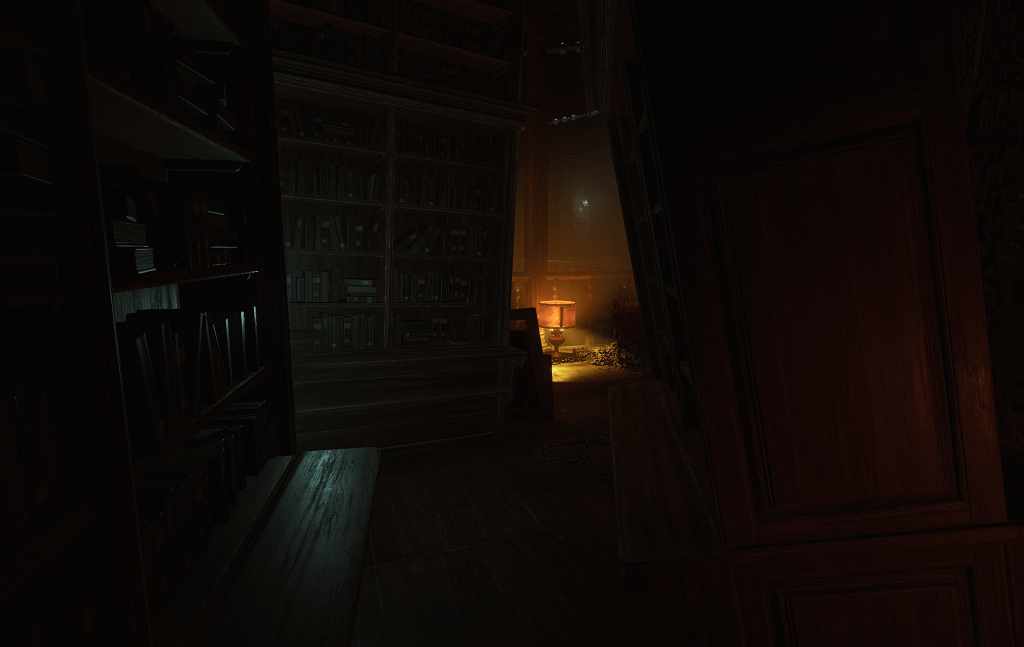
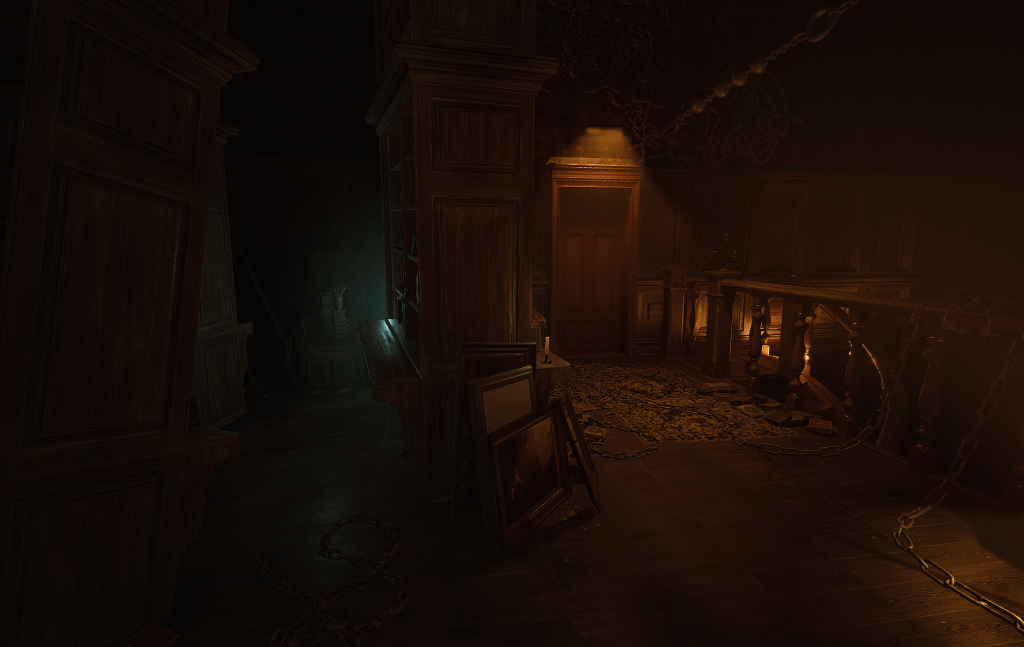
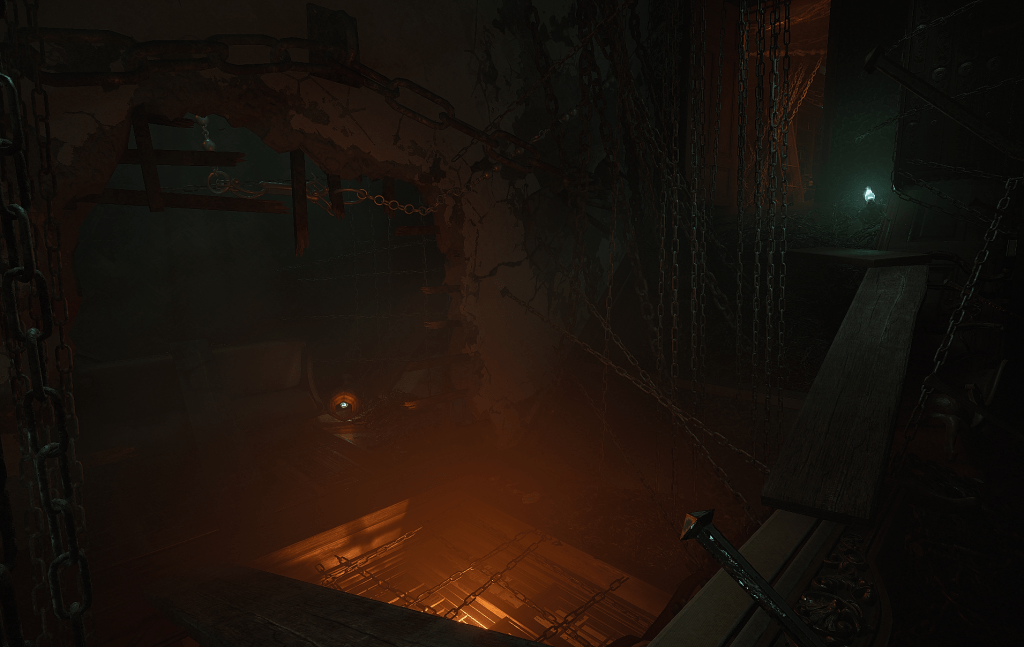
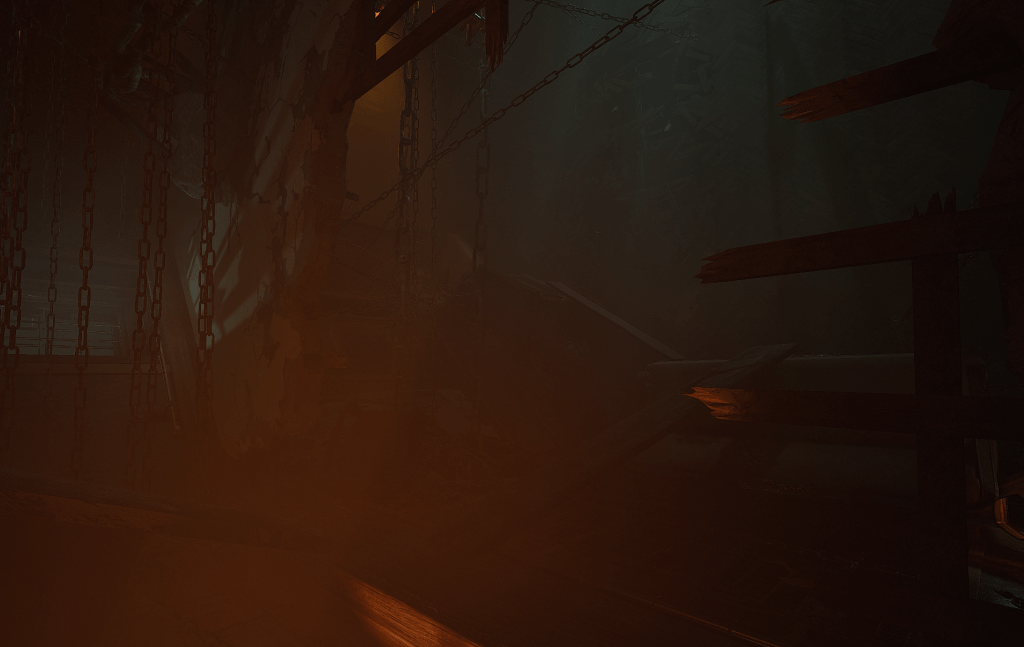
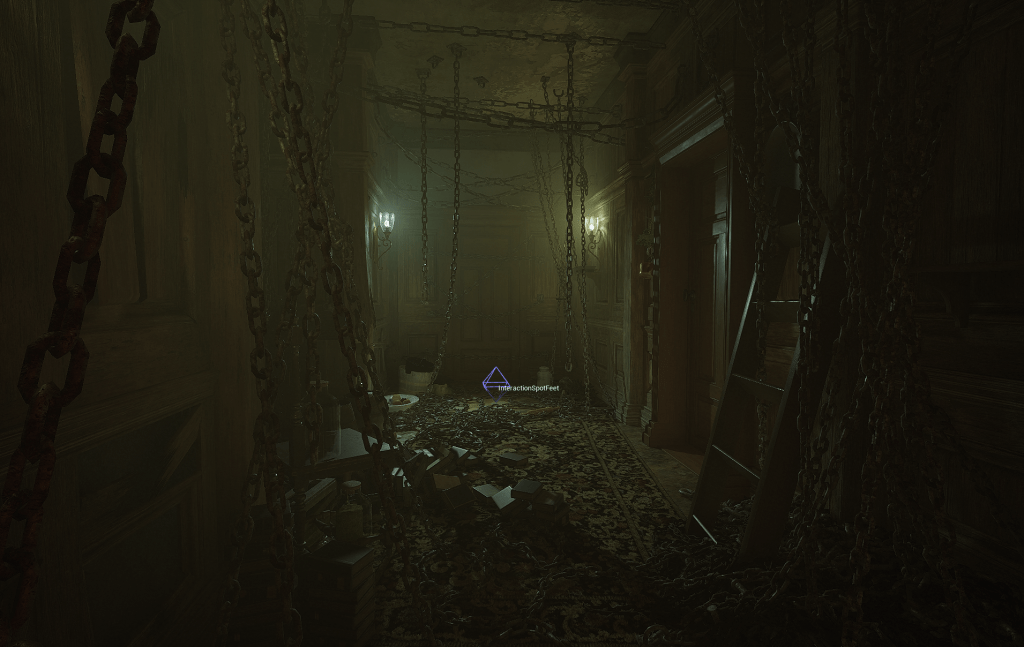
The side rooms are spaces known from the base game, but rotated and clogged with chains, creating a psychedelic experience.
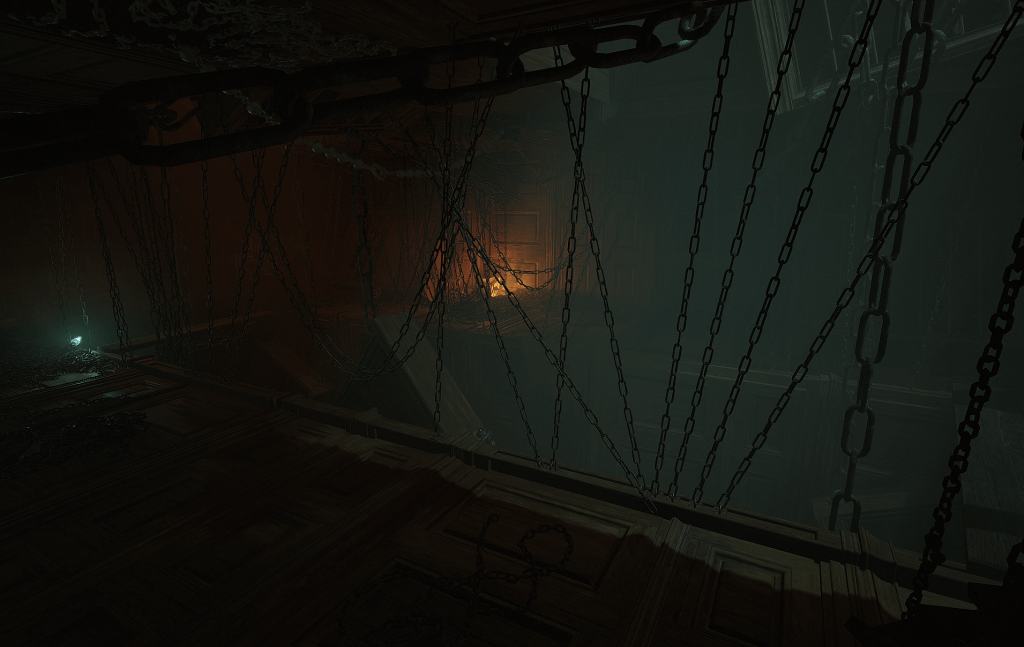
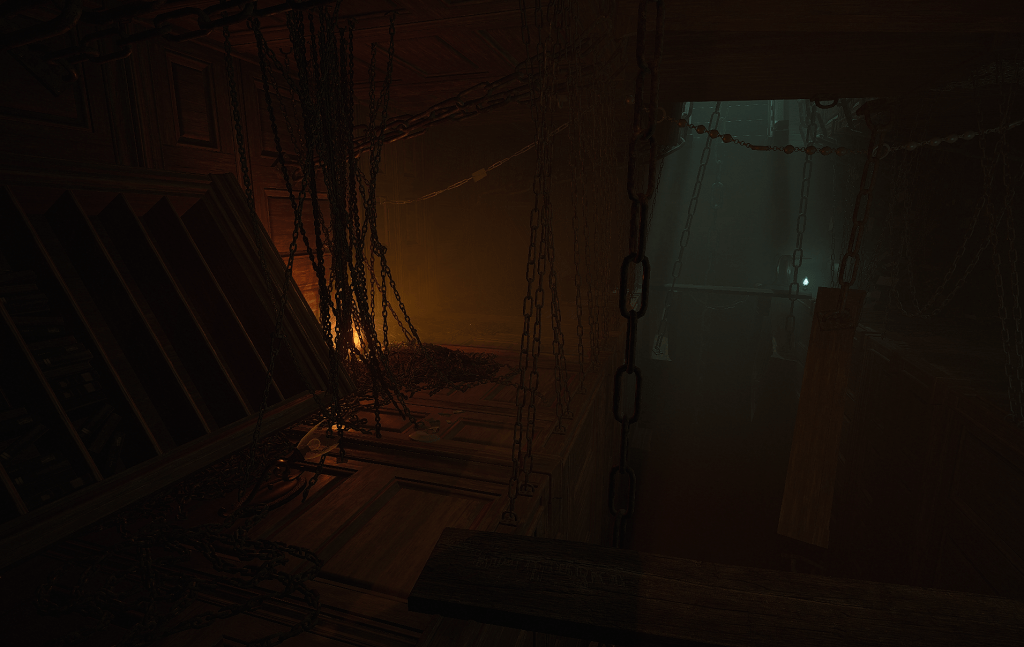
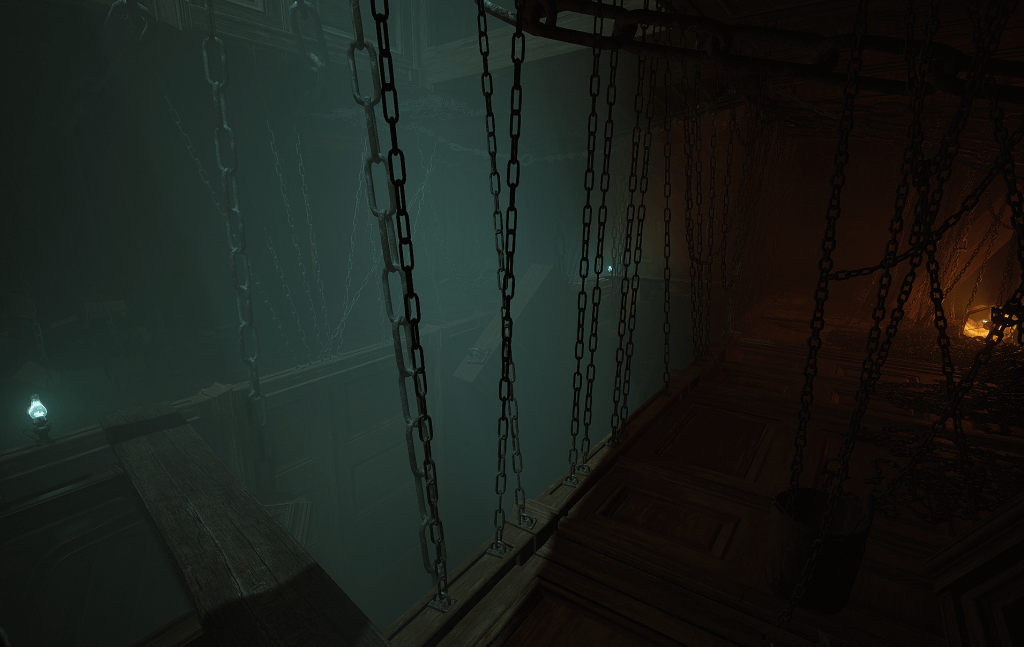
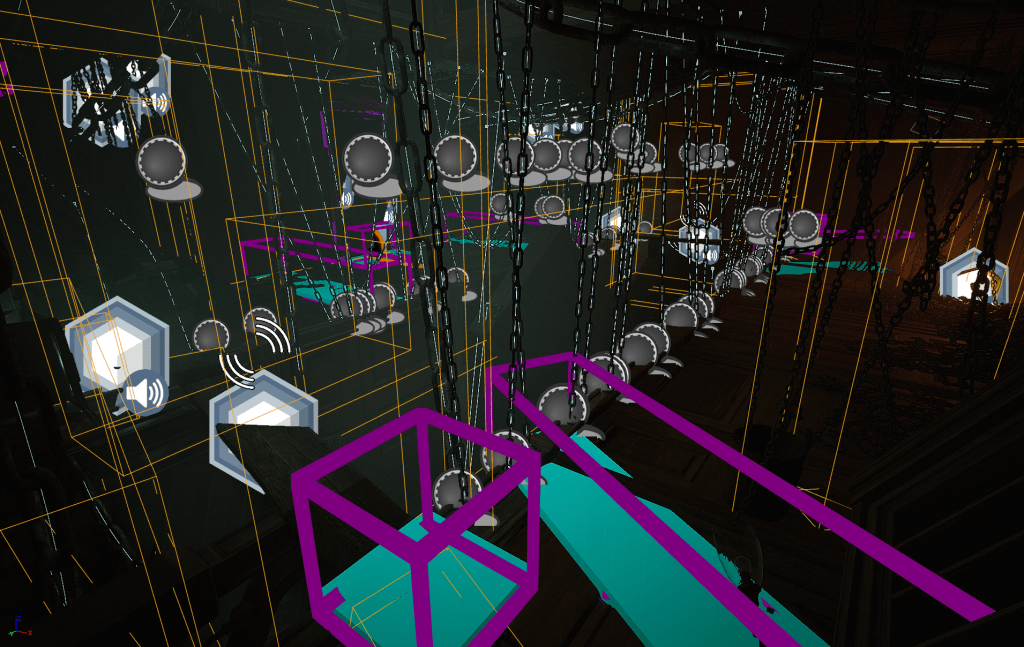
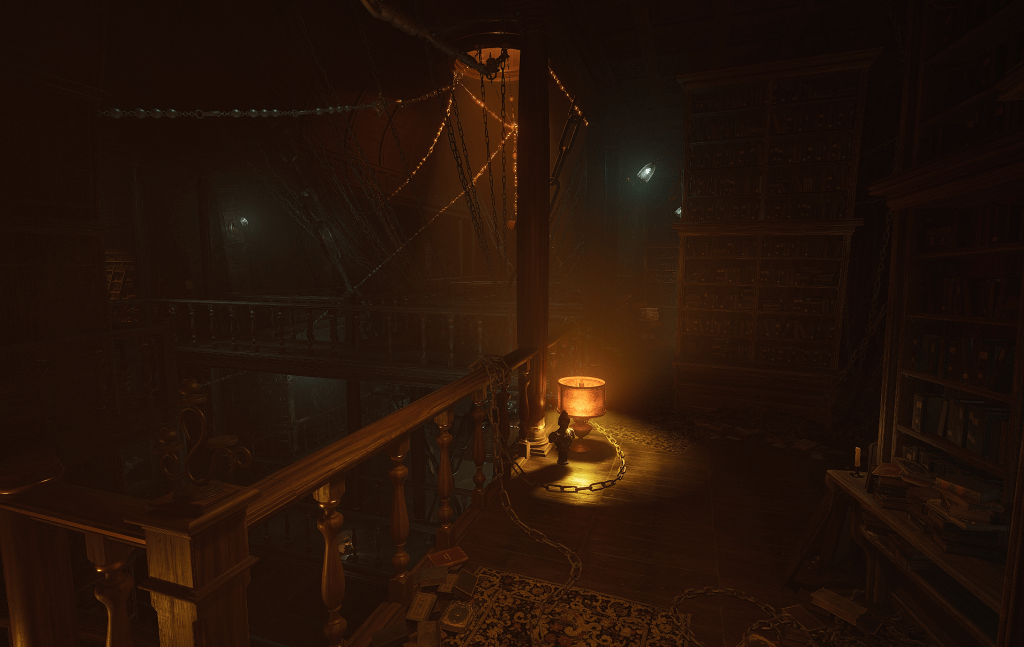
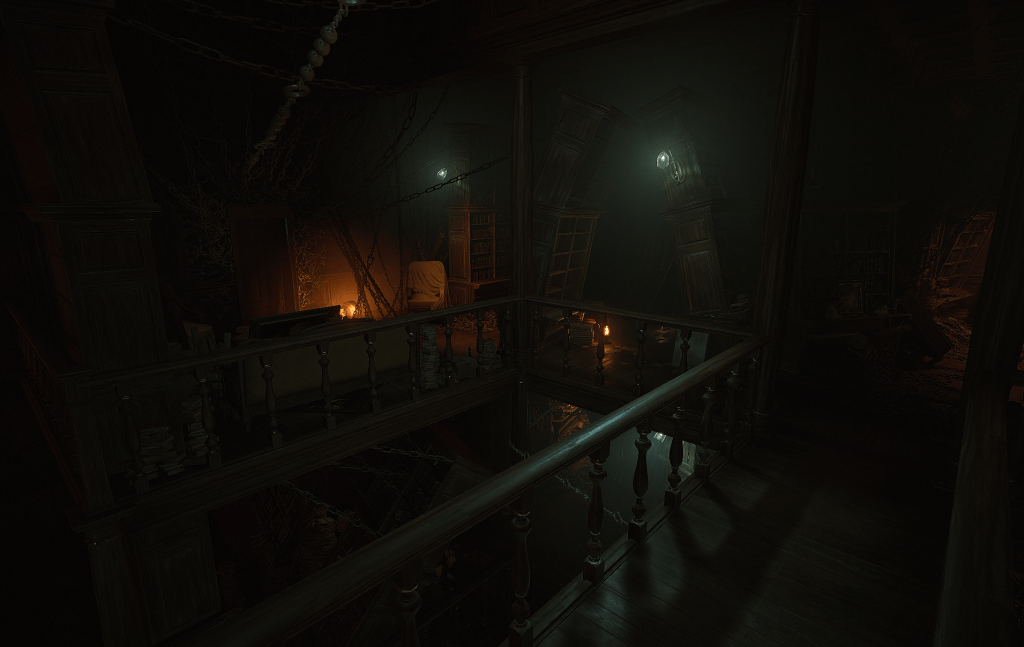
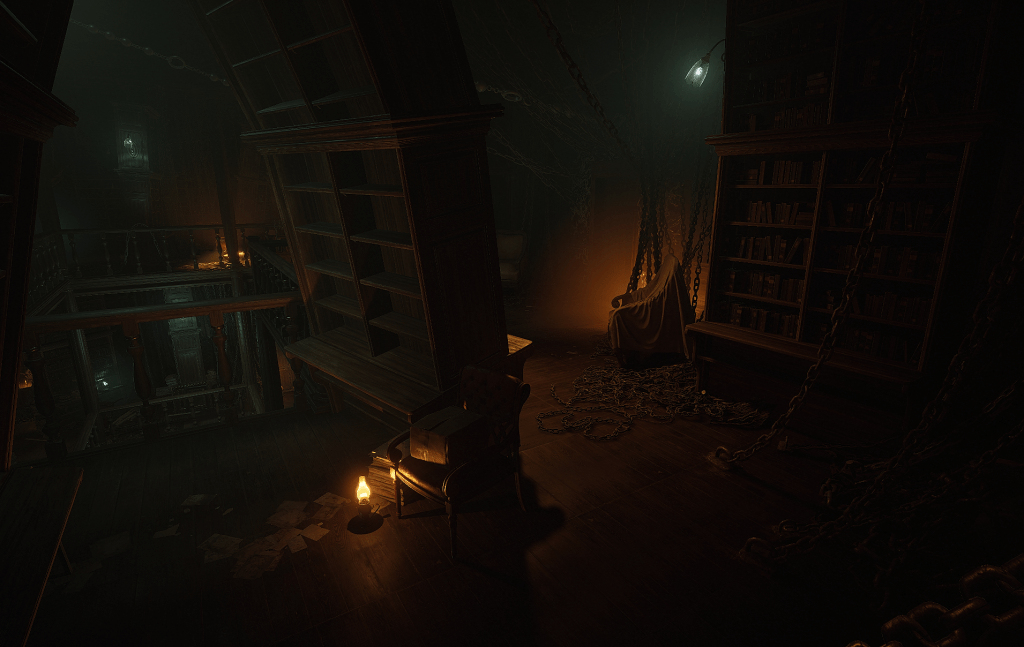
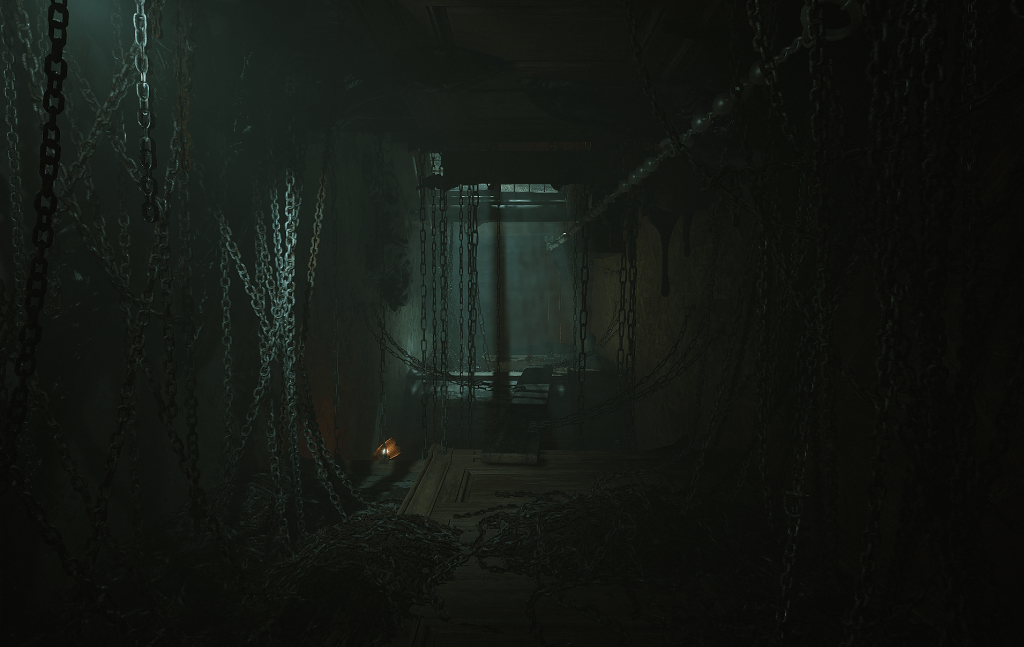


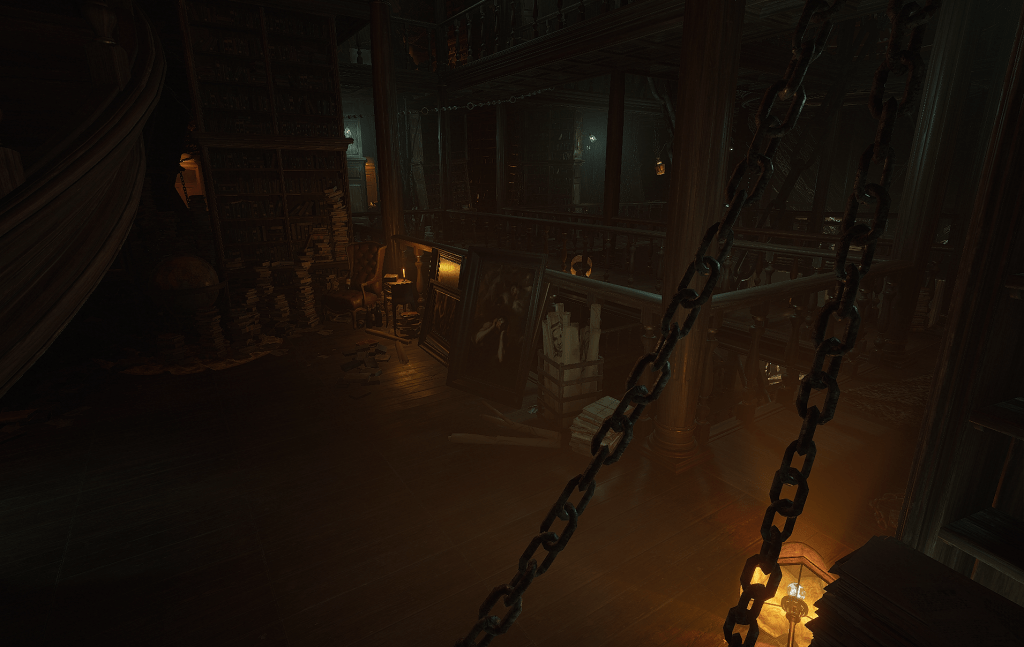

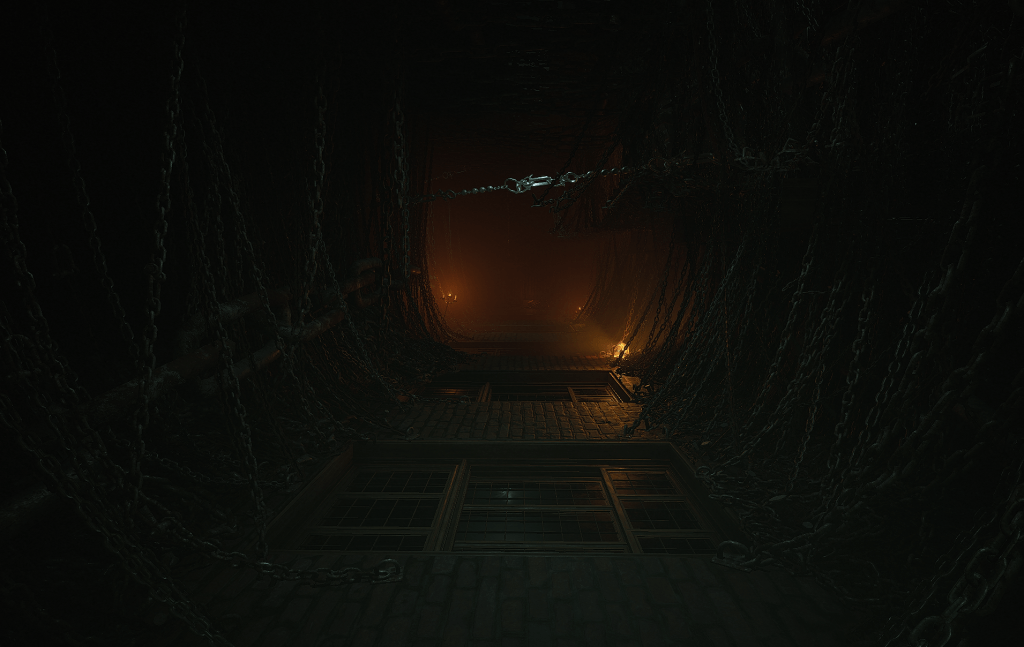
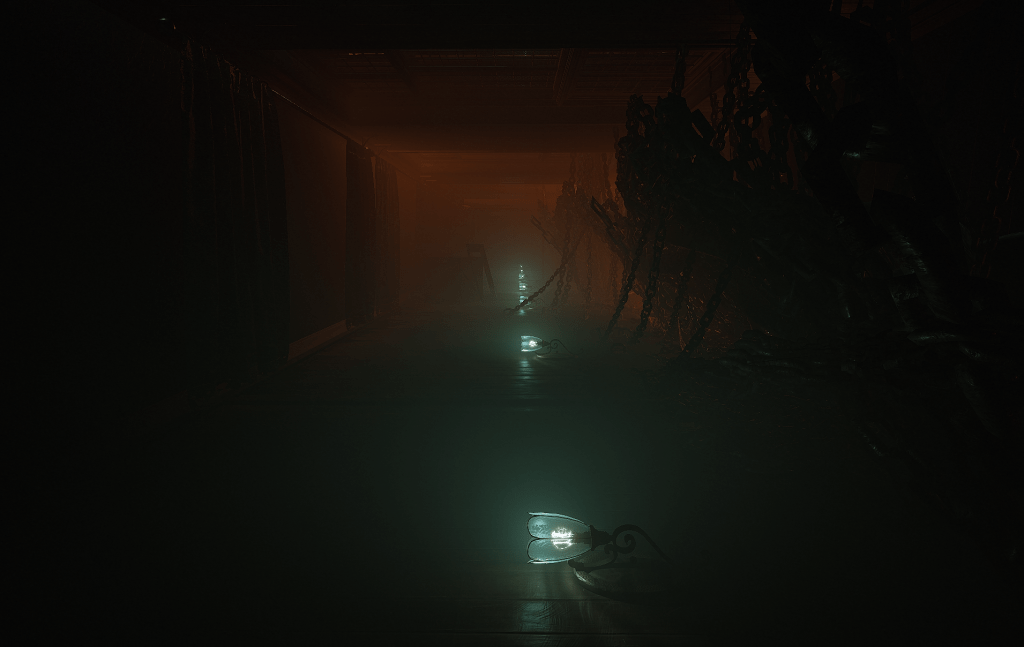
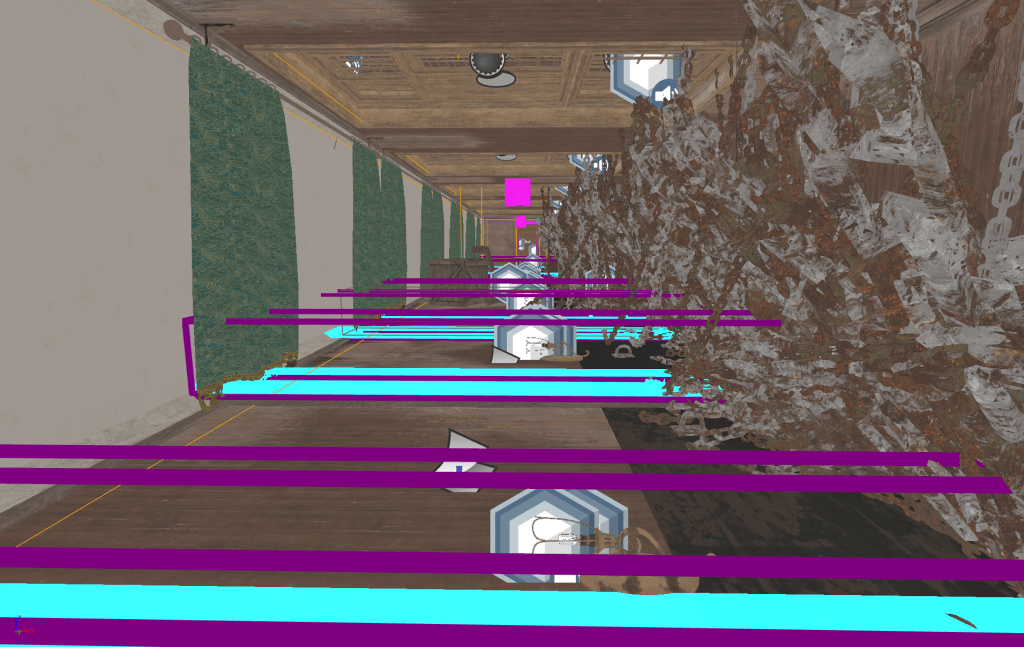
One of the more enjoyable mind-bending tricks uses the long corridor from The Painter’s Story and Chapter 3. In the original 2016 game, the Wife would pass by the window along this corridor – this DLC partially recreates that scene. Players enter a room and walk along the outside of the building past the windows; after entering the next room and snapping the chain, they return via the interior, which is a nod to the 2023 version’s encounter.


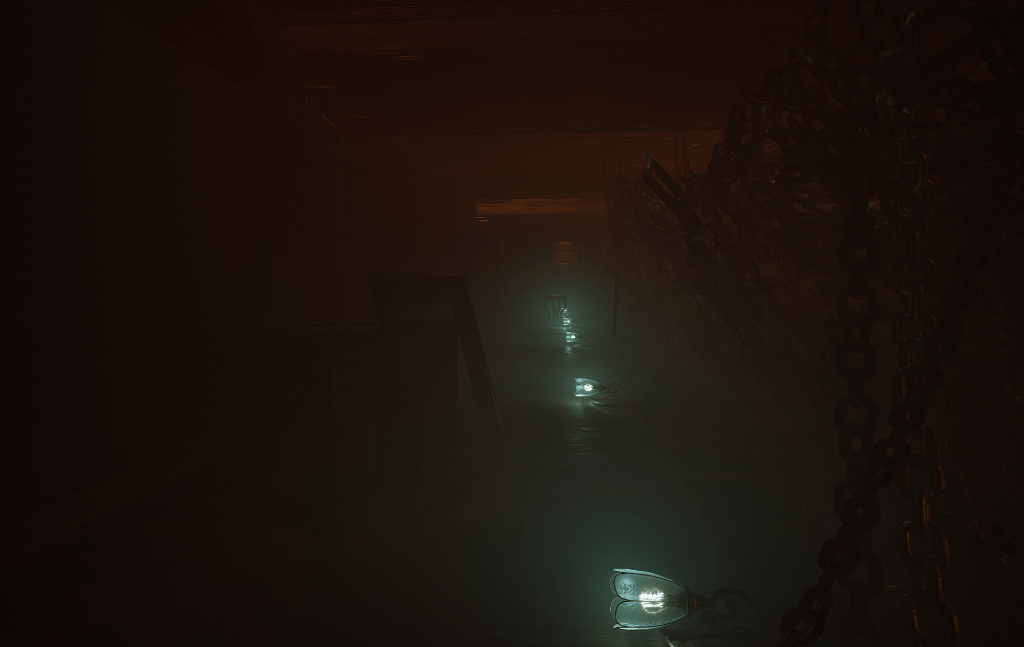
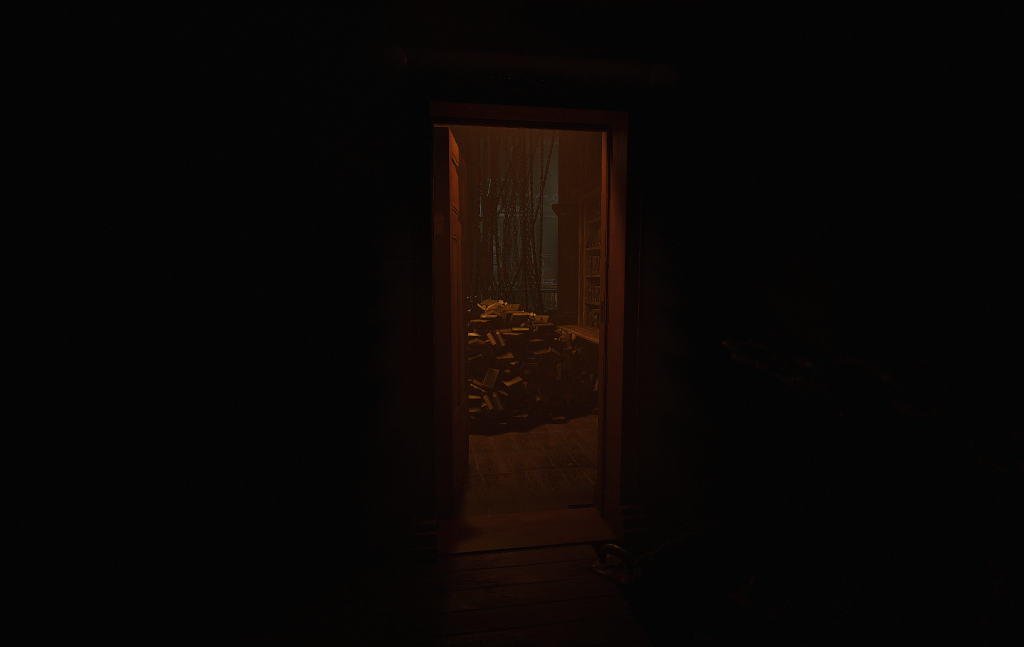
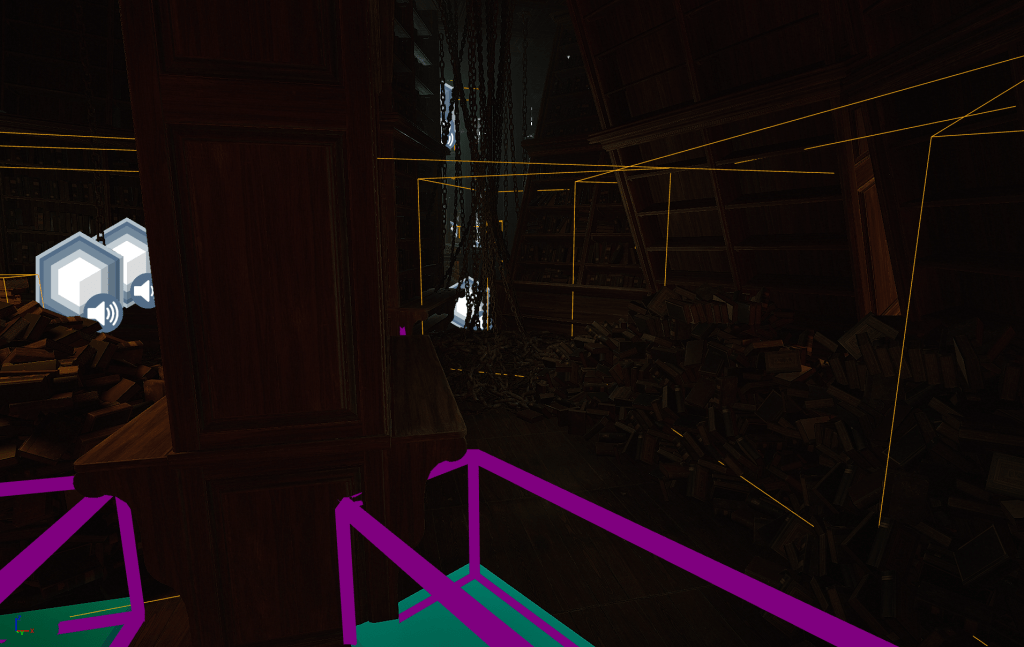

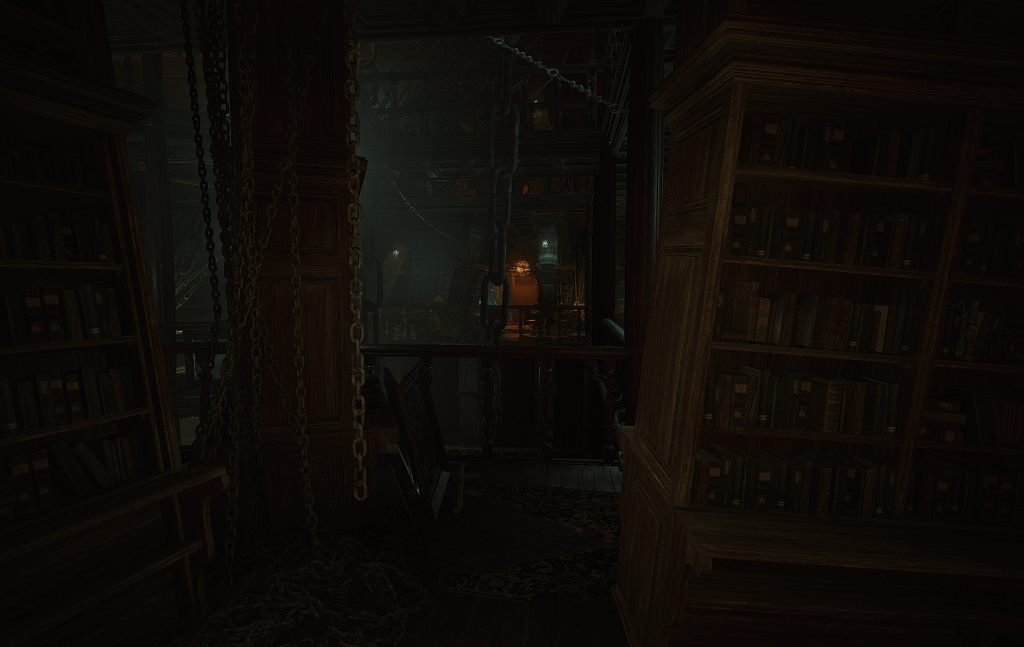


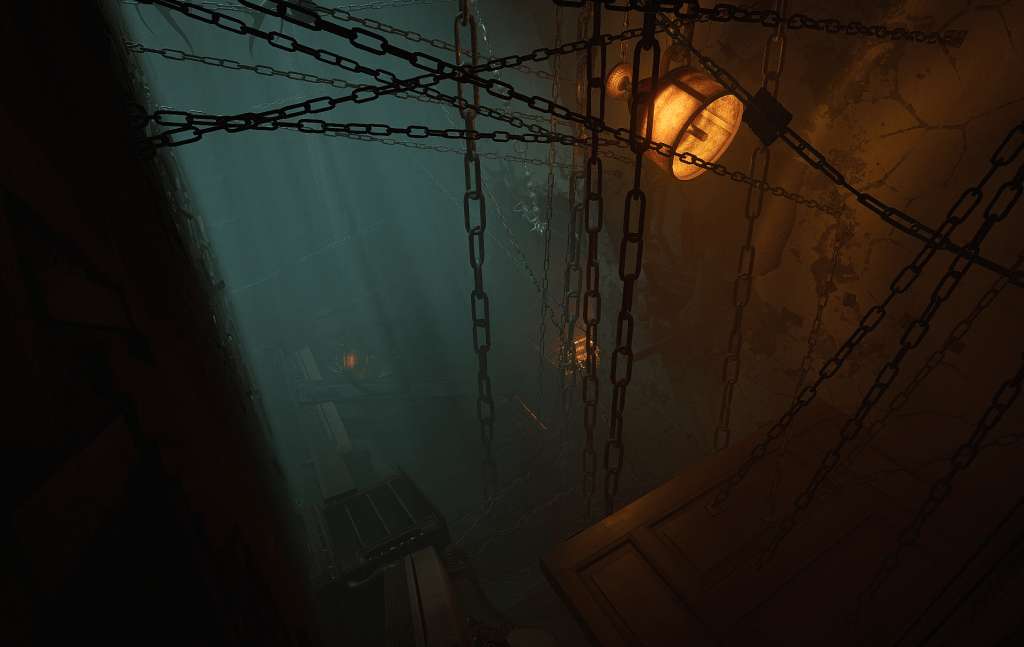
After collecting all the notes, the sound of the chest crashing down can be heard in the middle of the Library. After picking up the quill, a desk appears blocking the way, with the collected notes laid out on it – players can reread them and decide whether to side with the more positive or the more negative ones, choice counts to the DLC’s ending.
Chapter 2 finale
Motif: loss of connection with the daughter
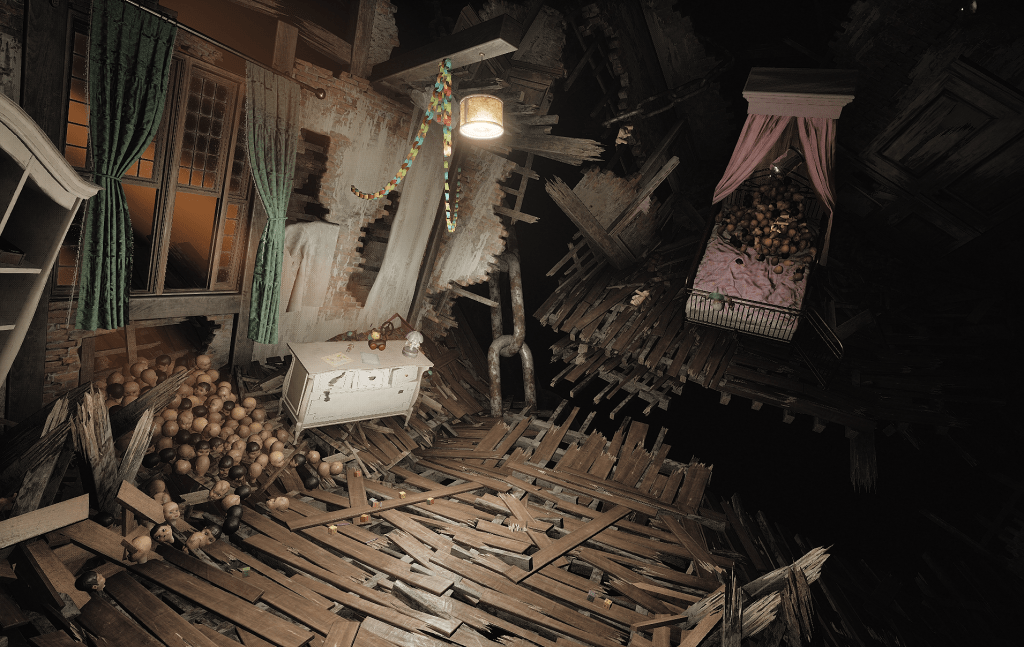
This sequence explores the Musician’s relationship with her daughter. It is depicted as a fleeing, playful doll and spaces that make chasing the doll difficult, symbolizing lack of mobility and thus the inability to be an active mother. One event features stairs that grow before the character and become a huge obstacle. There is also the motif of a stalking wheelchair.
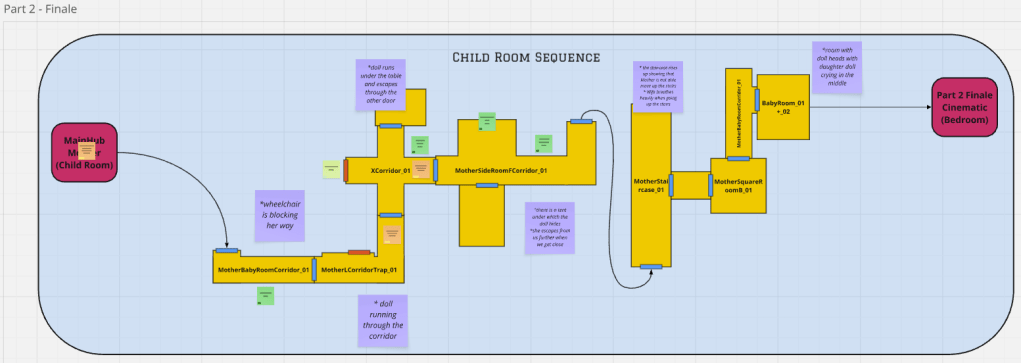
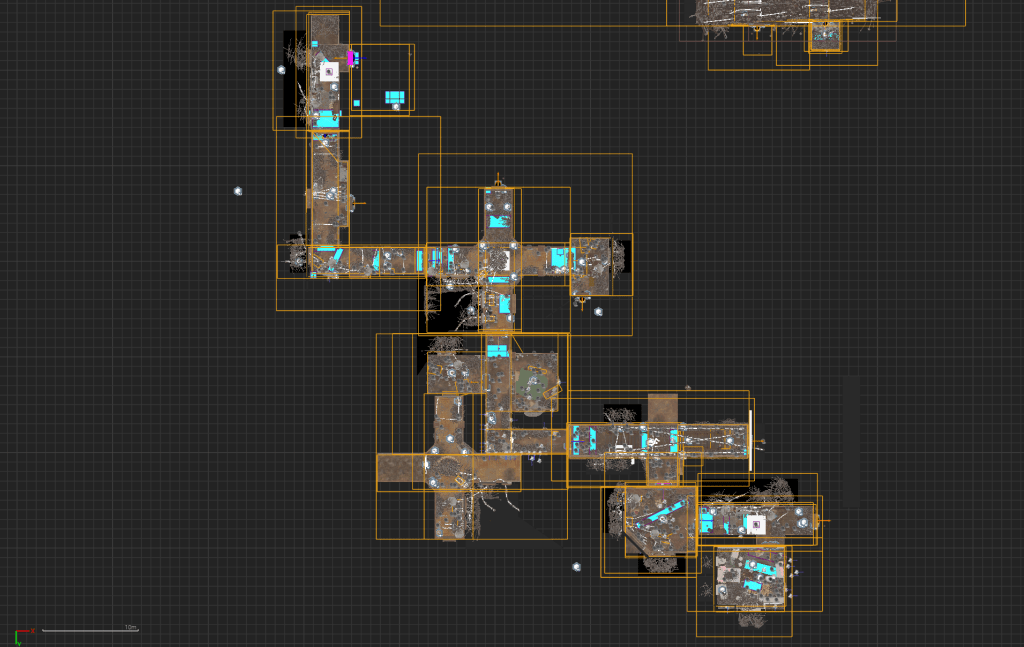
Upon leaving The Office, the Childroom is shown as unlocked.
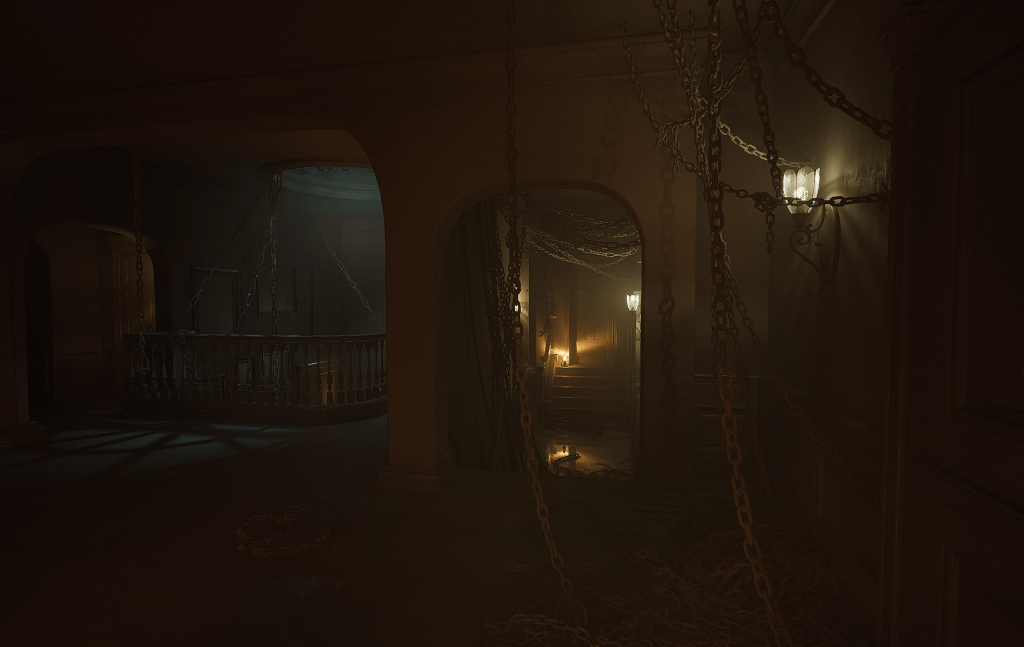
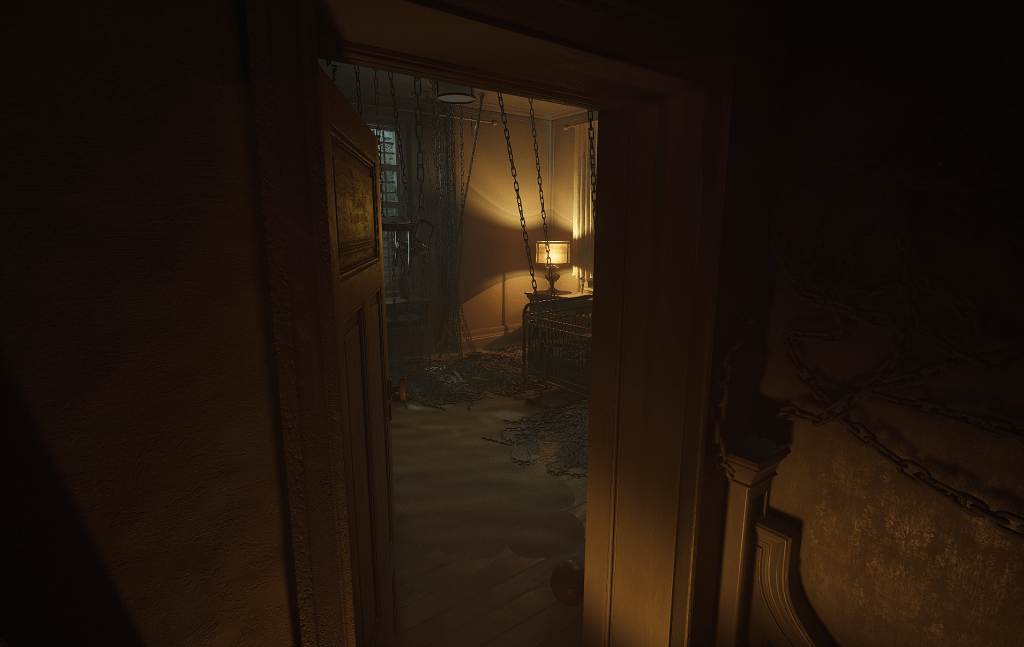
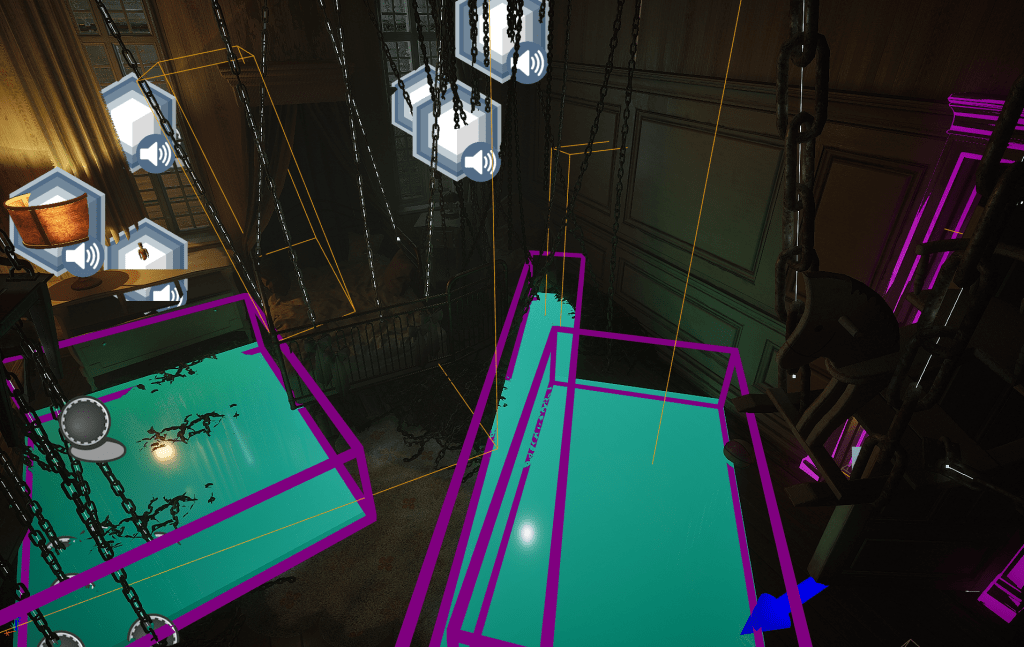
Leaving the Childroom, a fleeing doll can be seen, which then disappears behind a door. While chasing the doll, obstacles appear that players must avoid, causing them to lose contact with the daughter/doll. Each such element symbolizes an obstacle and the lack of full mobility needed to play with the daughter.
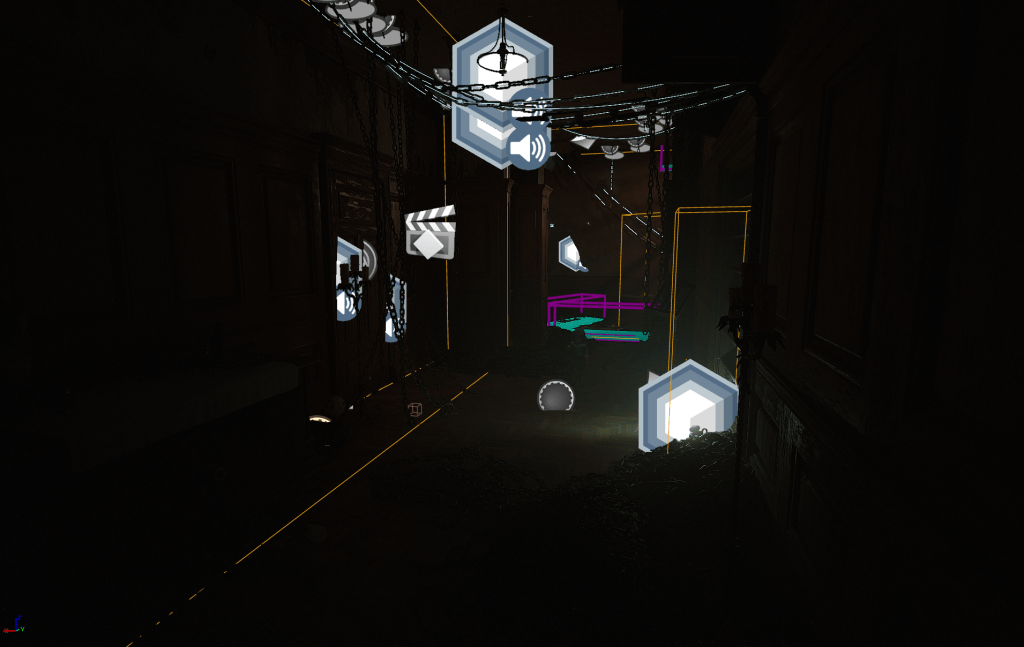
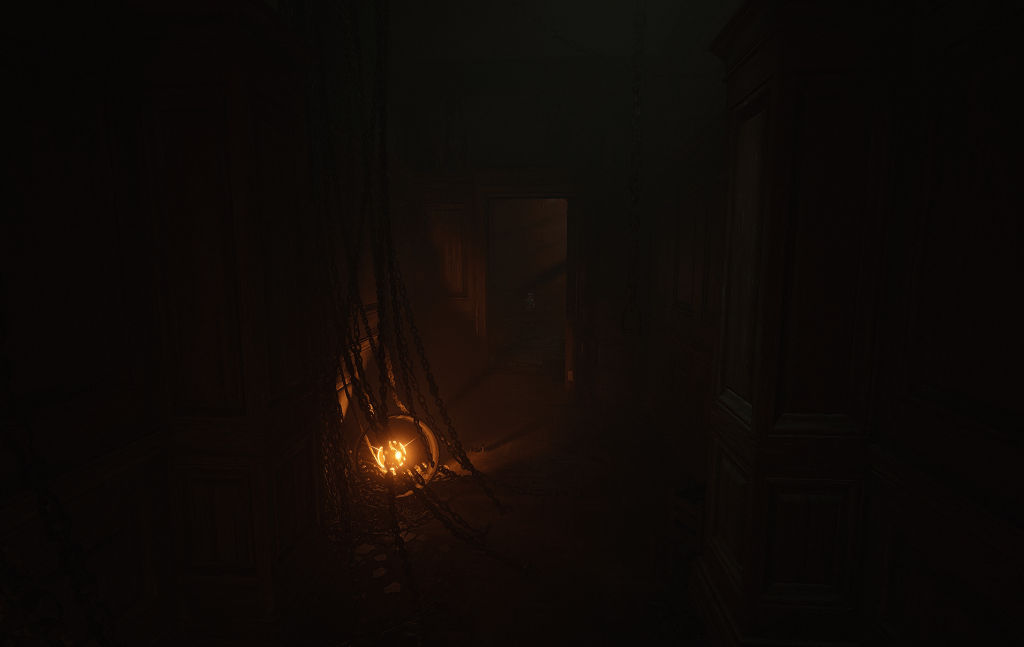
In this corridor, the doll runs into a room and disappears under a table.
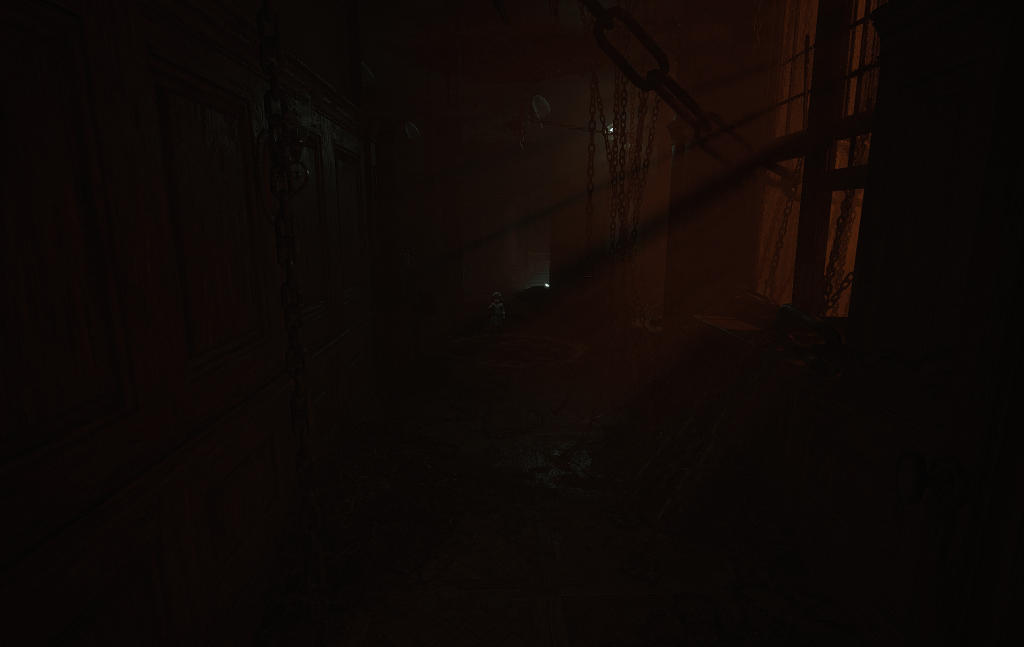
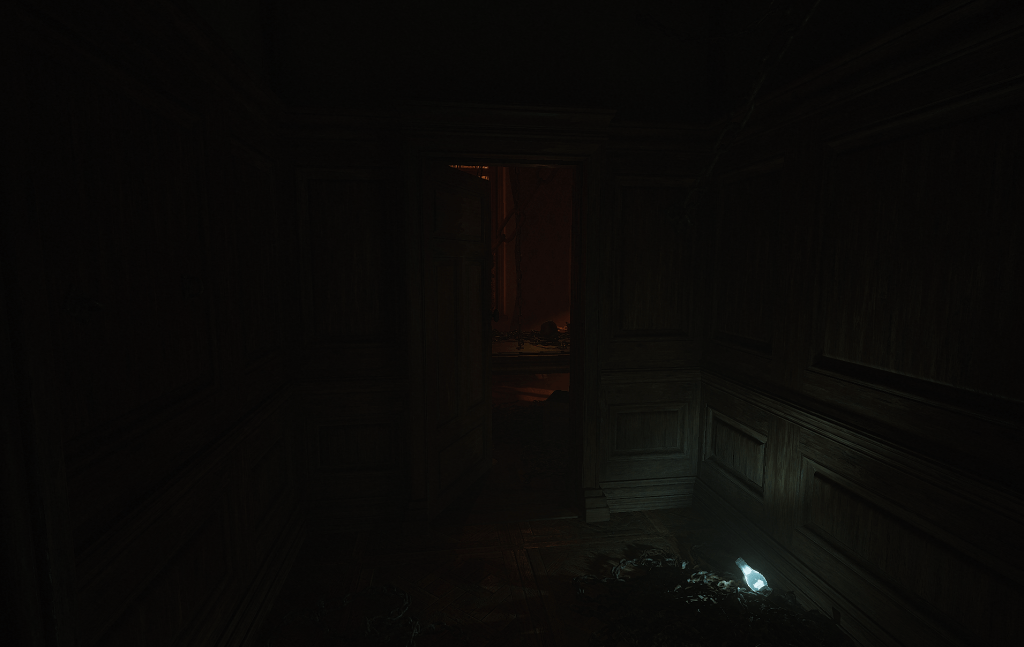
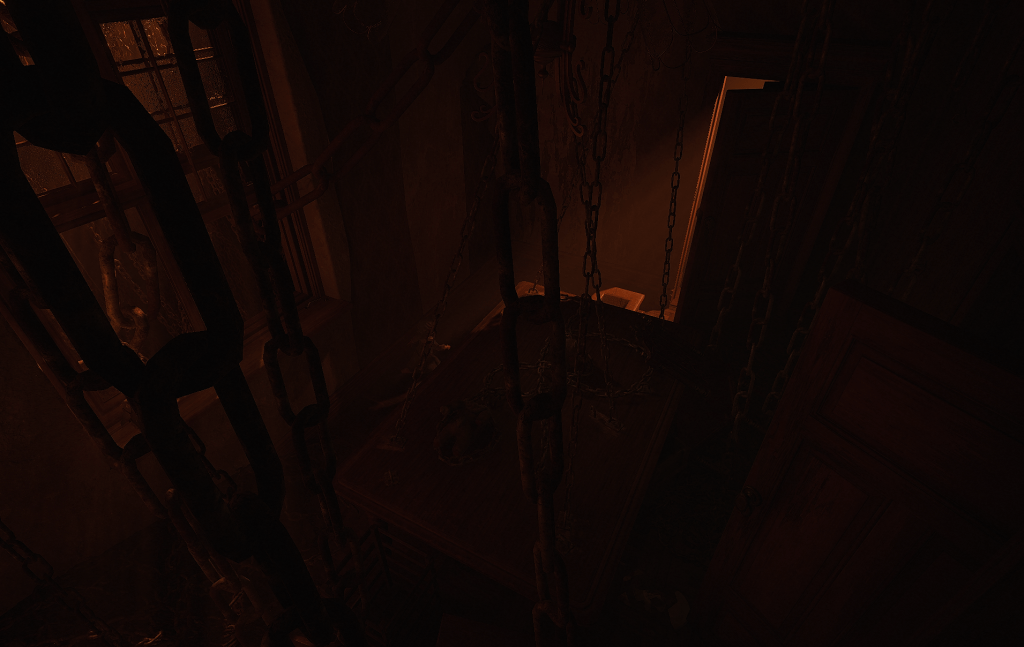
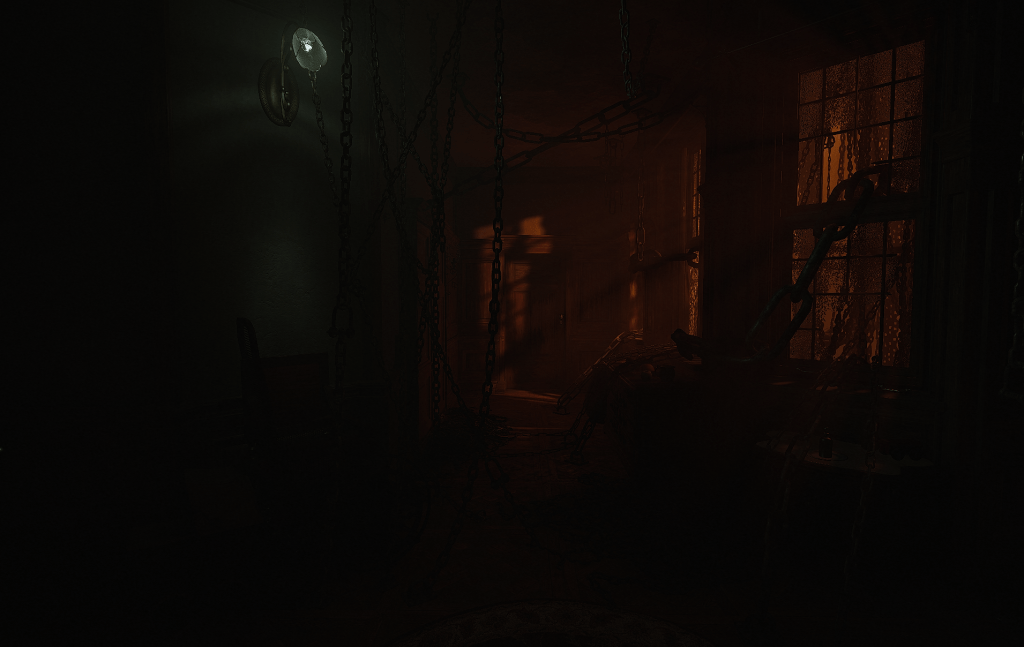
From the next room, players can enter the room with the table and witness an event – Musician appears in the very spot where the players were a moment ago.
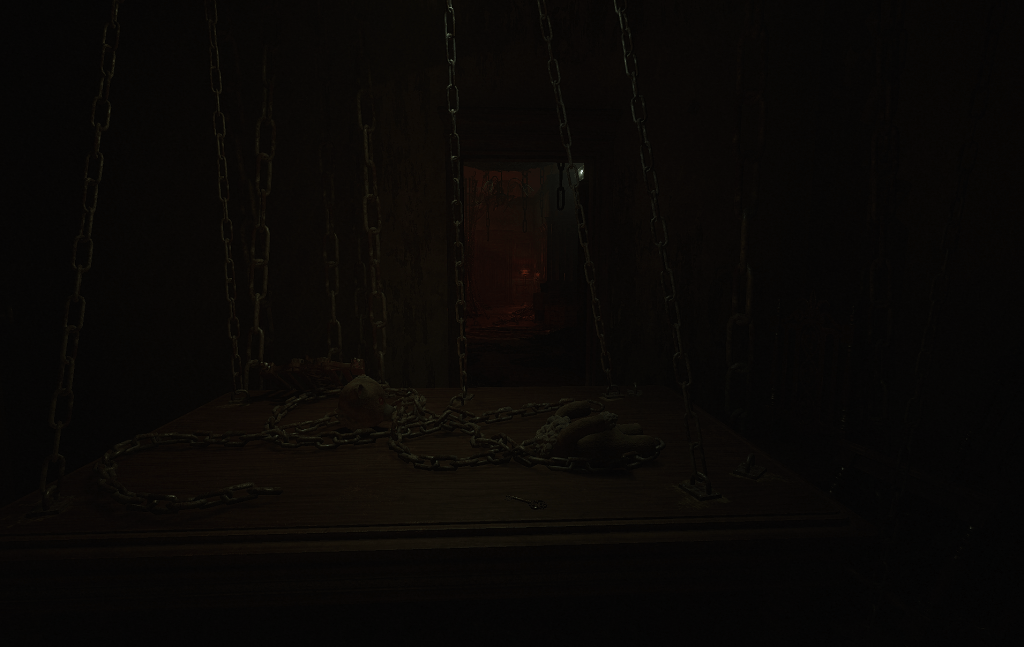
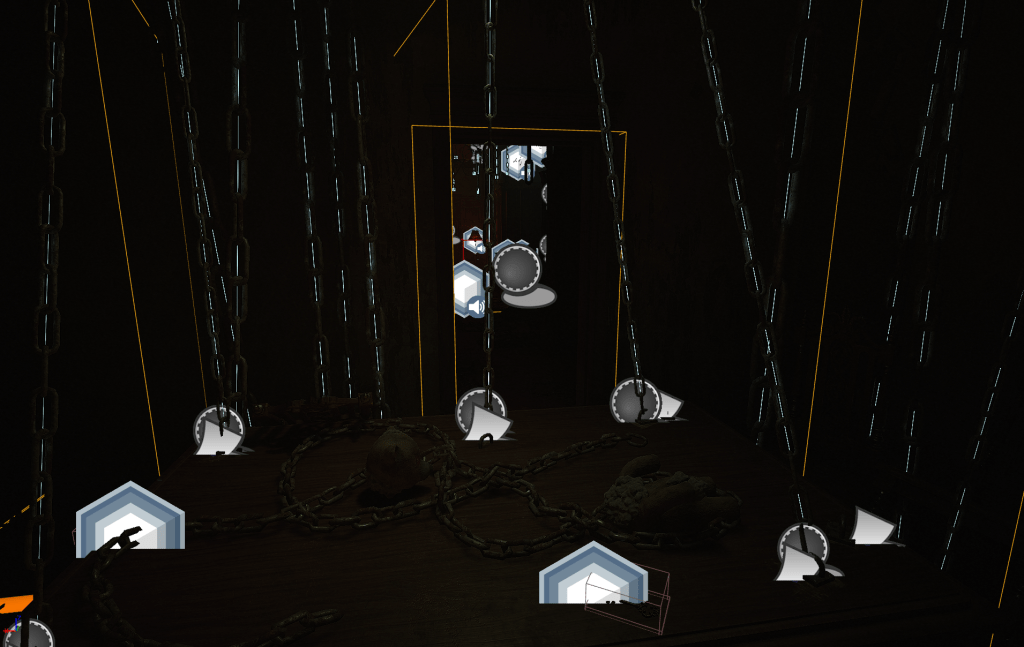

The final atmospheric event shows the doll running up the stairs, with a dark vision of Musician appearing behind her. Upon reaching the second flight, the stairs enlarge and twist into an insurmountable obstacle, clearly conveying the protagonist’s impaired mobility.
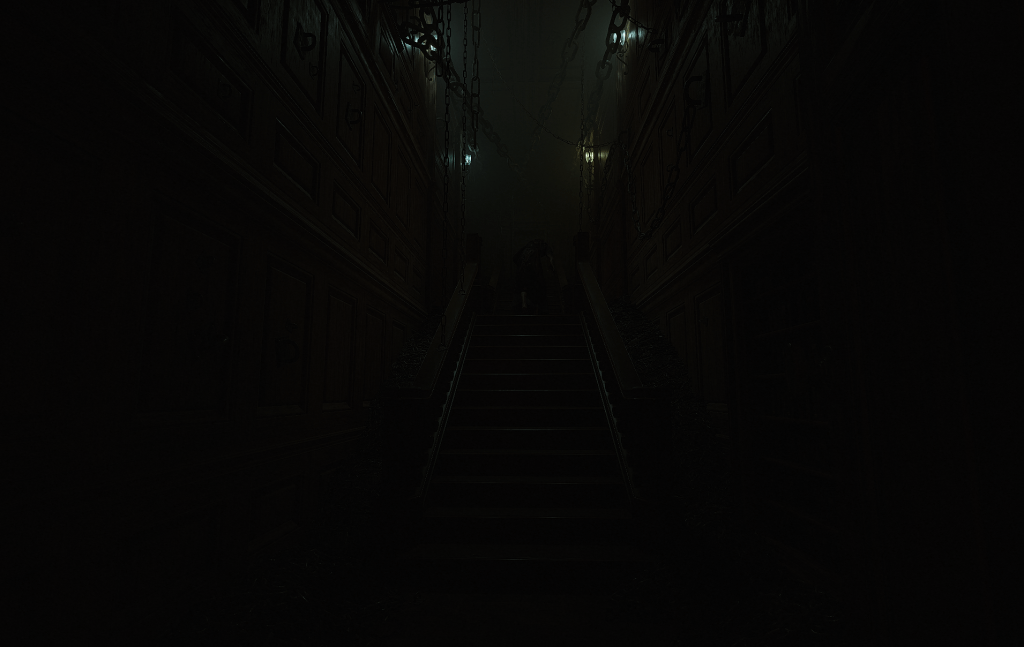
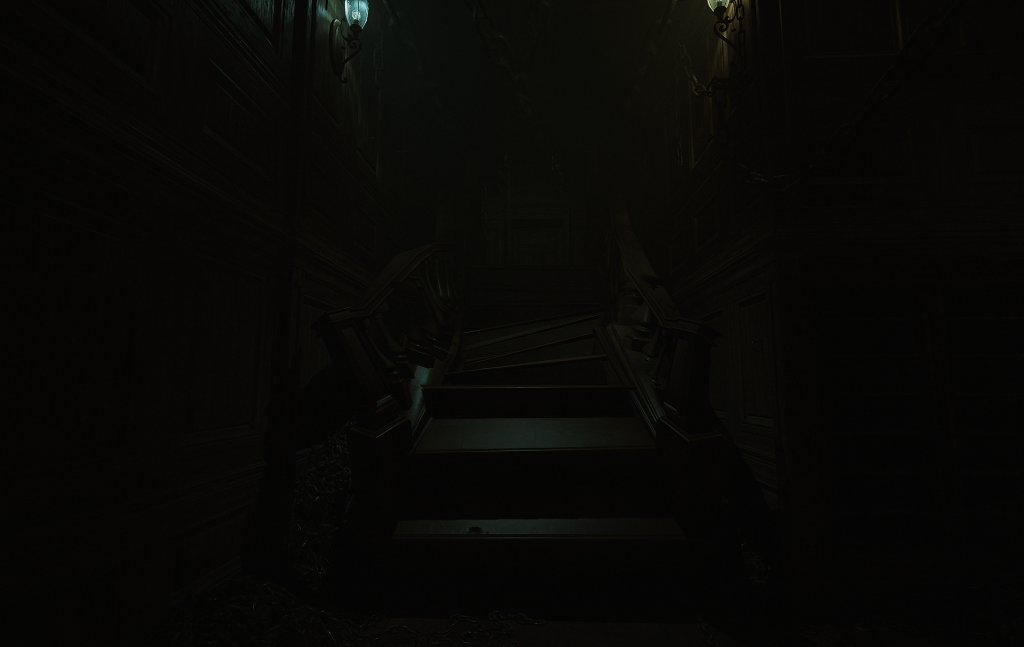

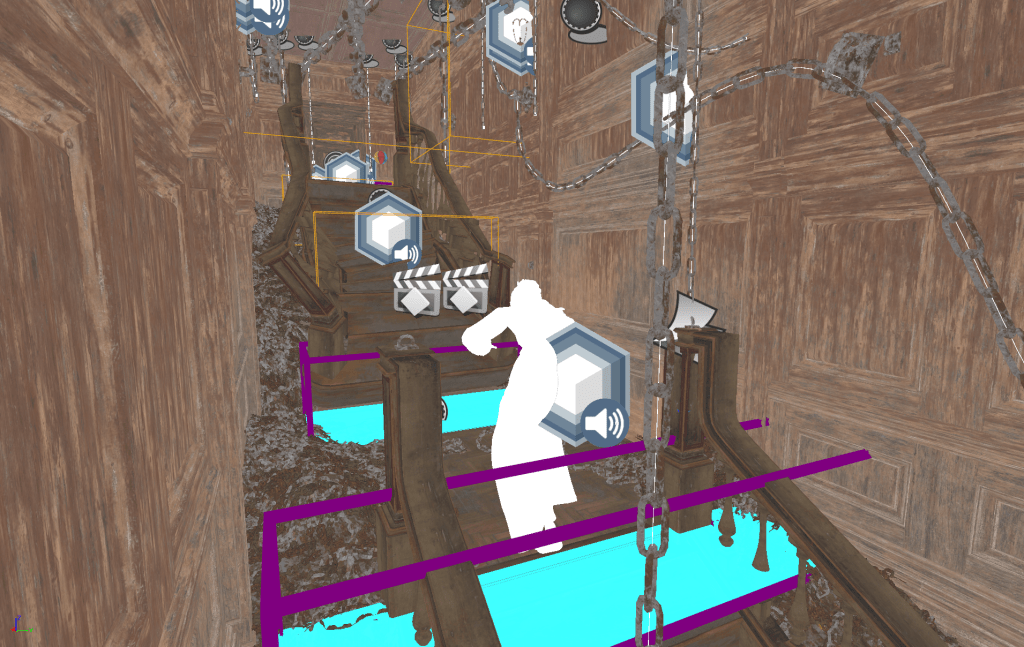
Players return to the Childroom, where a crying doll awaits – a cutscene triggers.
Chapter 3
Sequence 1
Motif: fear, suicide
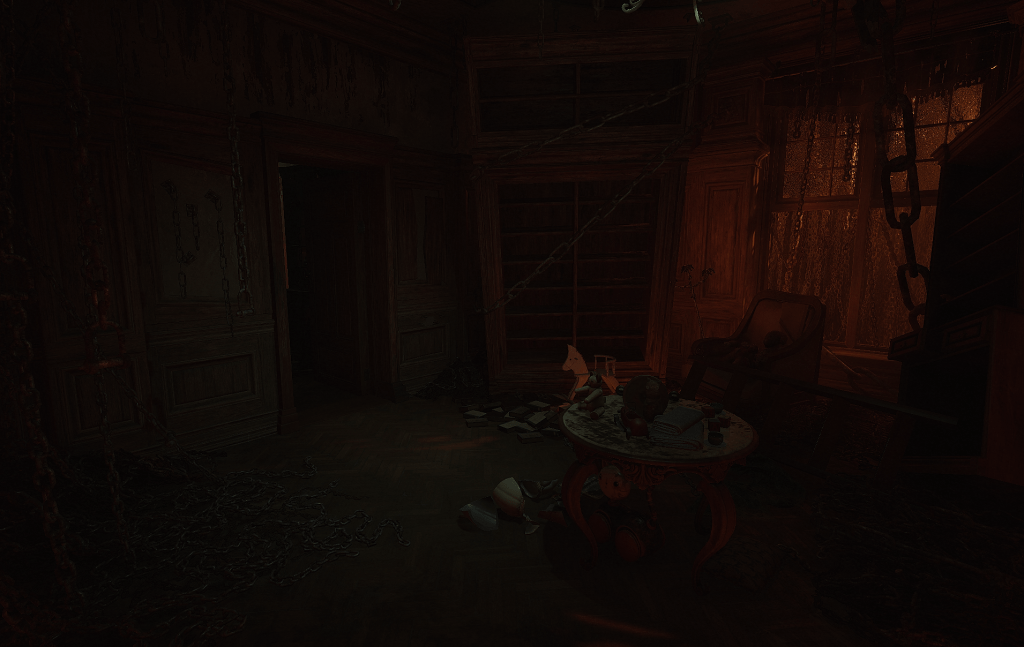
The finale’s main motif is making choices — destroying elements related either to the Painter or to the Musician. Fear is intensified by the frequent presence of the Musician’s dark version. One of the final rooms is an arena suspended in emptiness – players must overcome the darkness and reach the exit while running from the Enemy.
During exploration there are many elements associated with suicide — a gun, an open window, falling objects into the void, a knife.
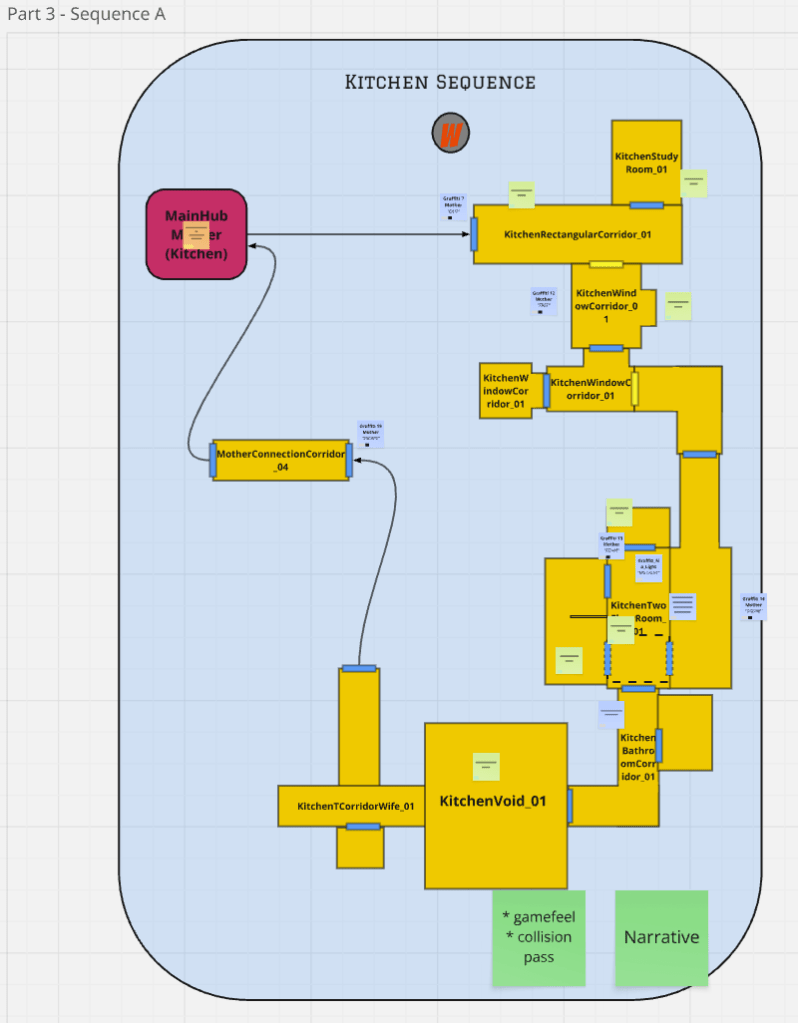
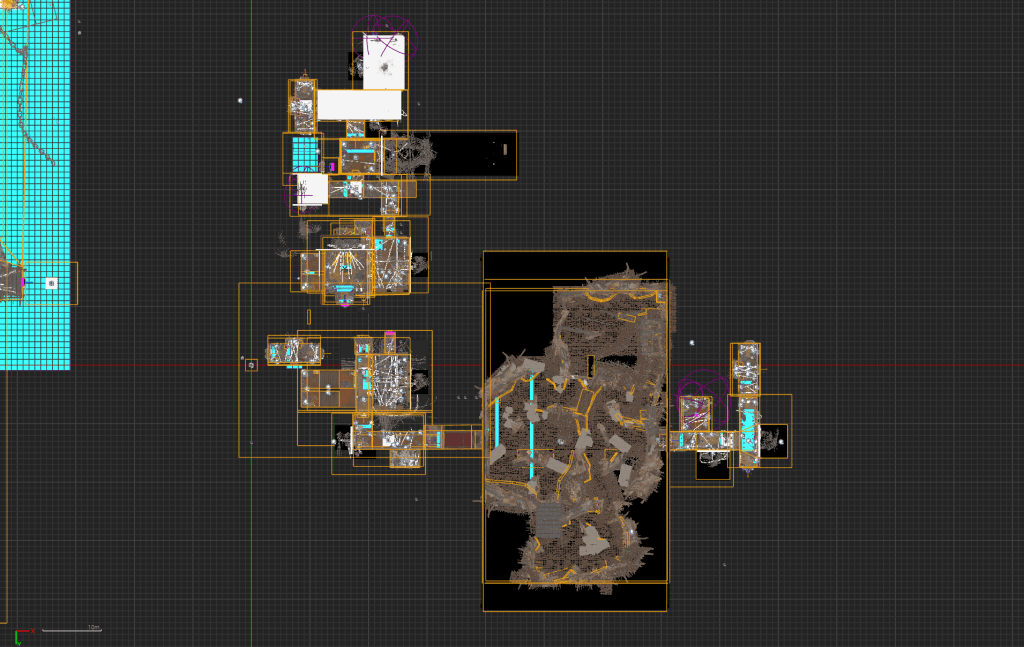
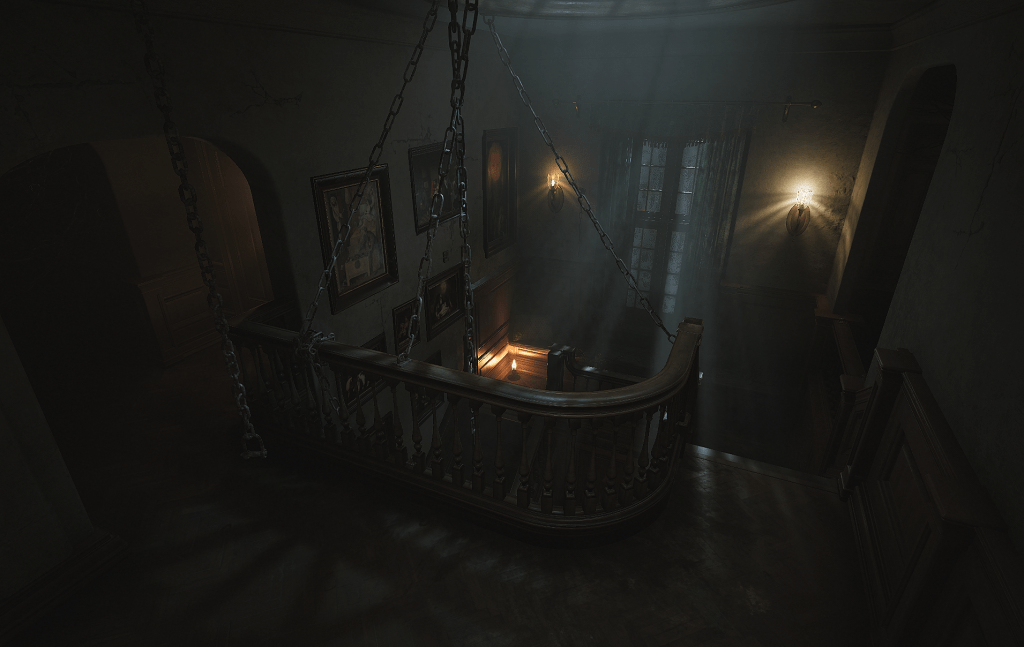
In the final Chapter, there are far fewer chains in the Mansion, signaling the protagonist’s mental “release.”
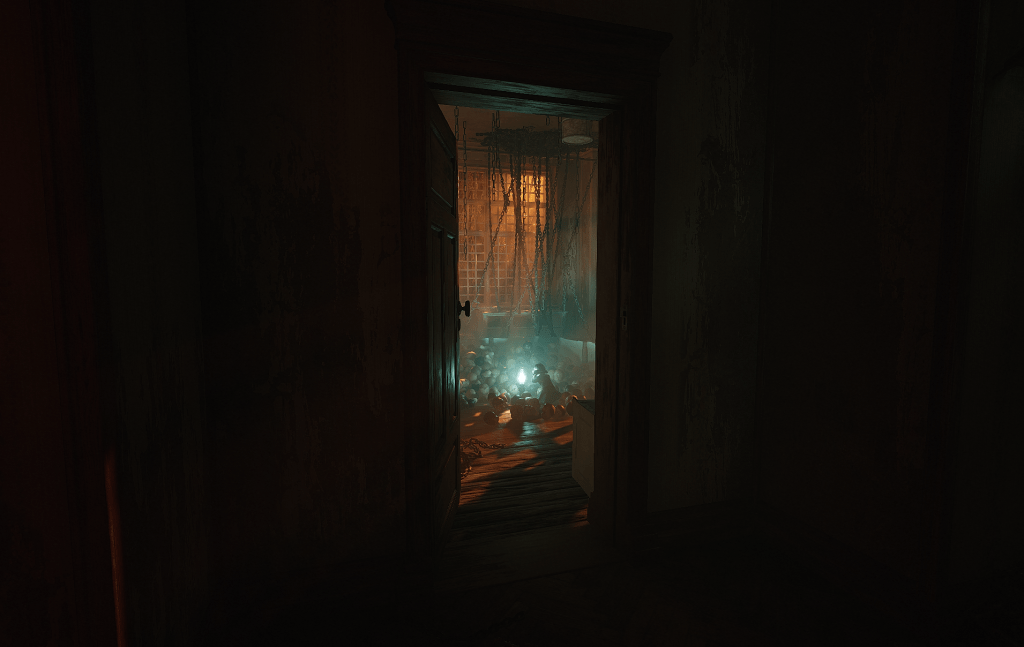
The light leads to the kitchen, where a knife hangs in the pantry, indicating the main motif of the next sequence – suicide.
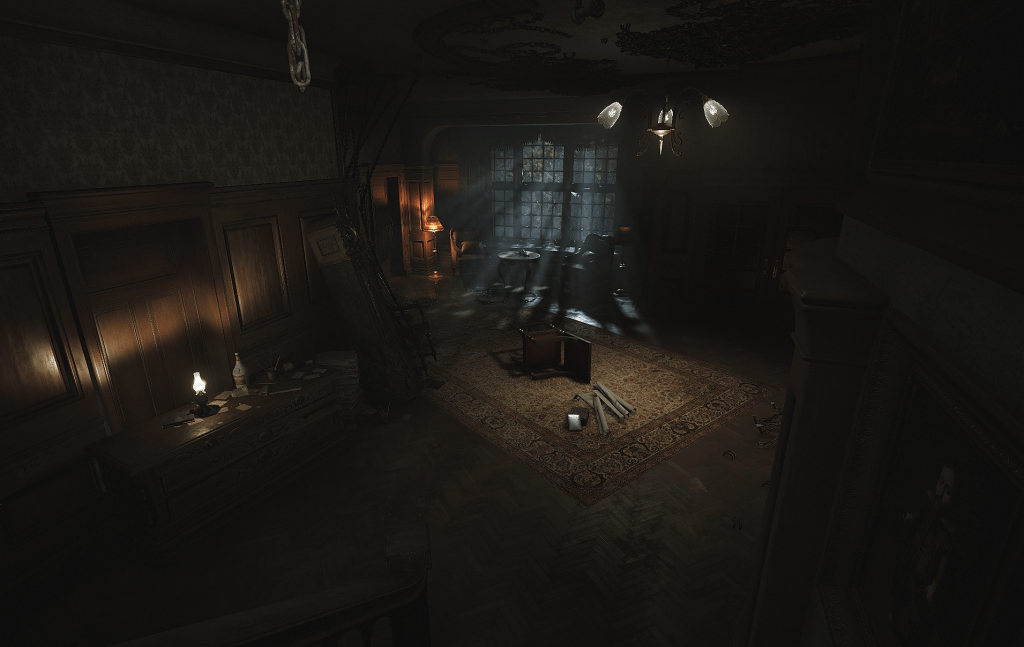

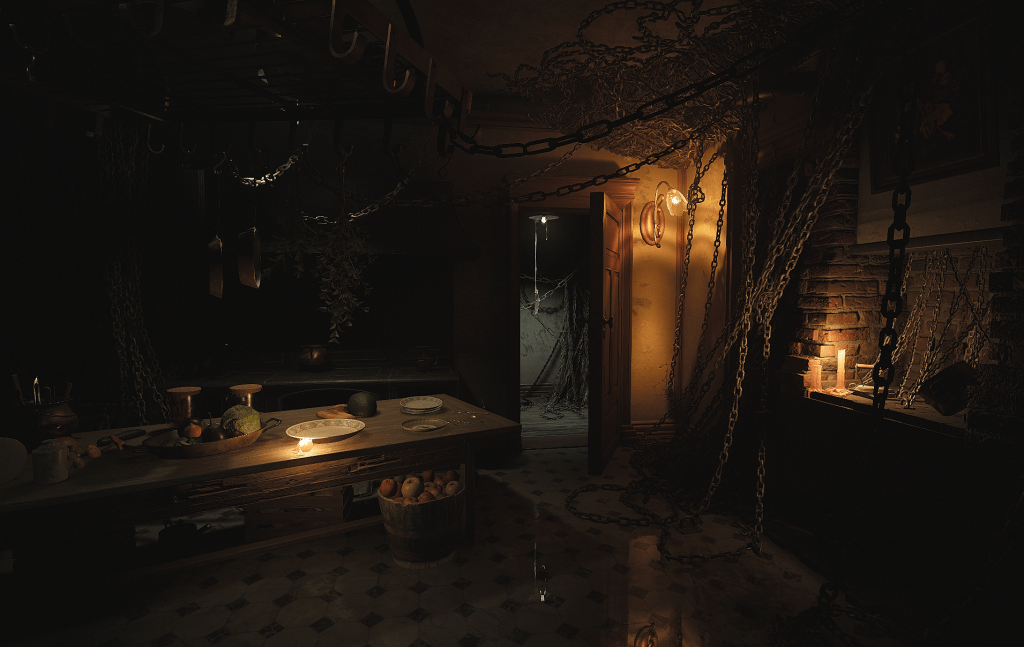
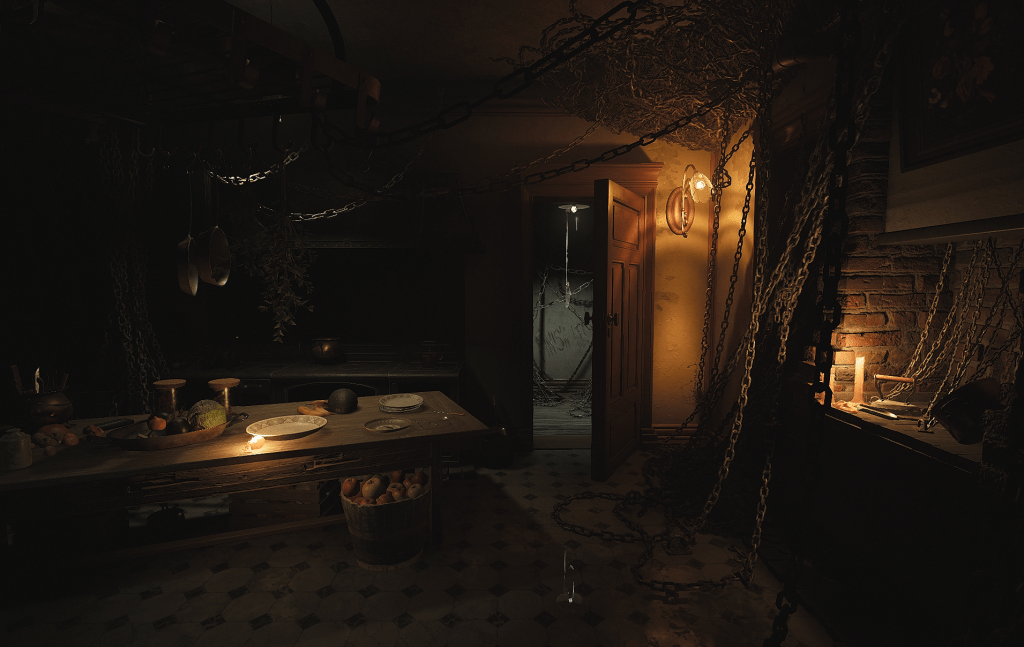
In this sequence, the Wife’s presence is more frequent – upon entering, we see her go into the only accessible room, building a sense of threat.
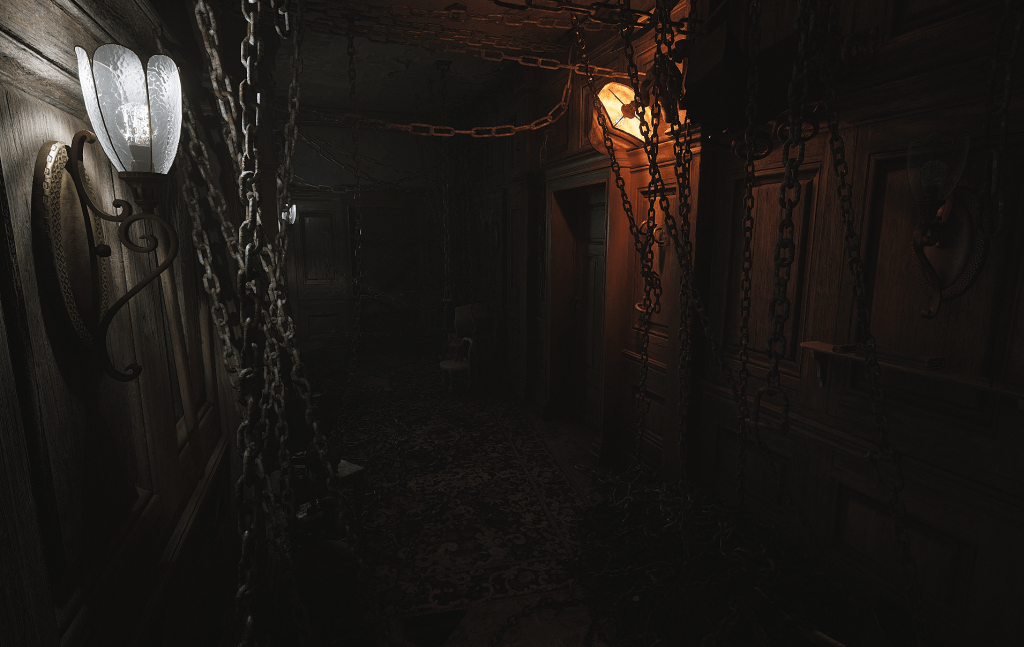
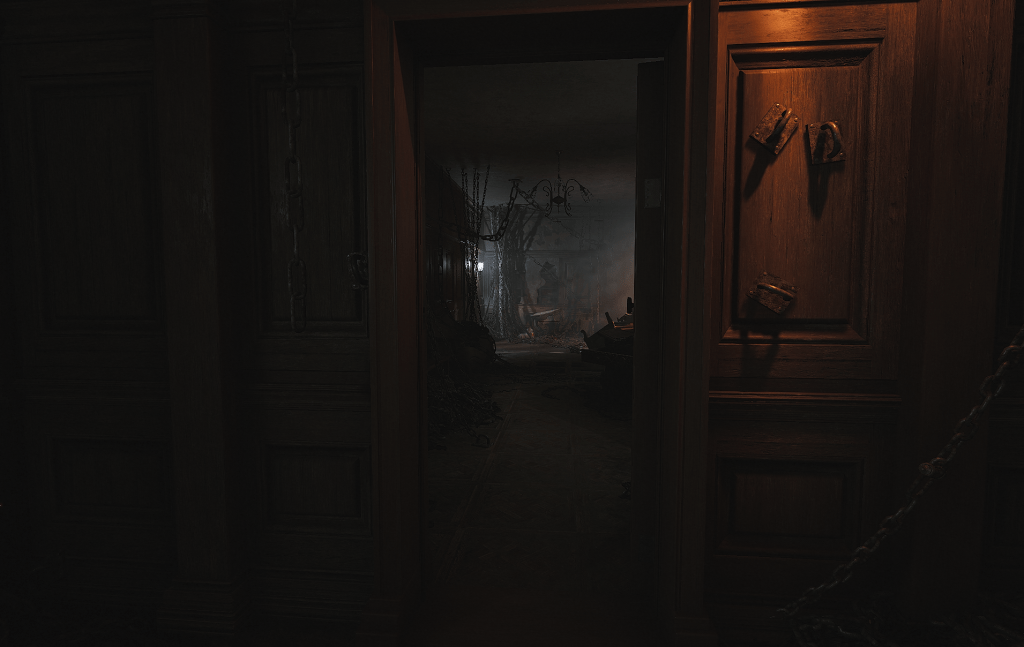
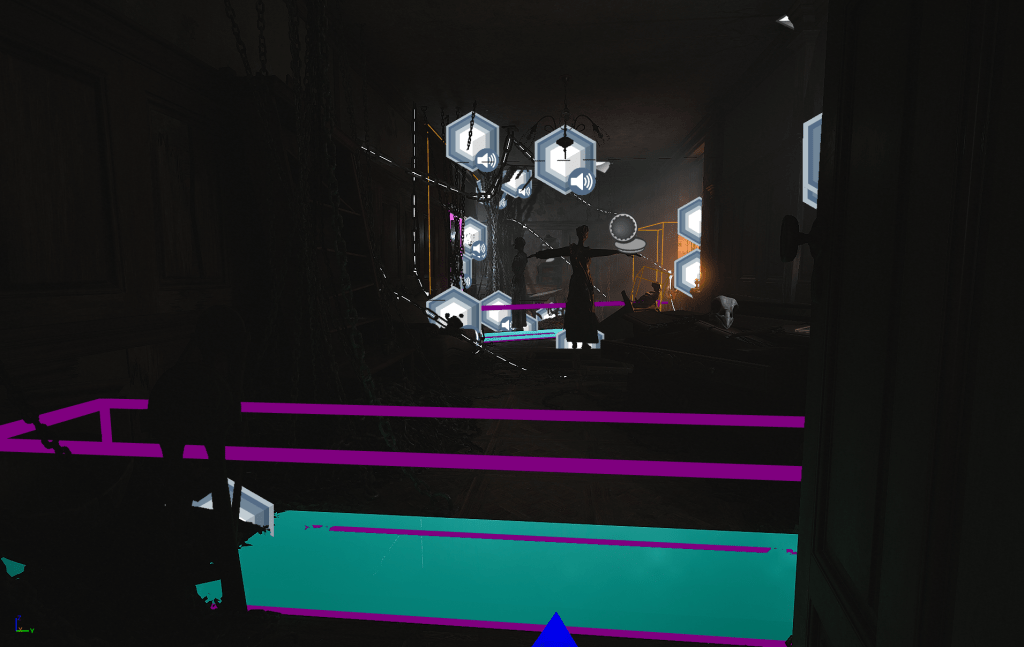
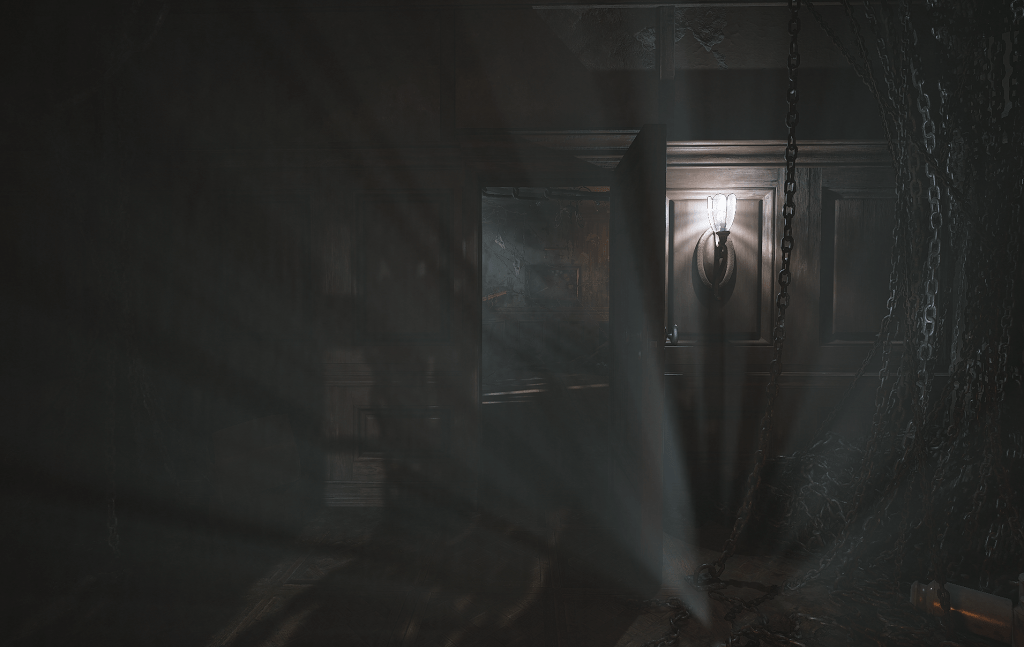
In the room, there are two light-sensitive objects – a doll and a pistol – one tied to family, the other to suicide. Players must decide which to destroy using the flashlight; destroying an object counts toward one of the game’s endings. This also introduces the motif and the mechanic for this sequence.
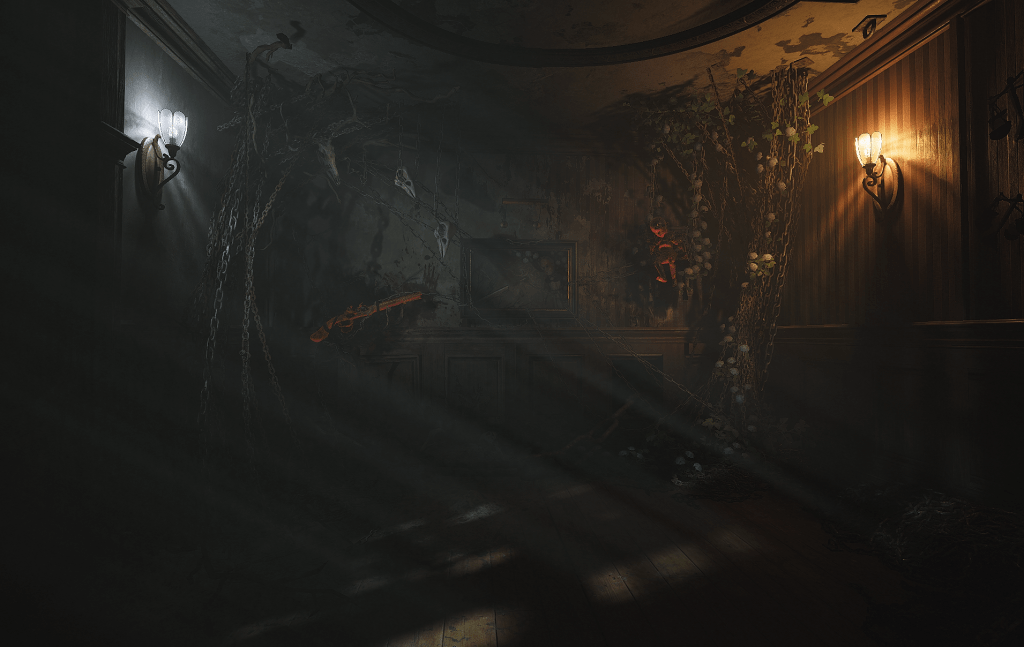
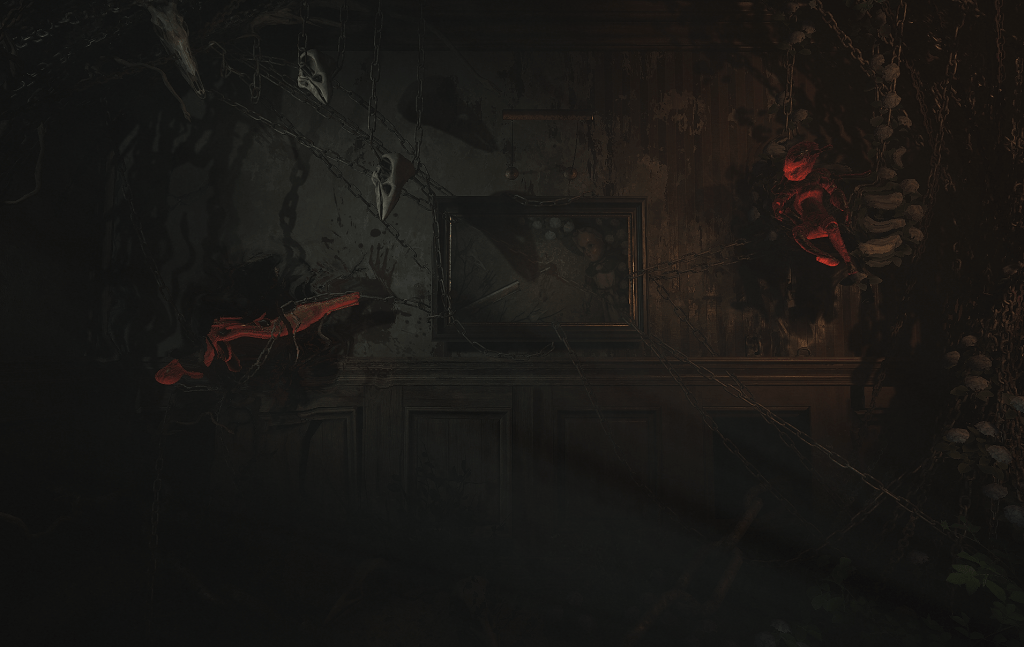
Upon leaving, it’s clear the room has changed. Throughout the sequence, elements associated with suicide appear: an open window with stairs leading up to it, a chair in the middle suggesting suicide by hanging, and similar imagery that strongly conveys the motif and the protagonist’s mental state.

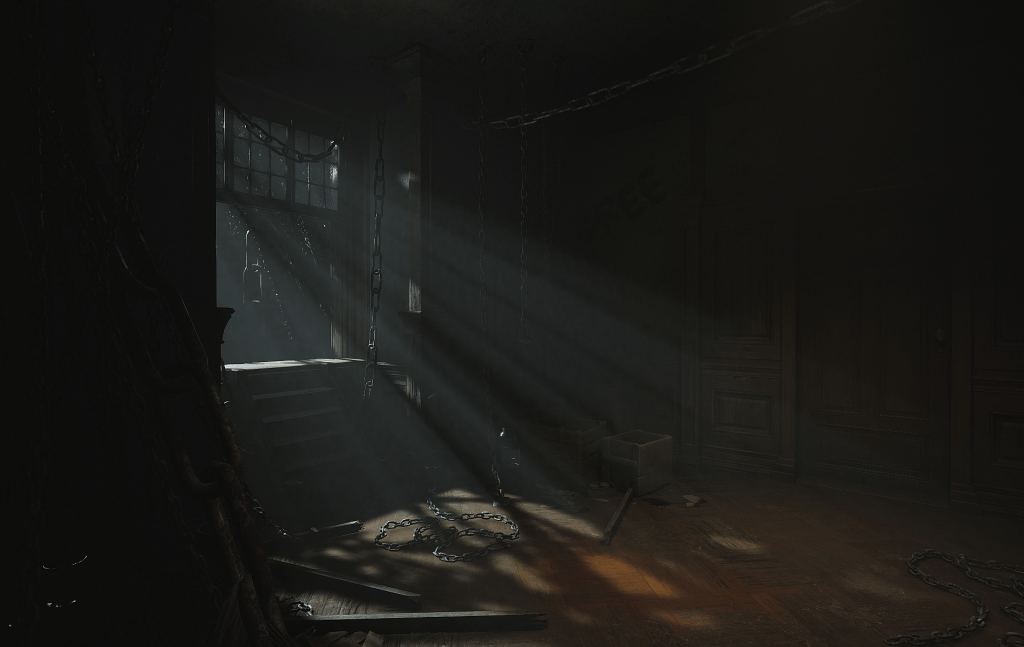
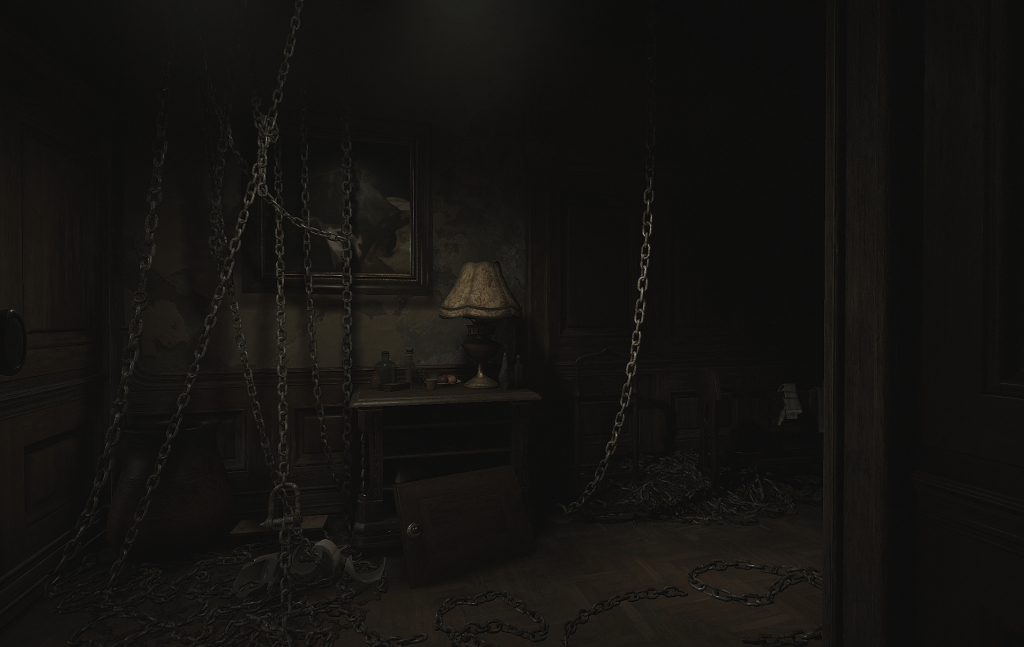
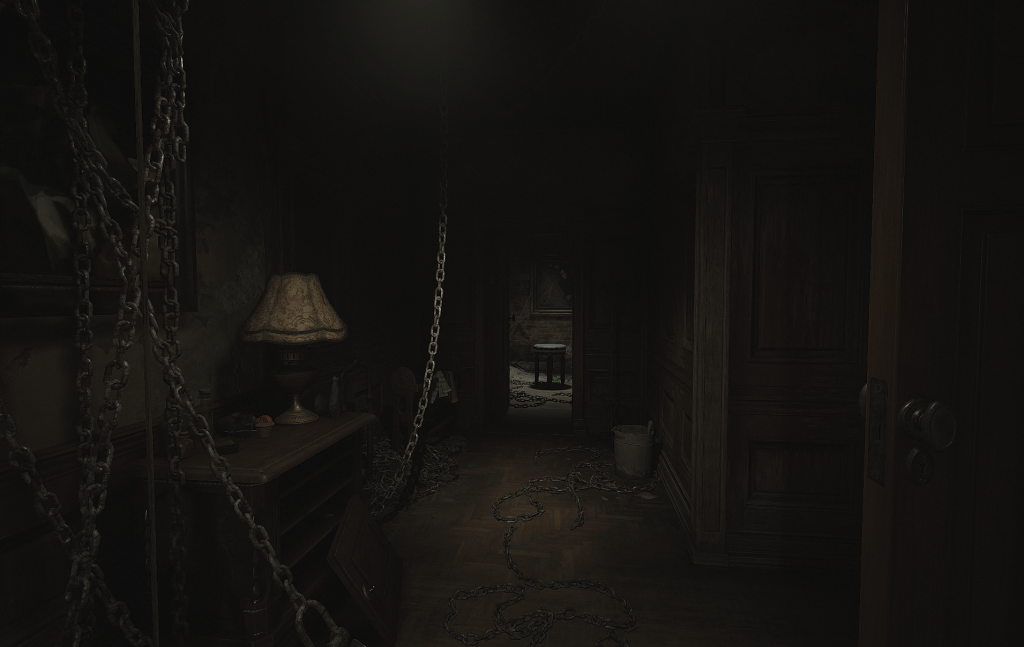

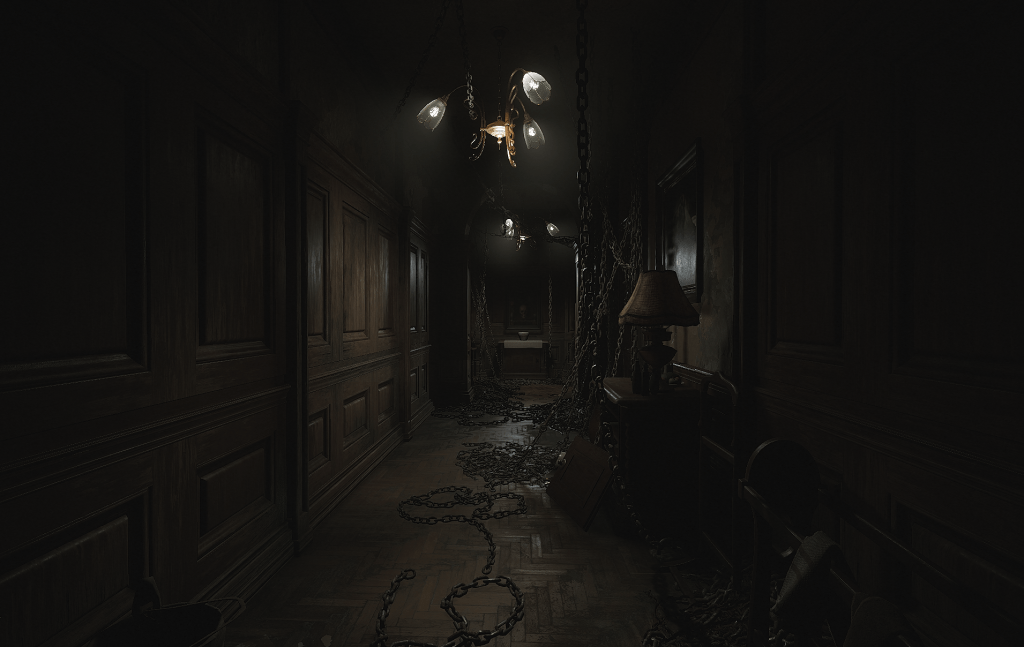

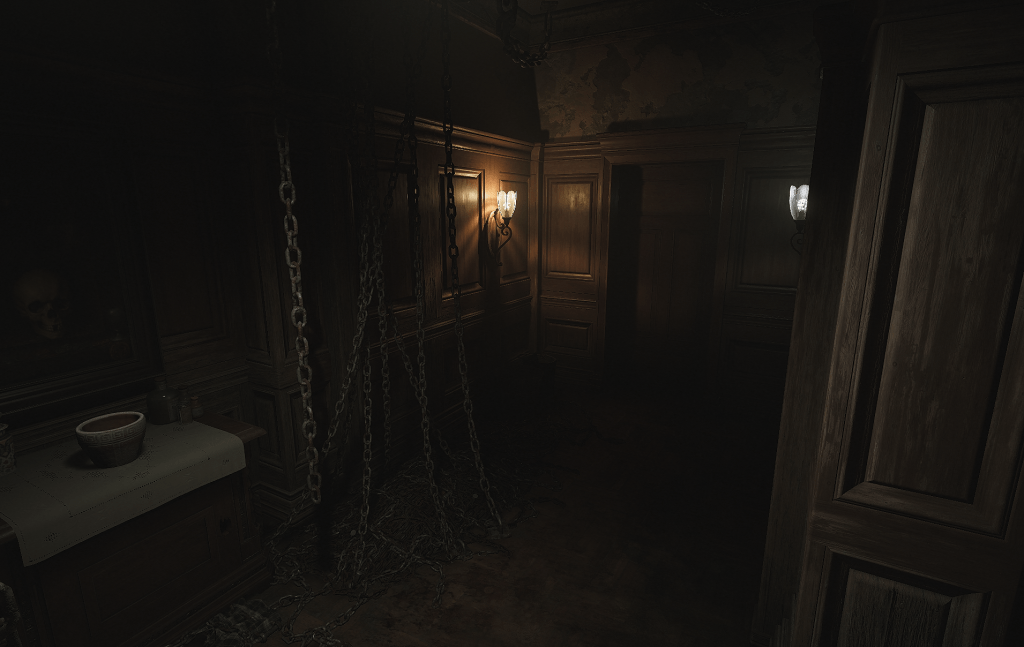
Entering this room, players see a bottle falling and shattering. A side room, placed to encourage exploration, contains a note and atmospheric events.

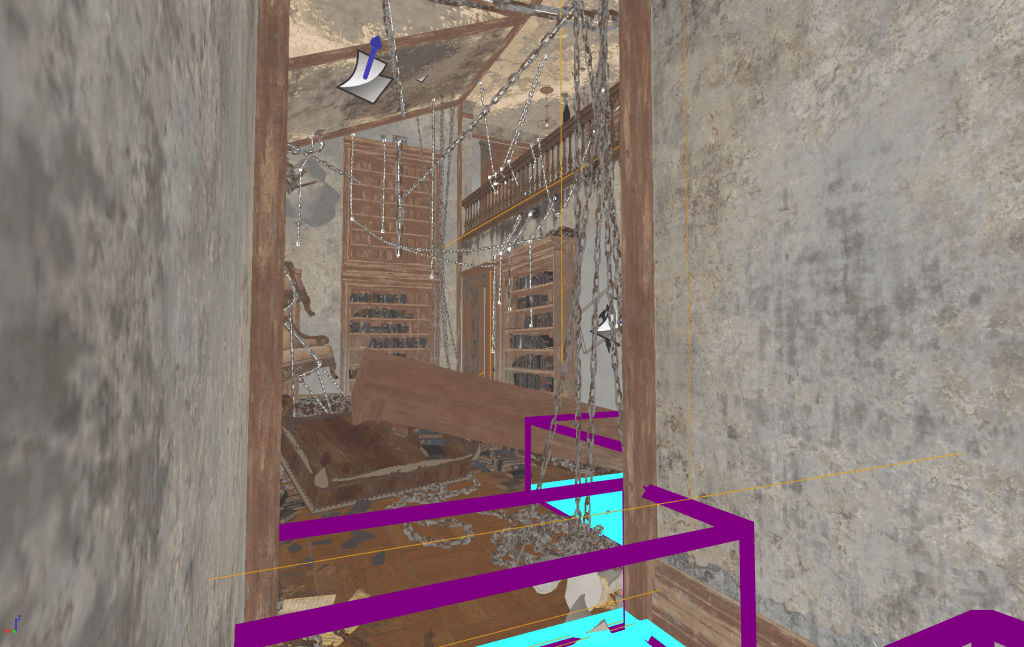
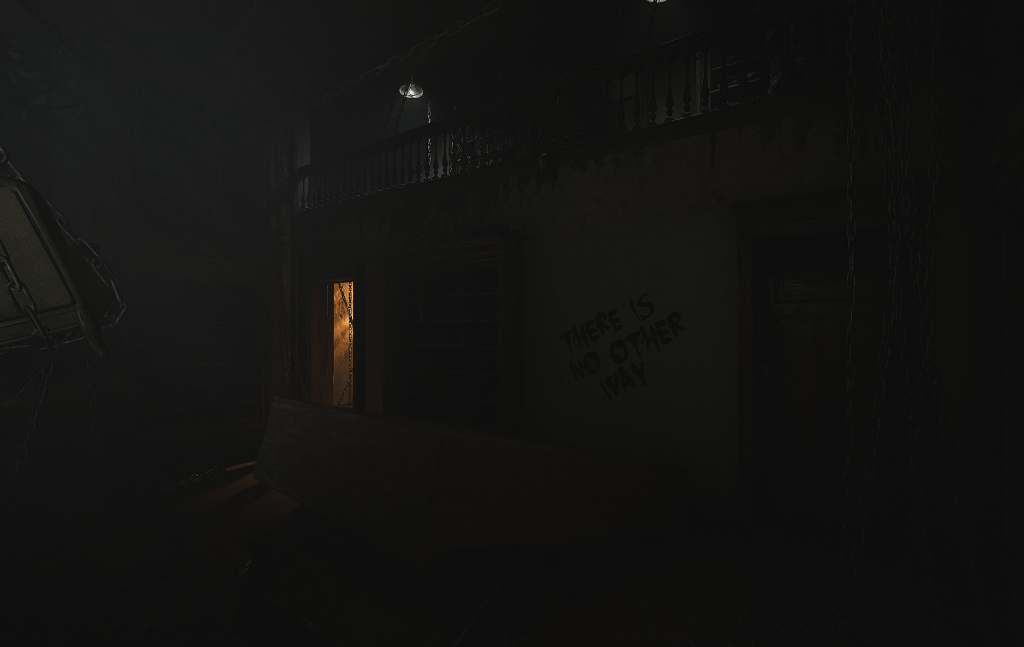
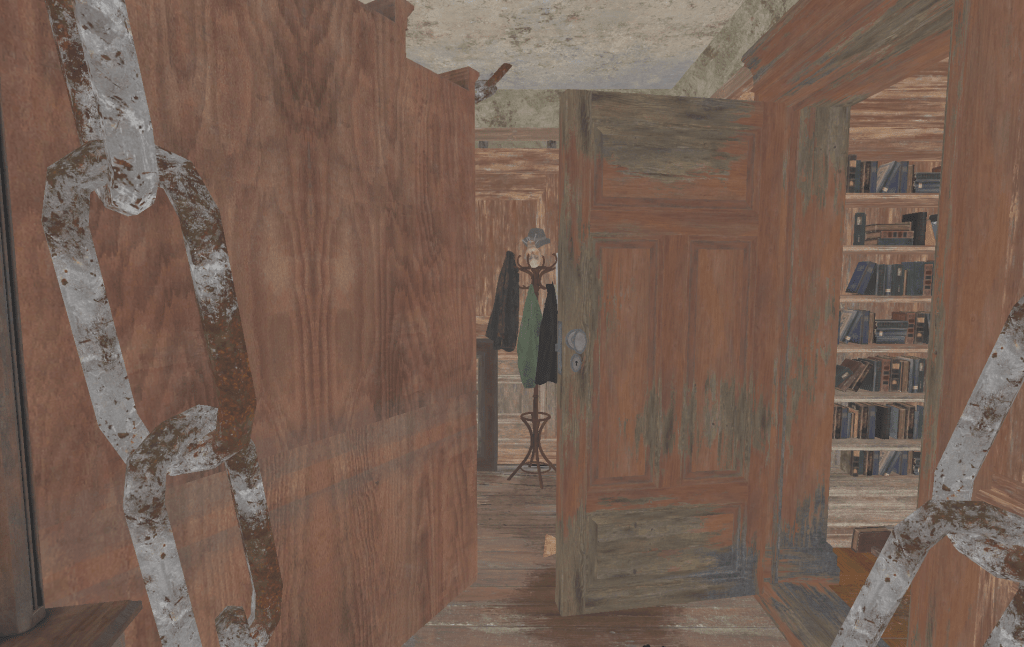
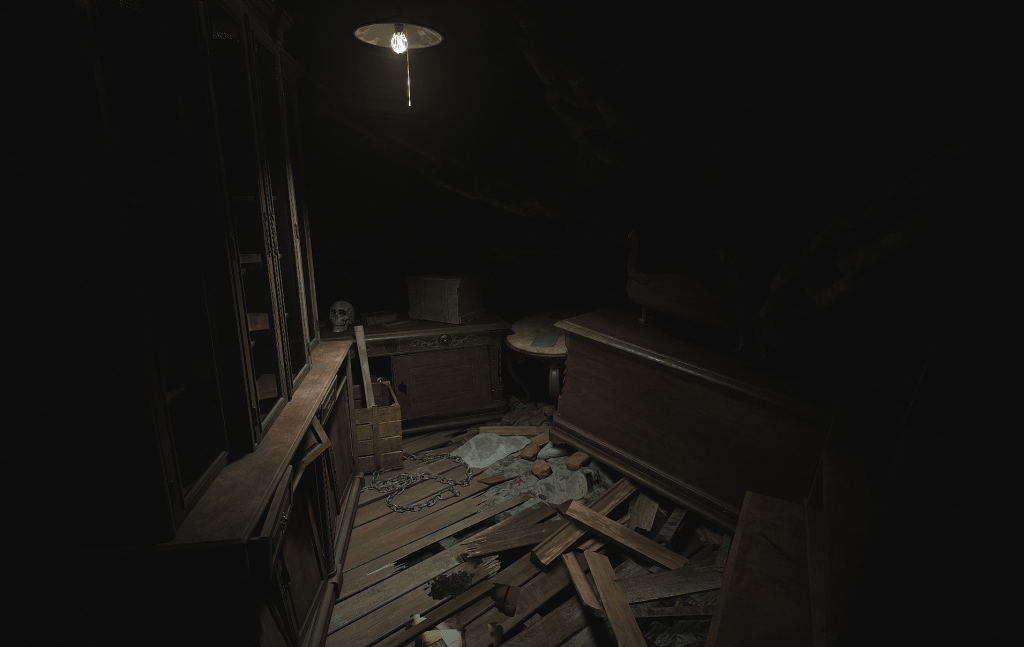
Going upstairs, we see the same falling bottle – but this time it doesn’t shatter, because when you approach the railing, you can see the room you were just in is now a void – another suicidal suggestion.
Exiting this room triggers a short sequence in which players must flee from the Wife.

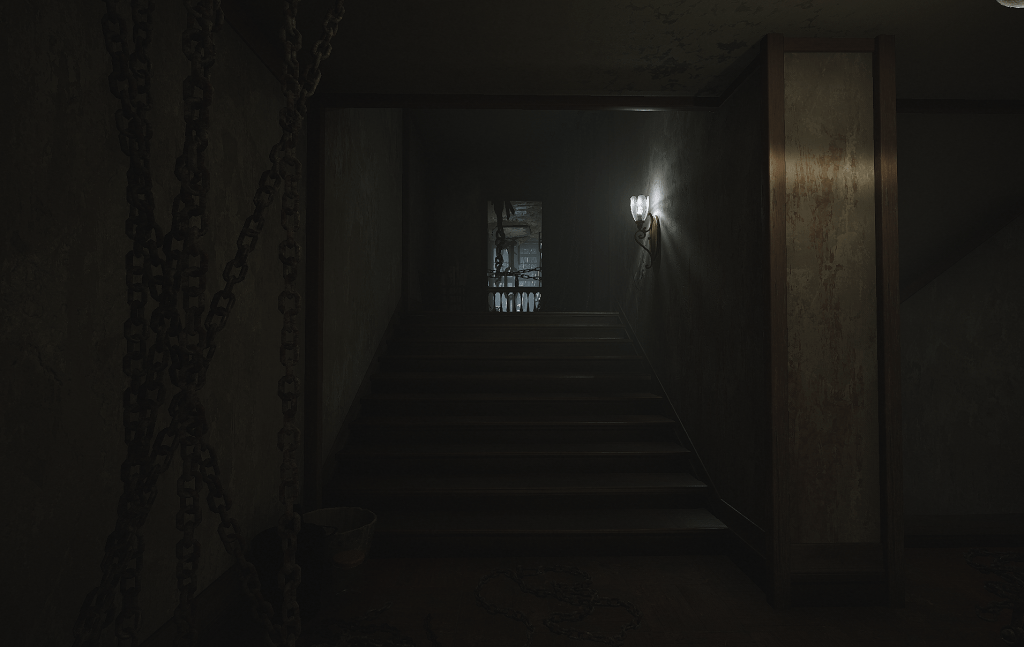
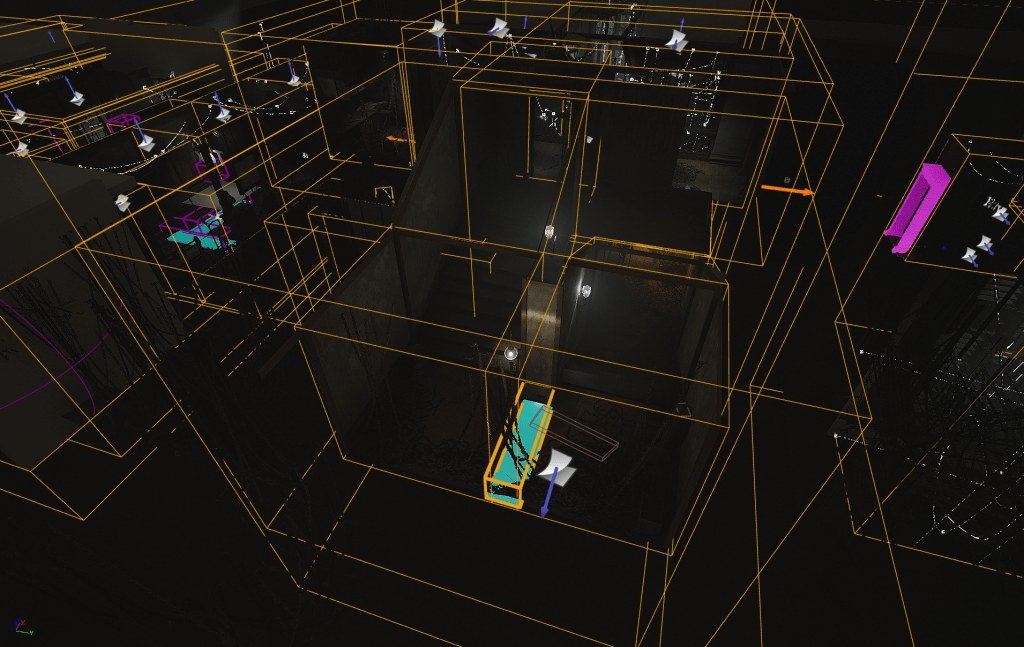
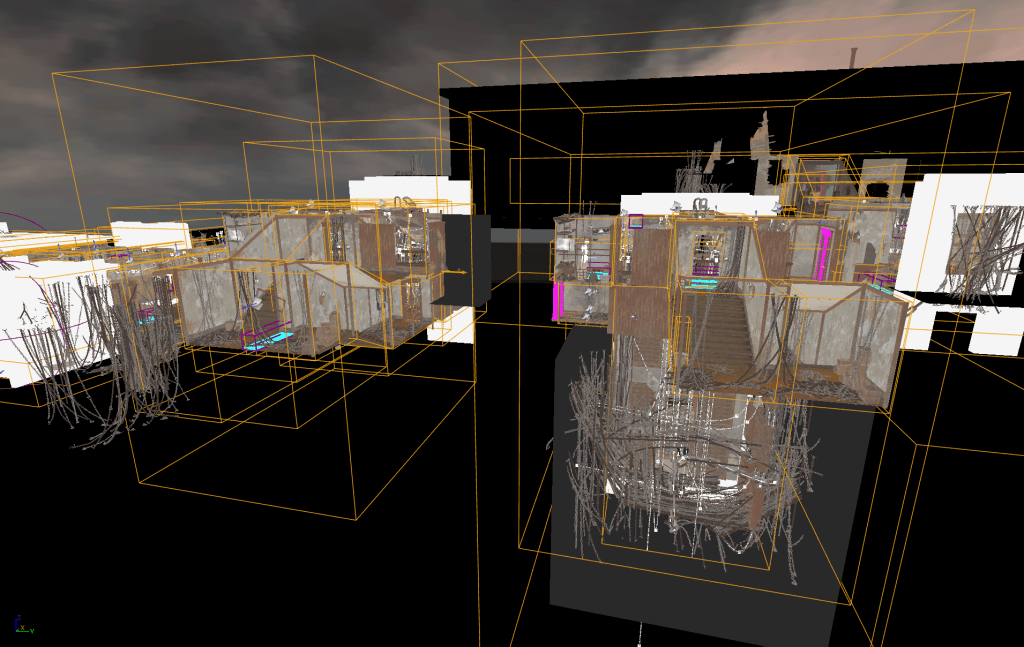
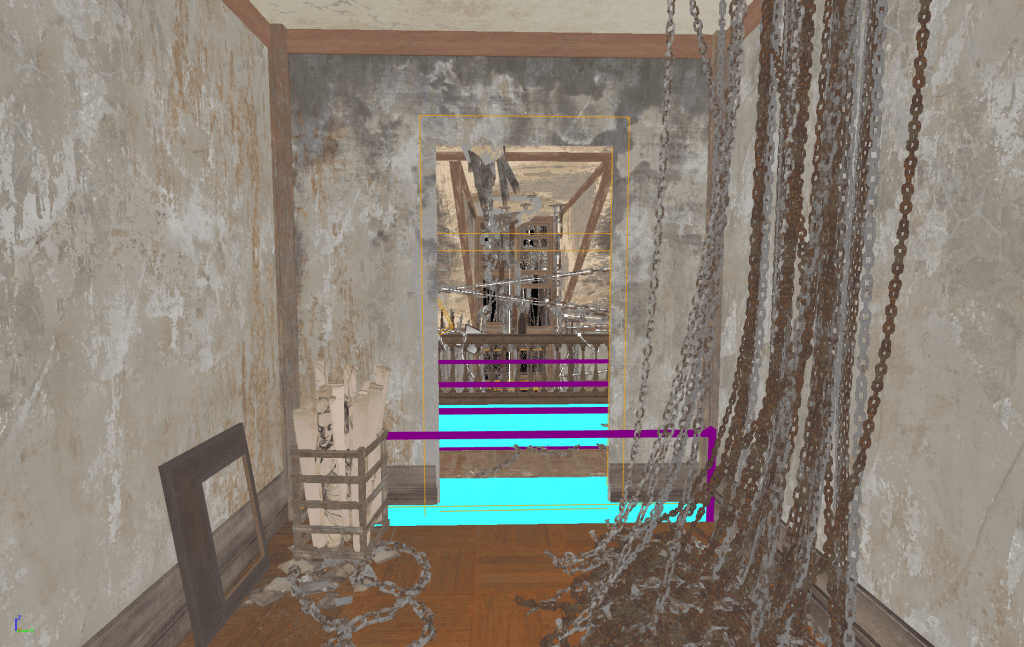
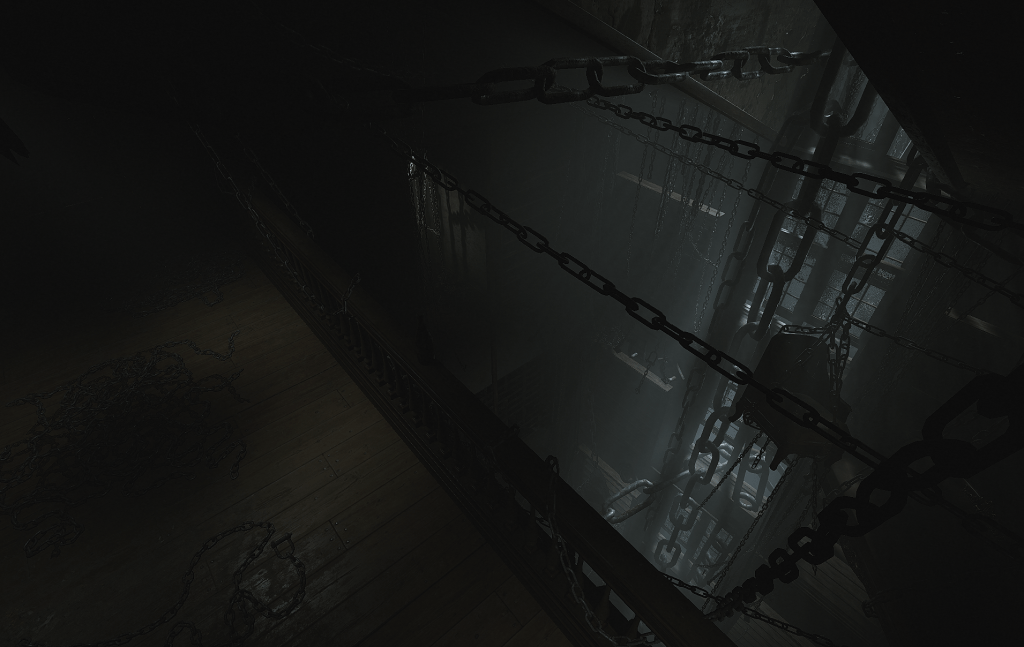
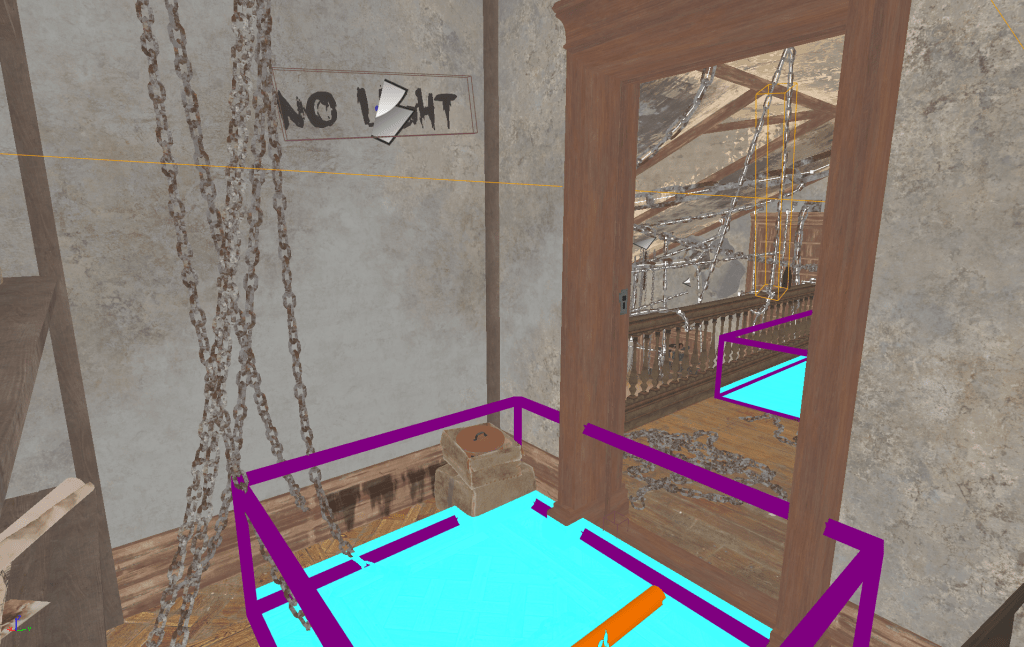
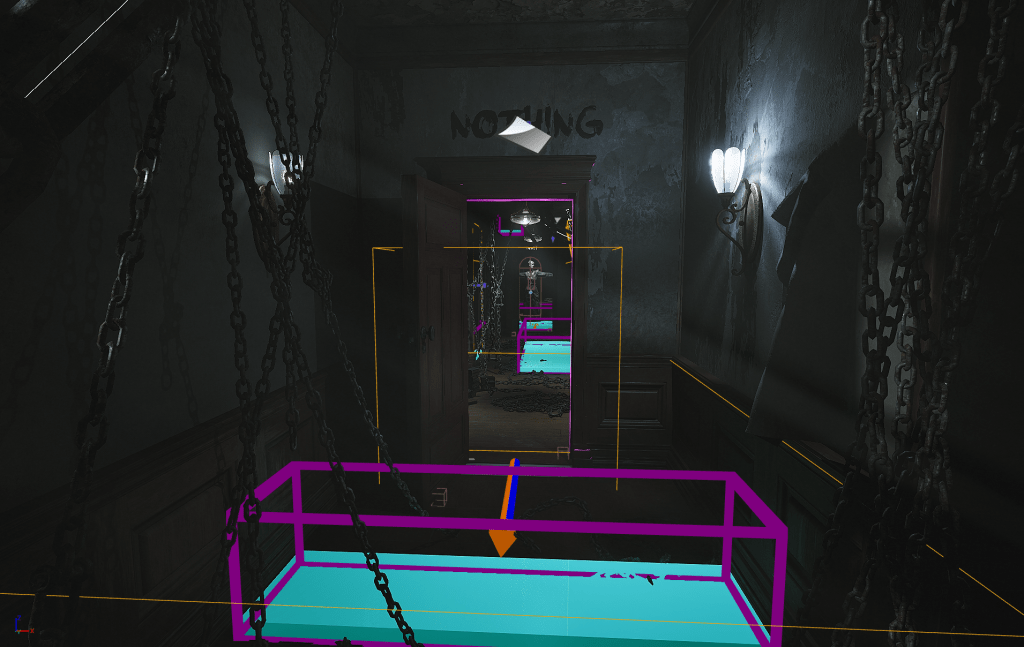
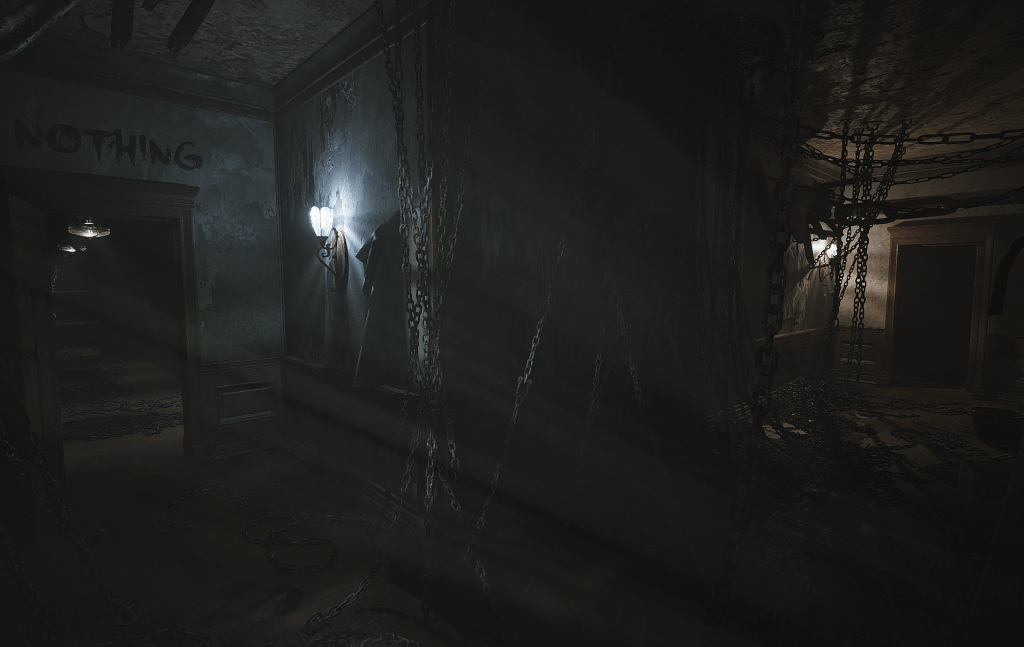
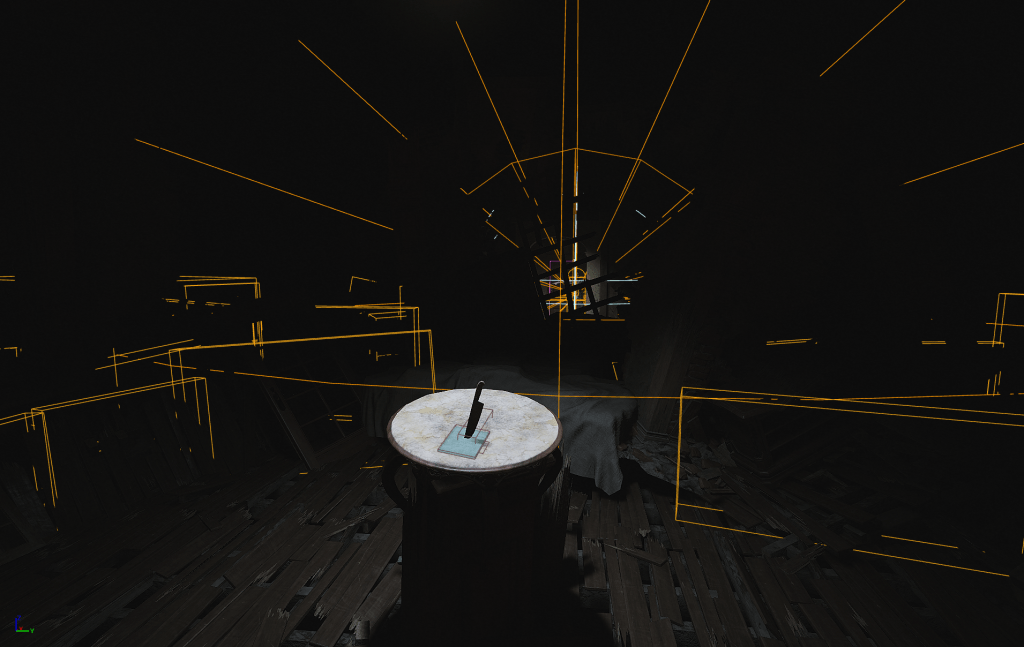
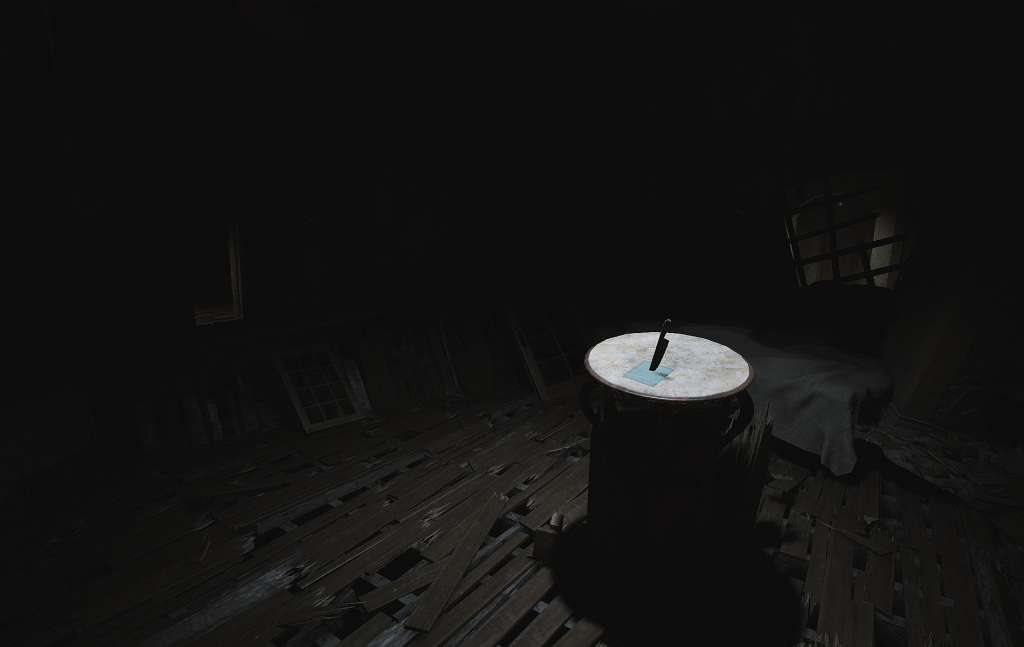
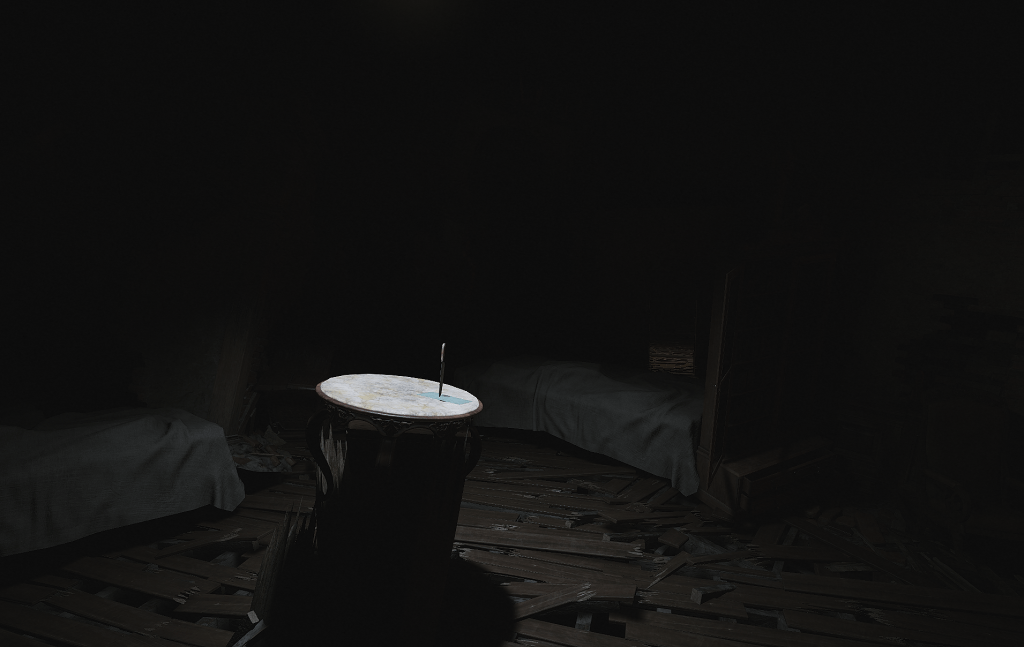
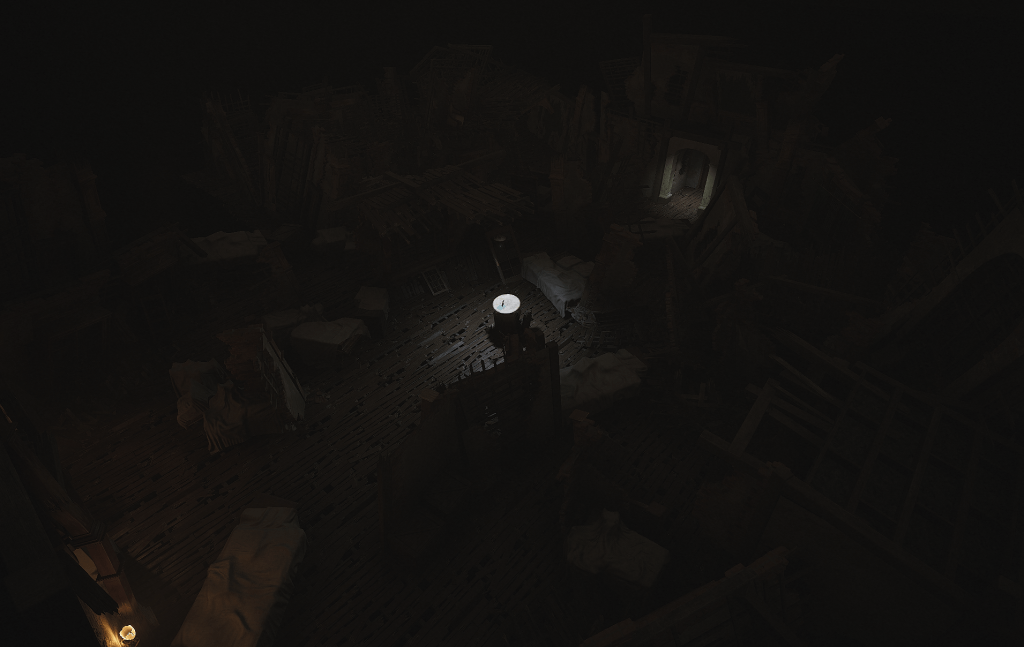
After escaping, players arrive in a dark room set in the void with a knife in the center that disappears as you approach. After picking up the note, players can see a key for the door across the way. Picking up the key triggers a combat sequence.
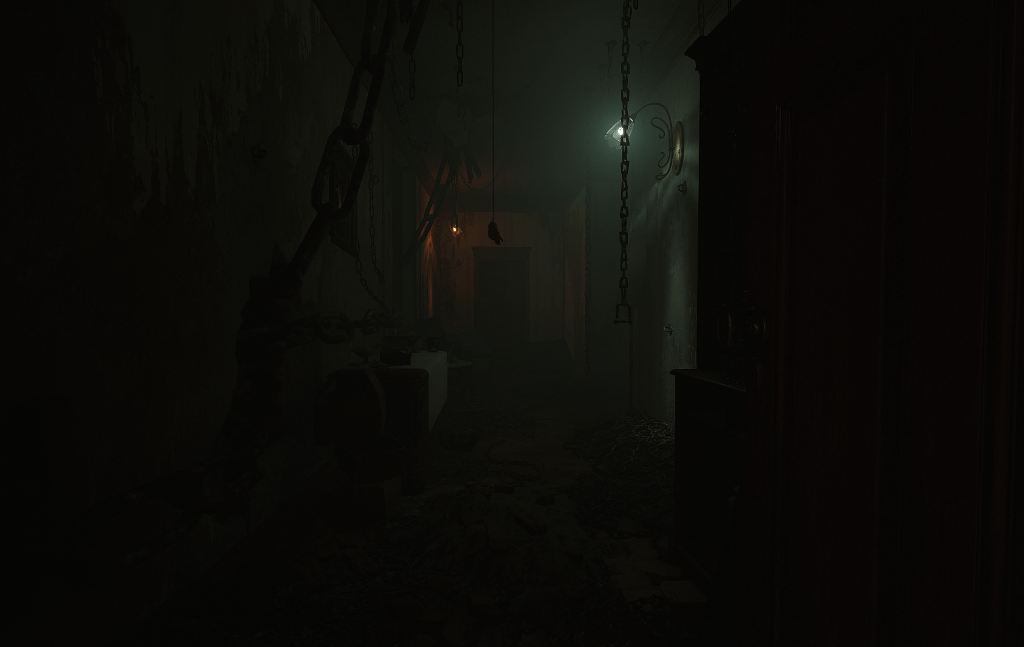
The space branches; players can choose any path, subtly guided by light. The darkness amplifies the fear in the room.
The level’s construction references and foreshadows the form of the DLC’s finale.

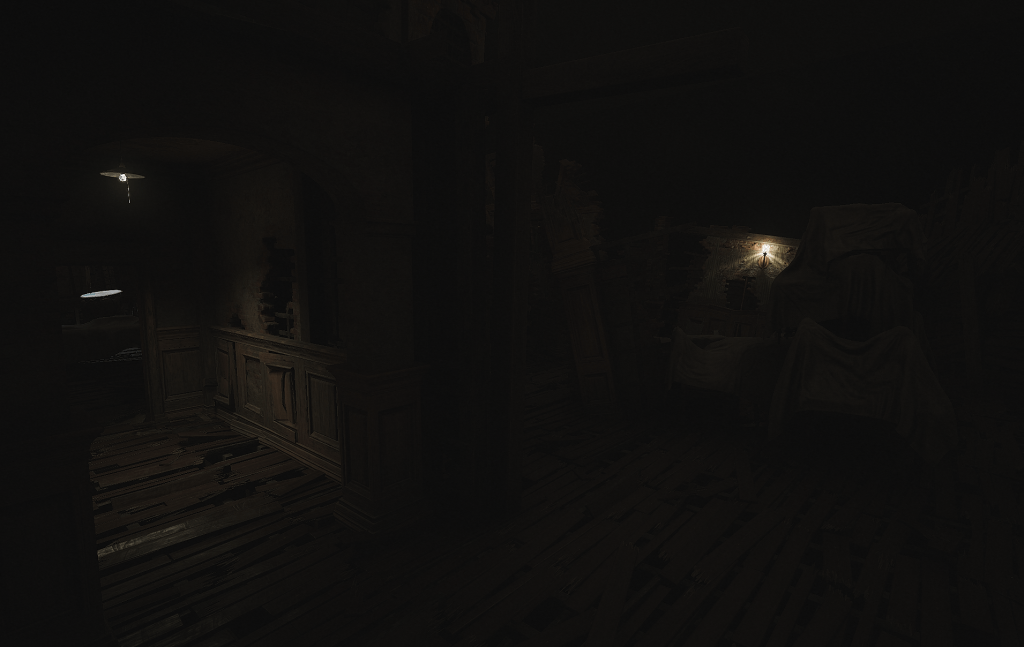
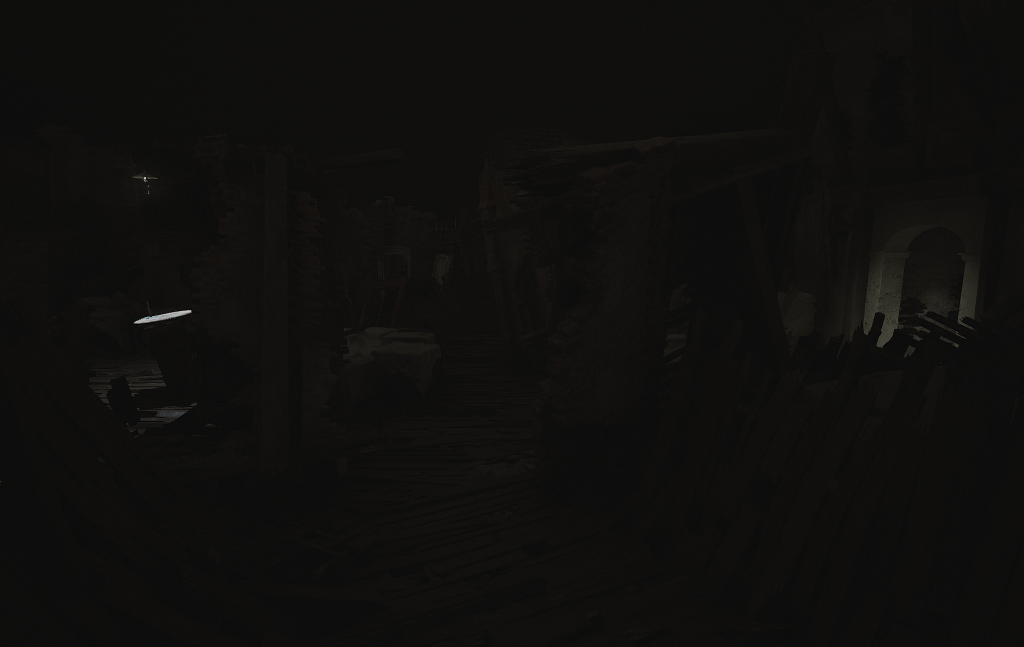
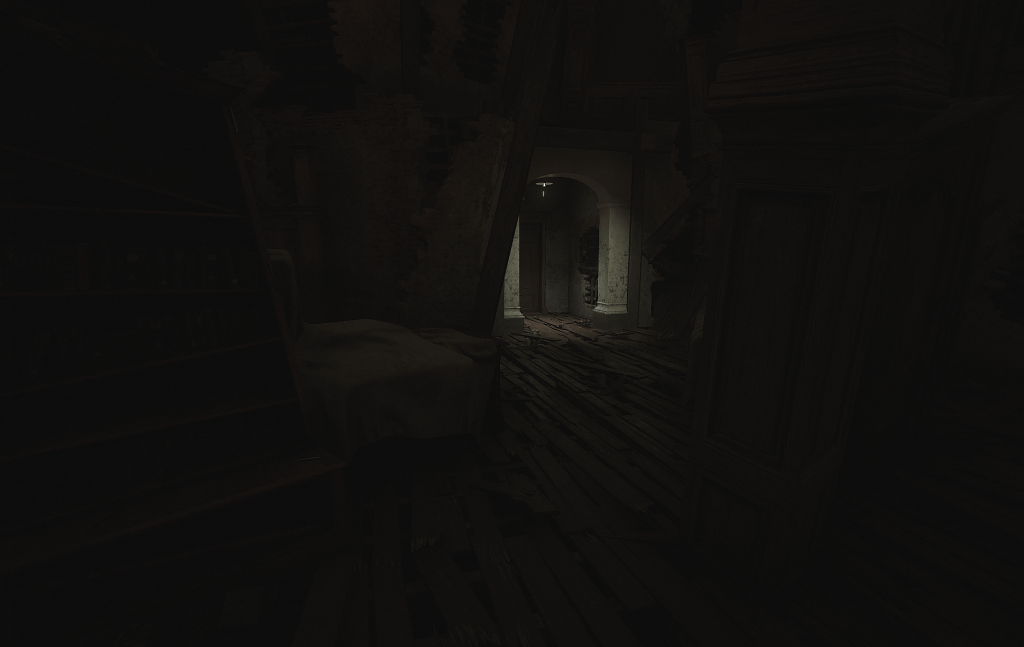
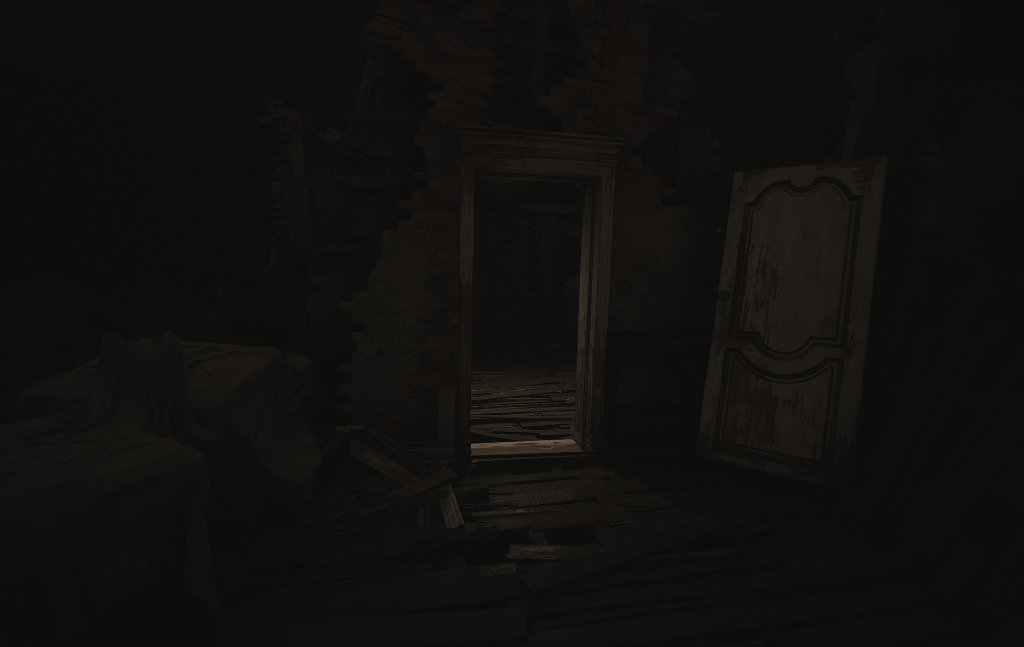
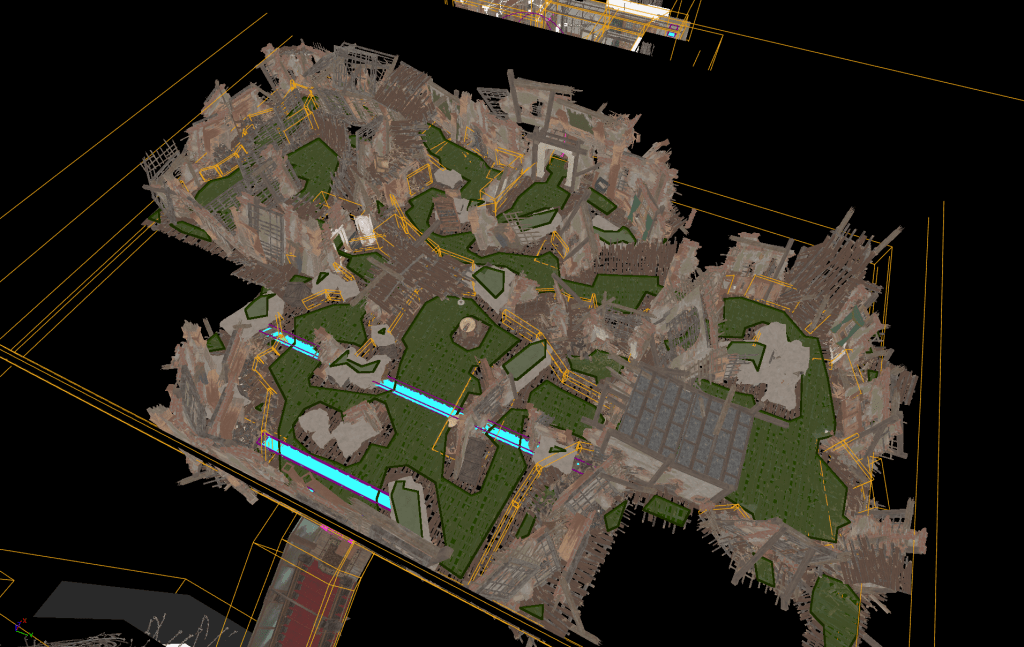
After leaving the room, the final choice and the Wife’s final appearance await.

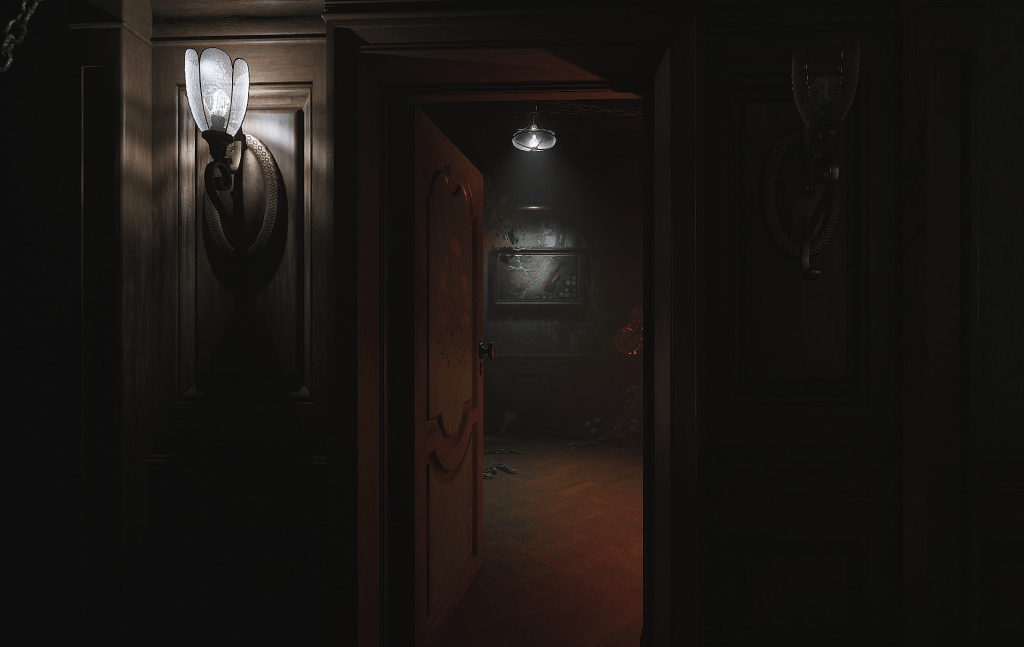

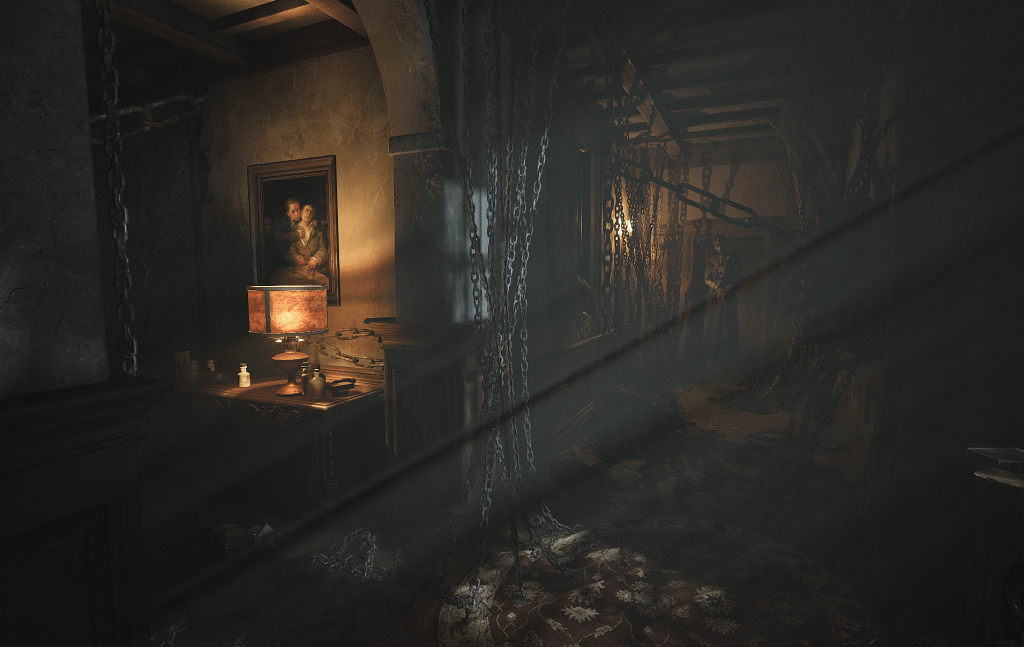

Chapter 3 Finale
Motif: the final step
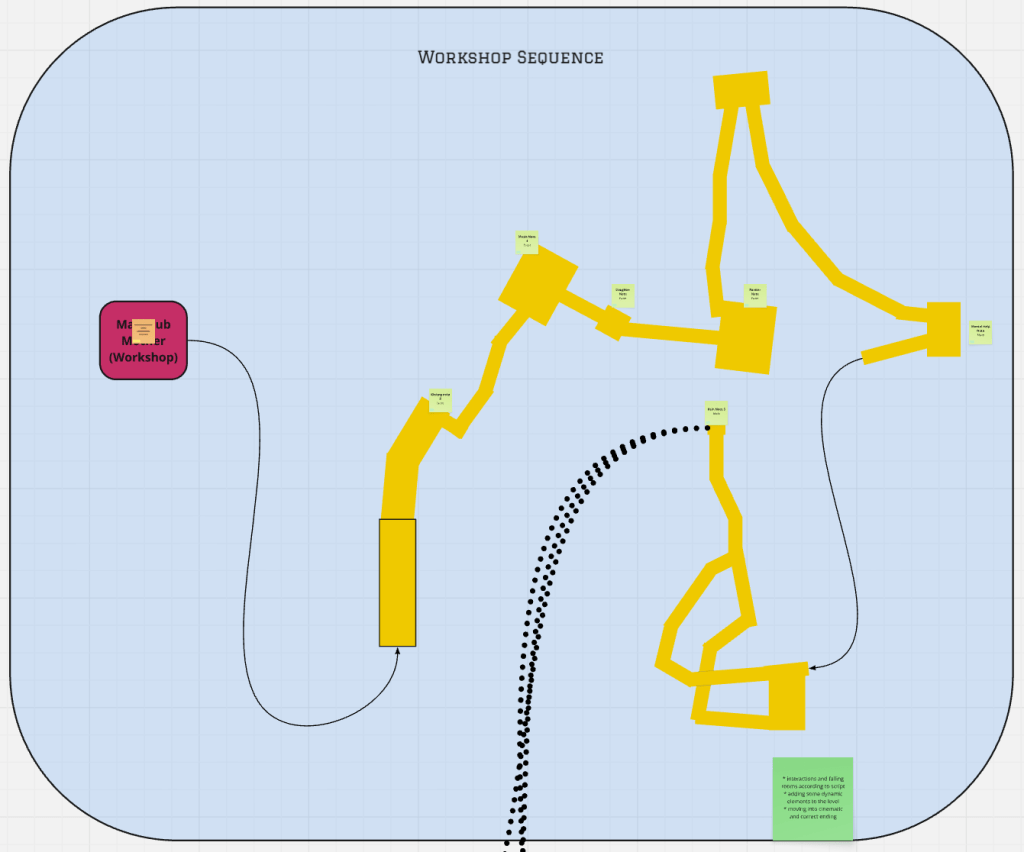
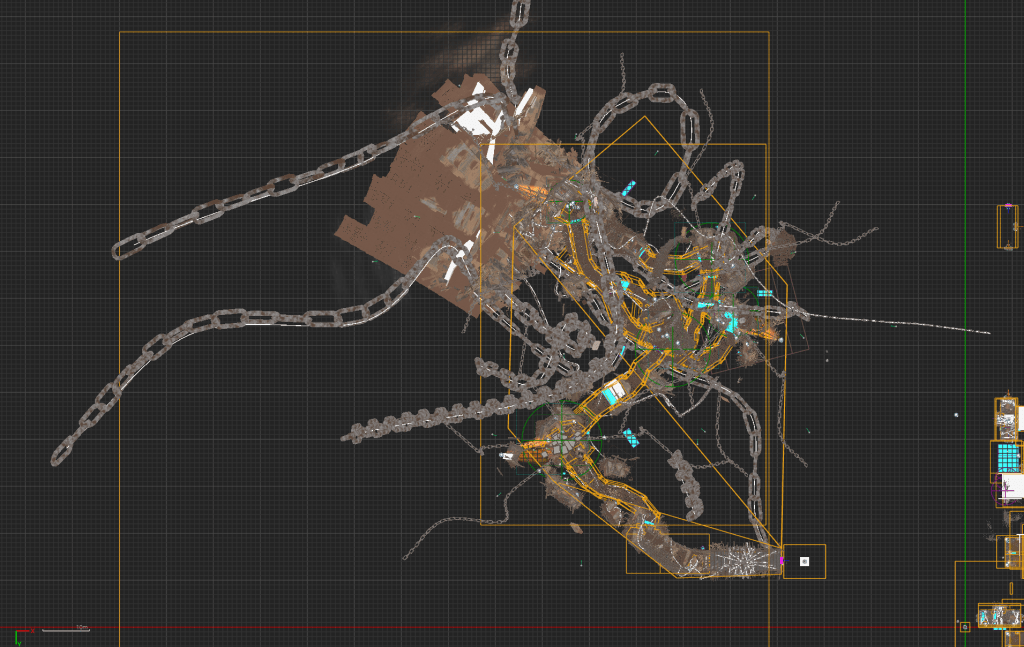
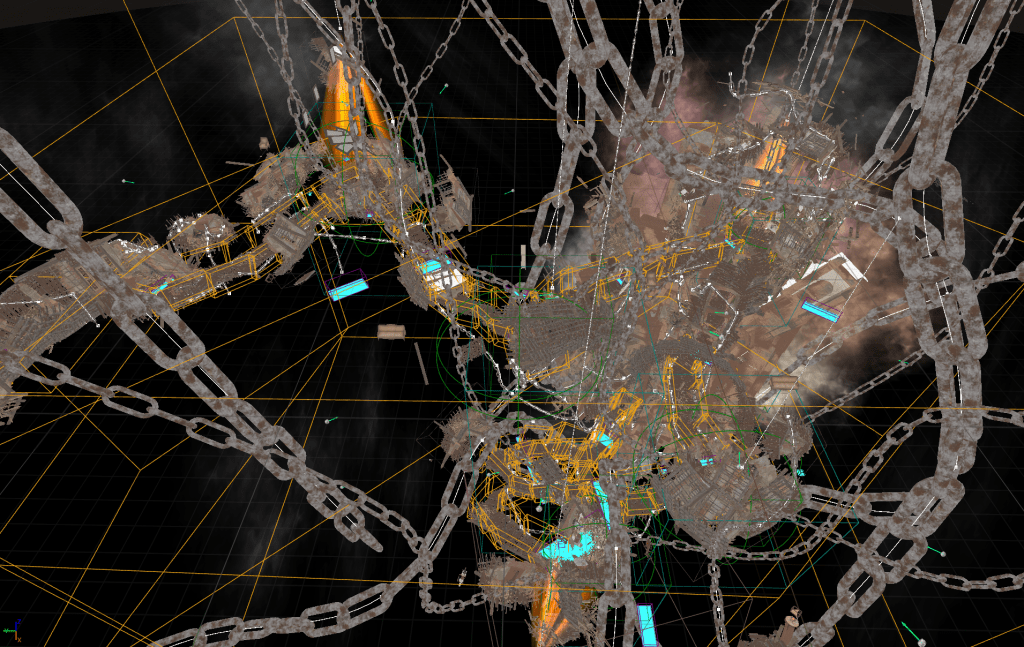
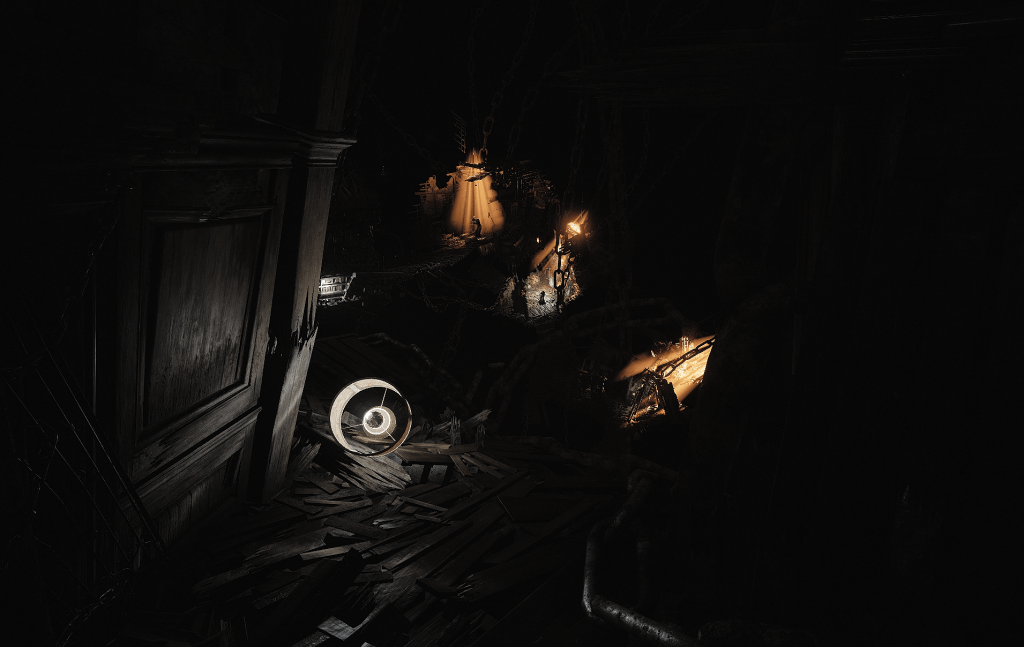
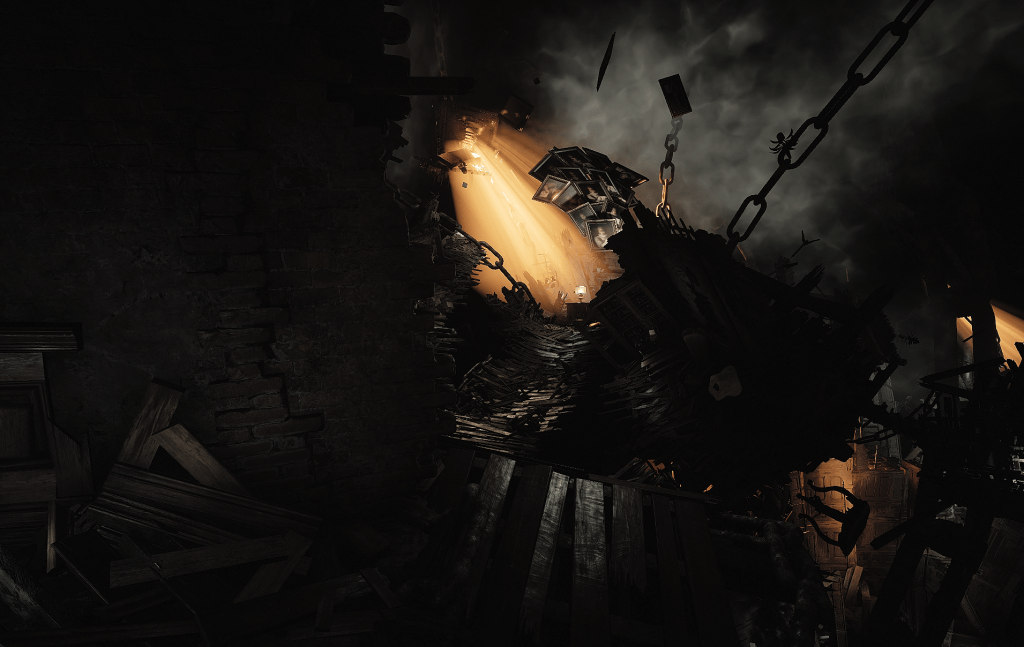
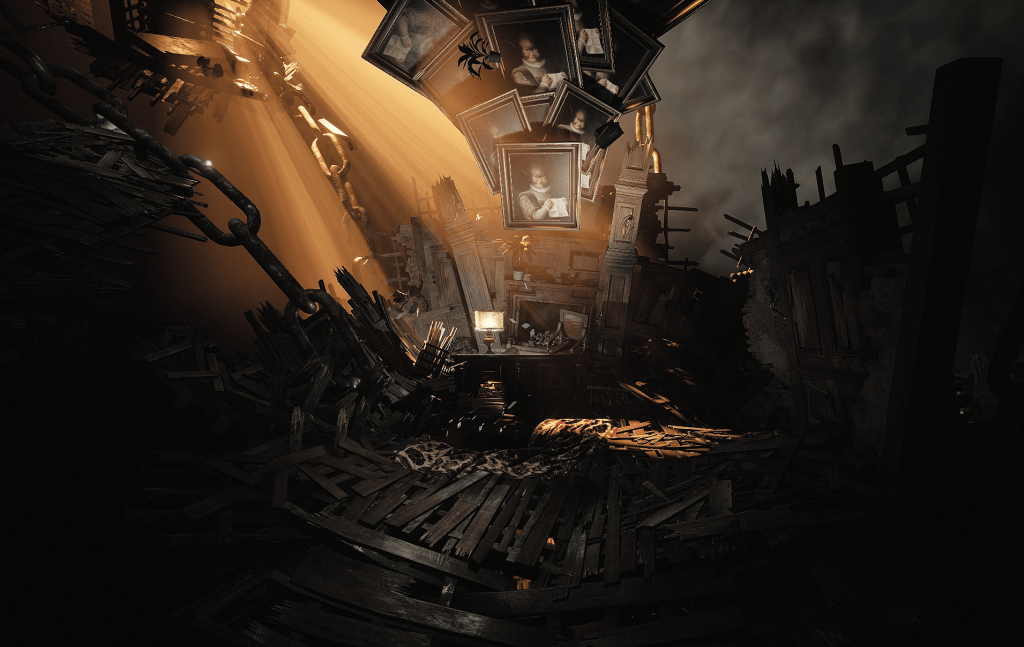
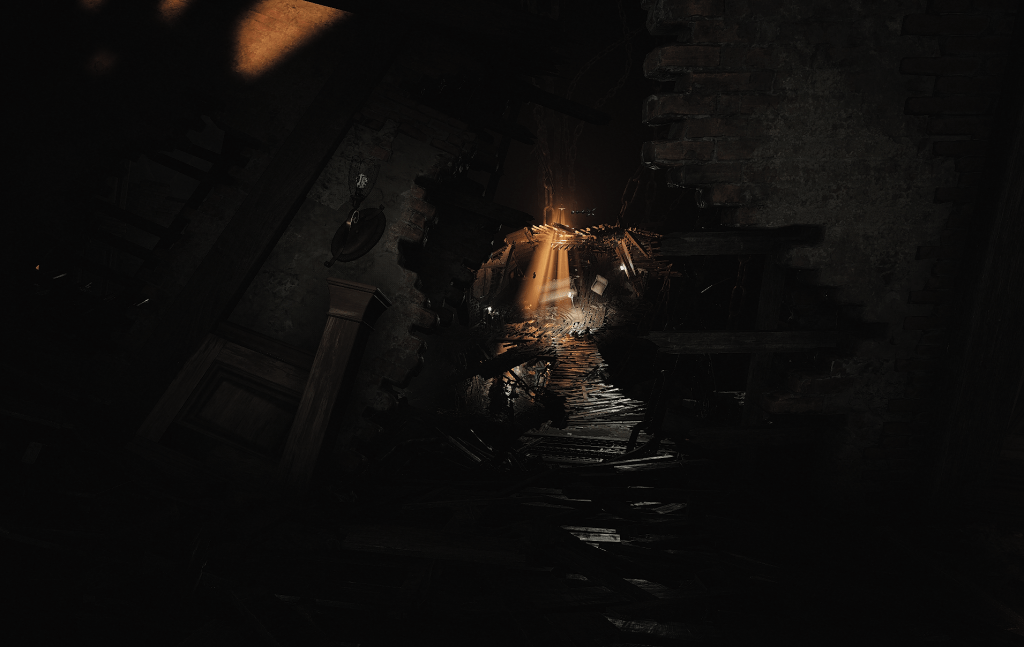
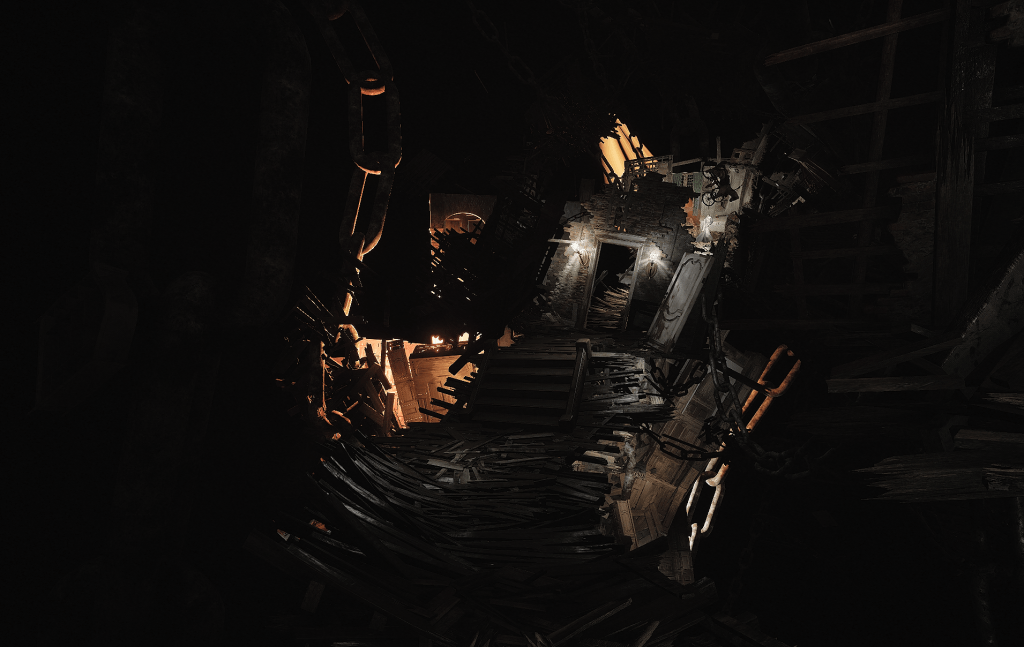
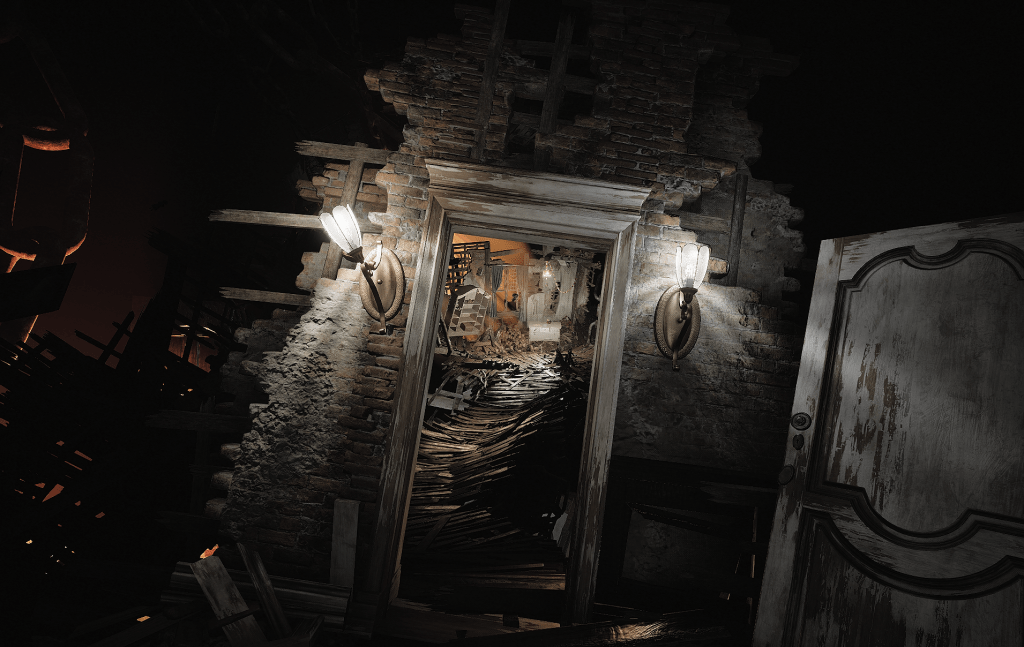
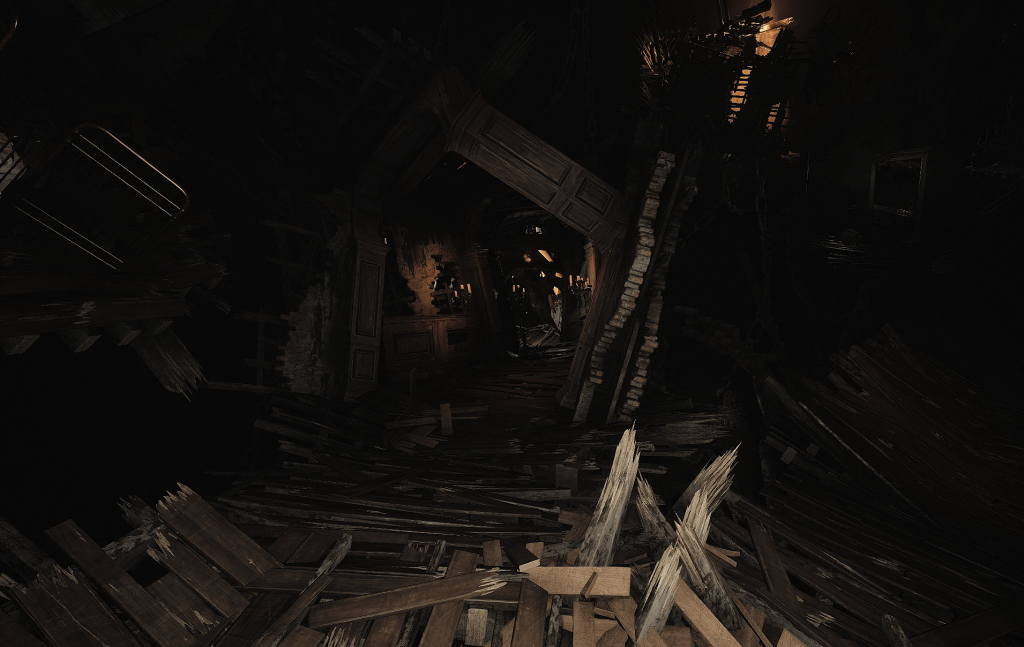
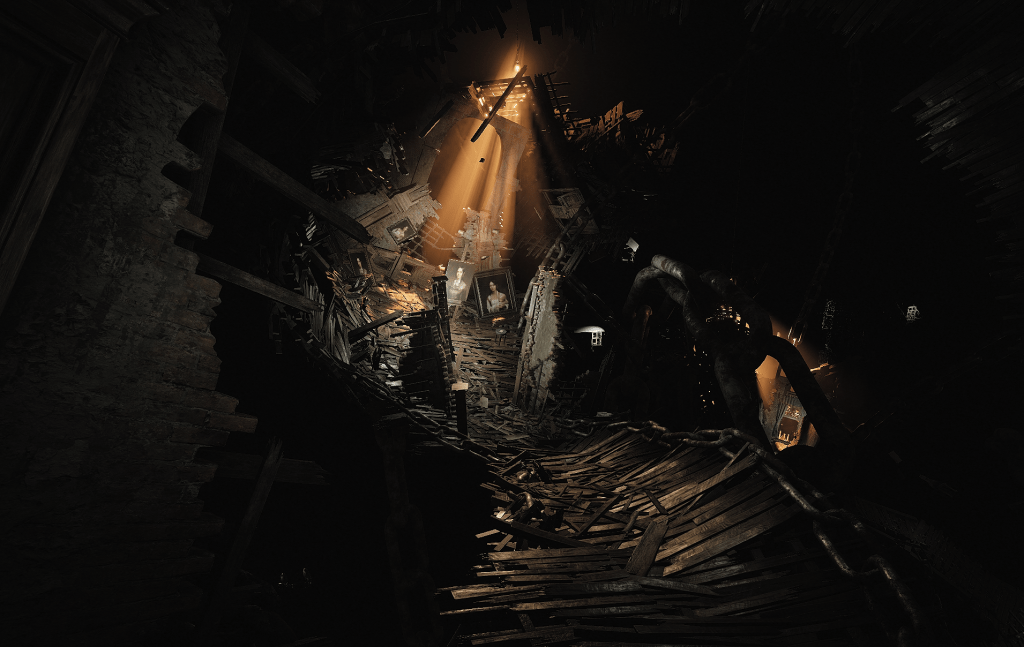
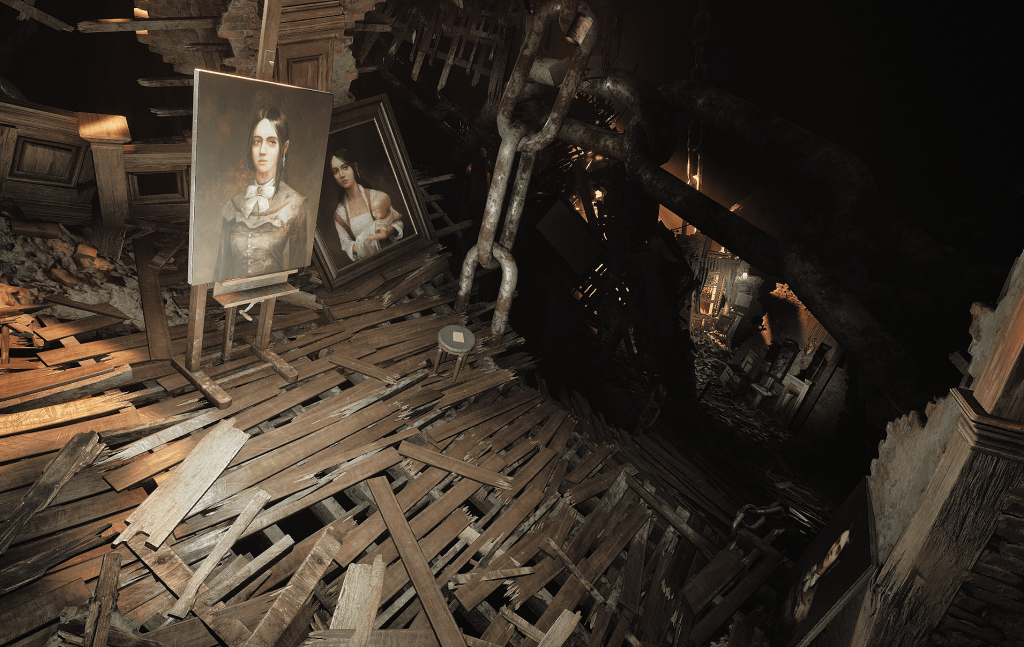
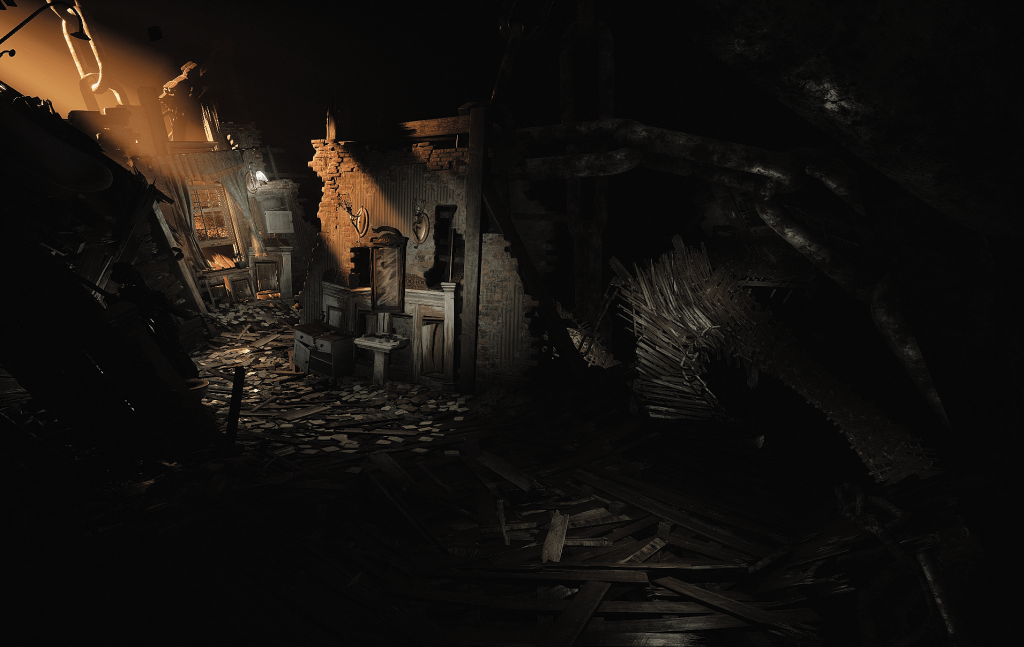
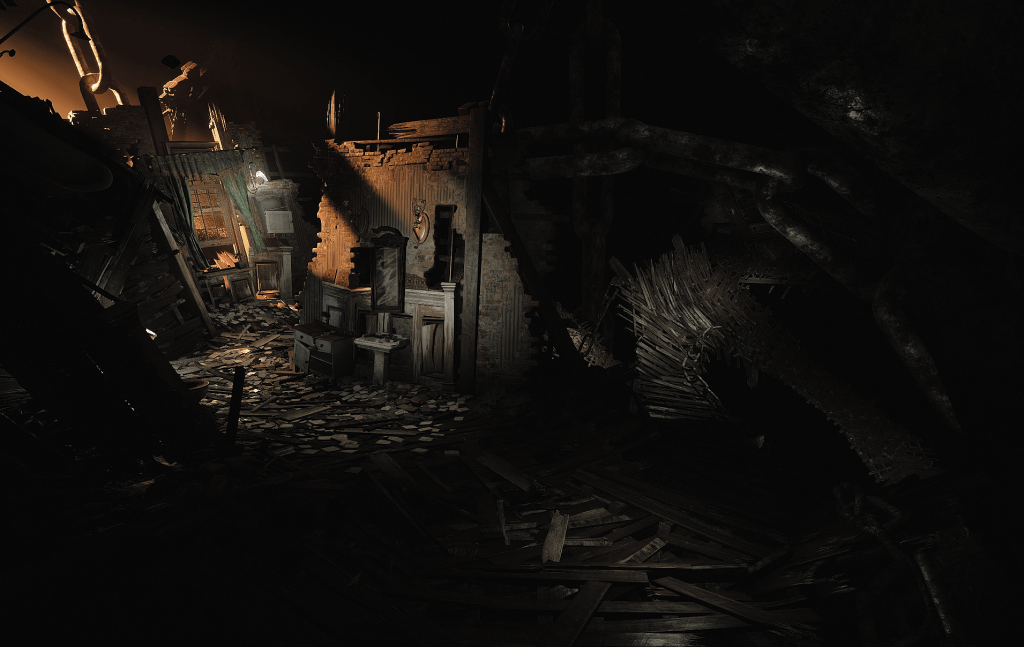
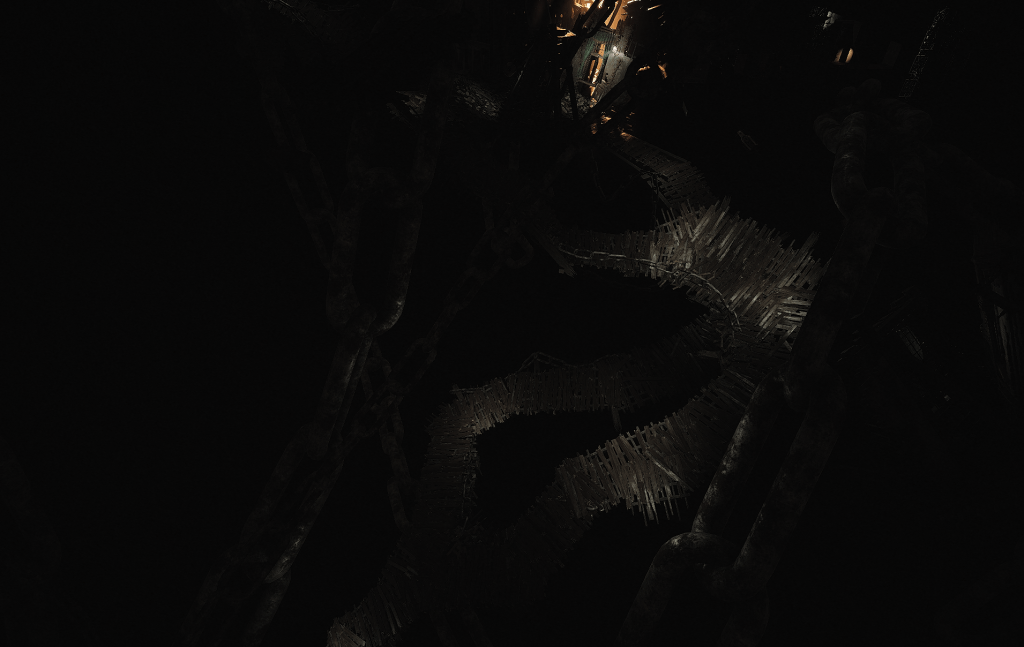
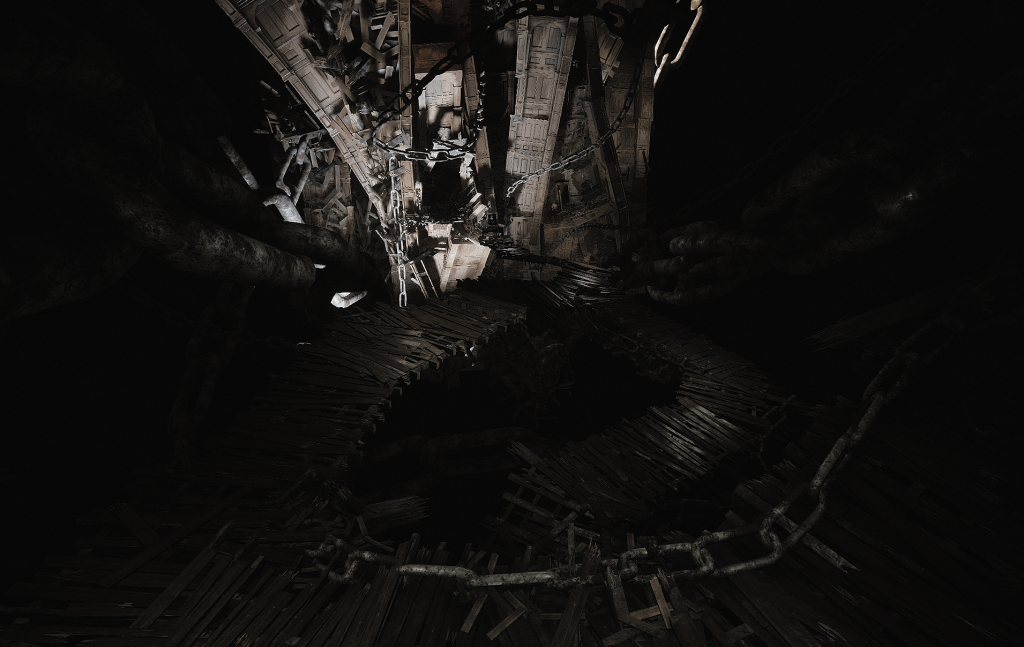
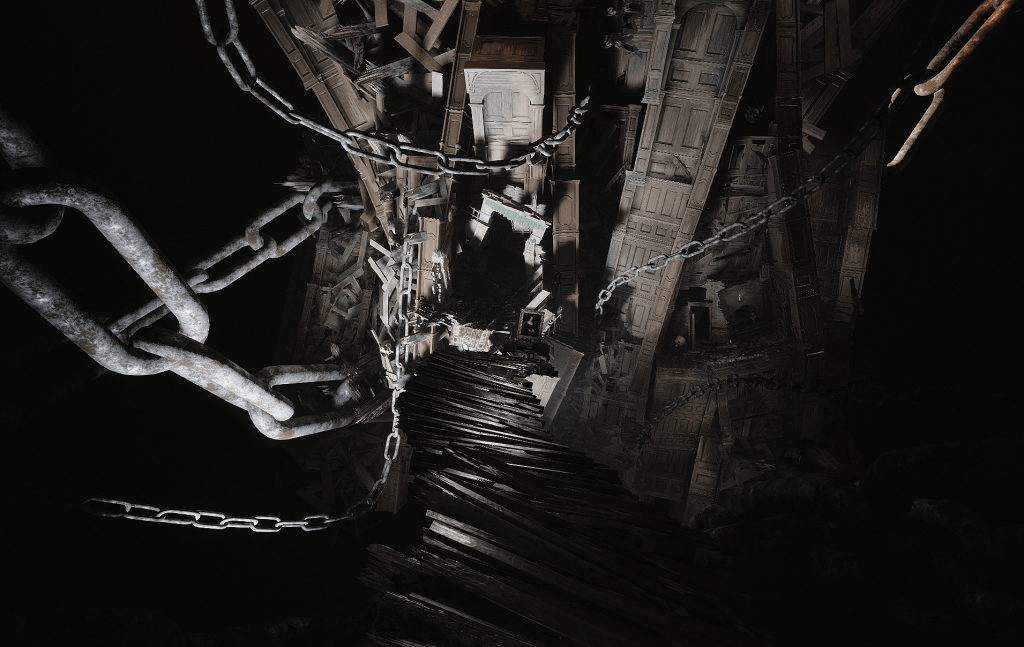
This is similar to the final sequence from Chapter 6 of the Painter’s story — a kind of memory lane where the character traverses corridors and catwalks hanging in the void and visits fragments of familiar rooms, connected by chains that fall apart as the level progresses.


 Pawel Pruszynski